What This Bouncing Dinosaur Is and Who It Suits
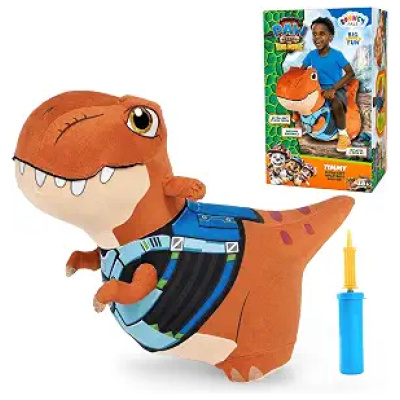
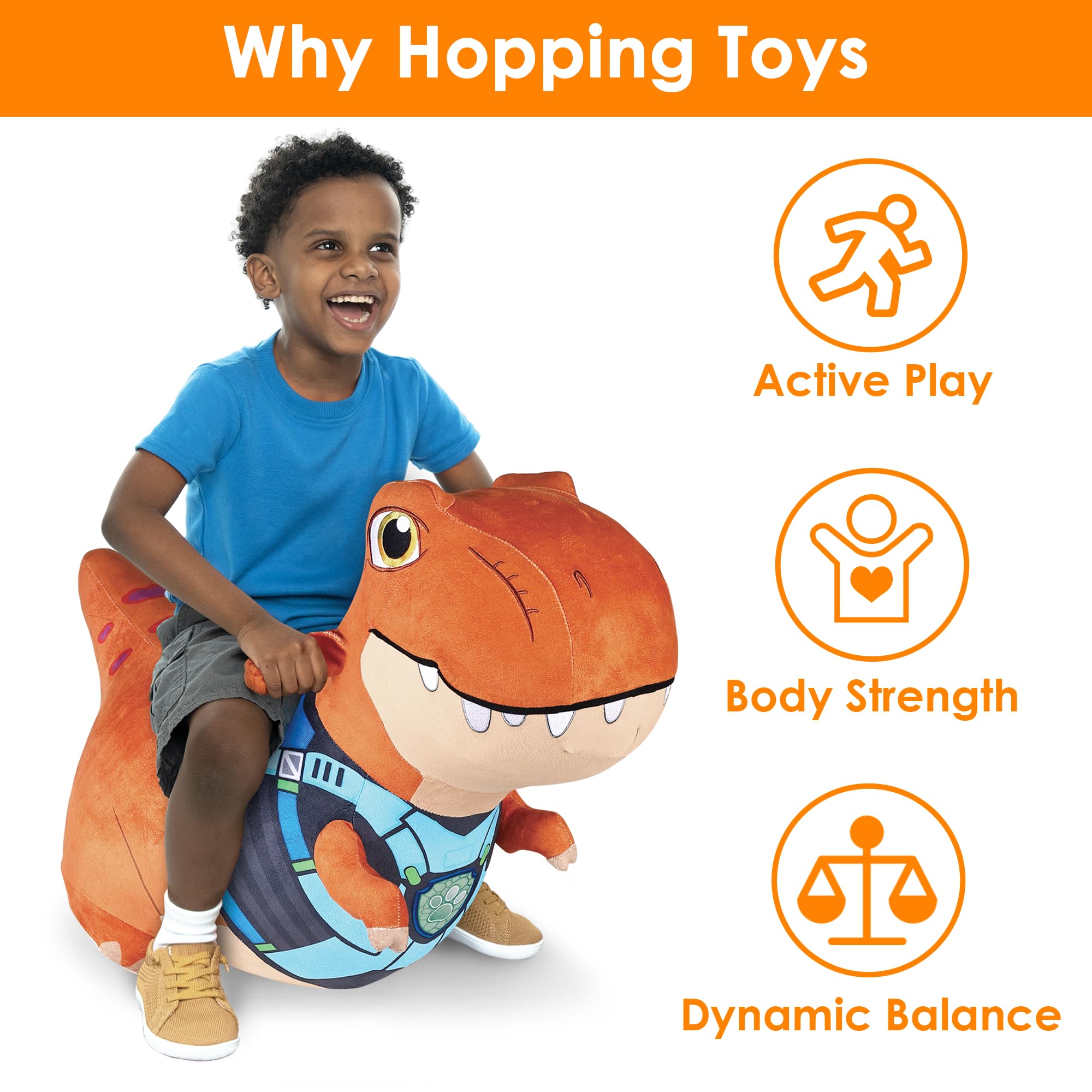
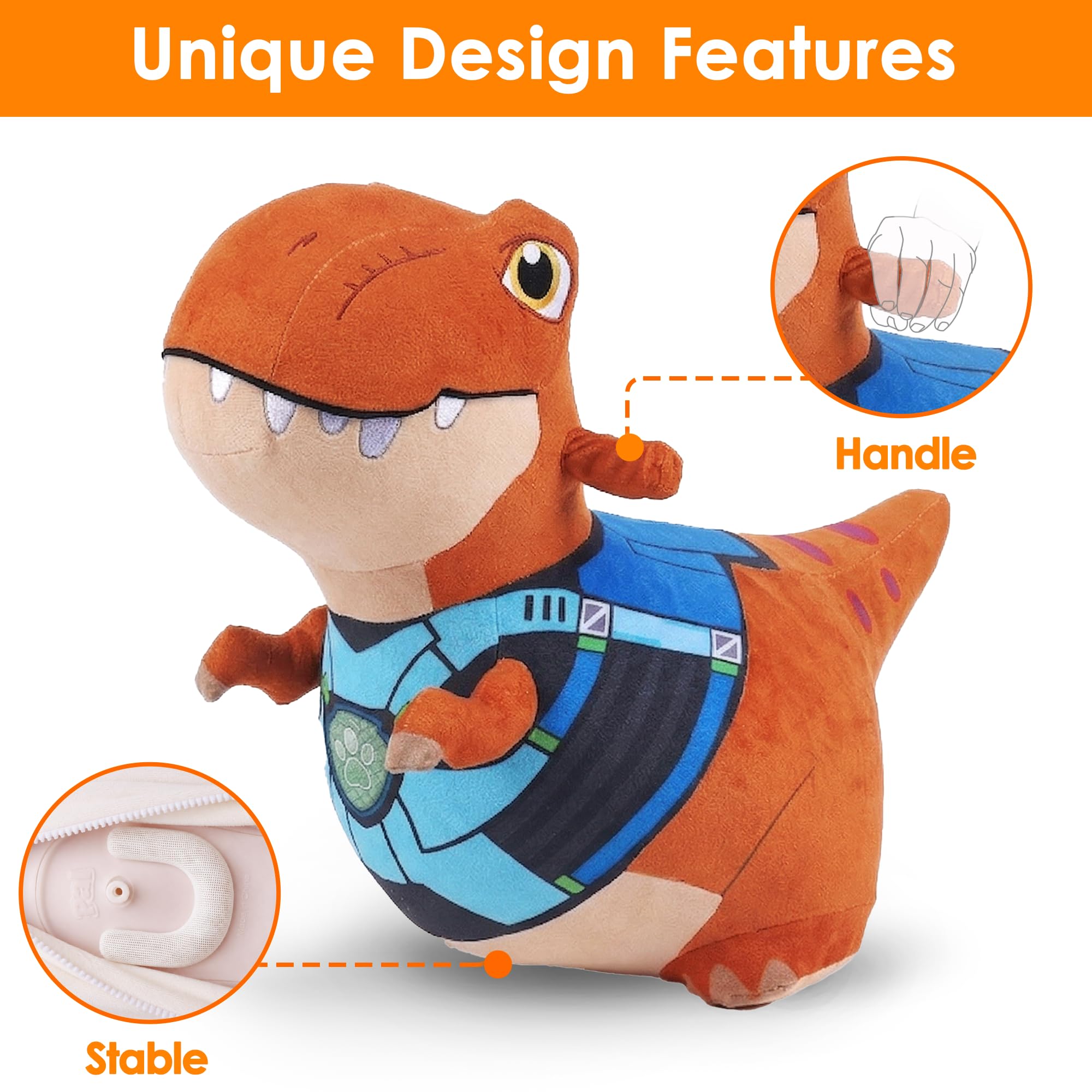
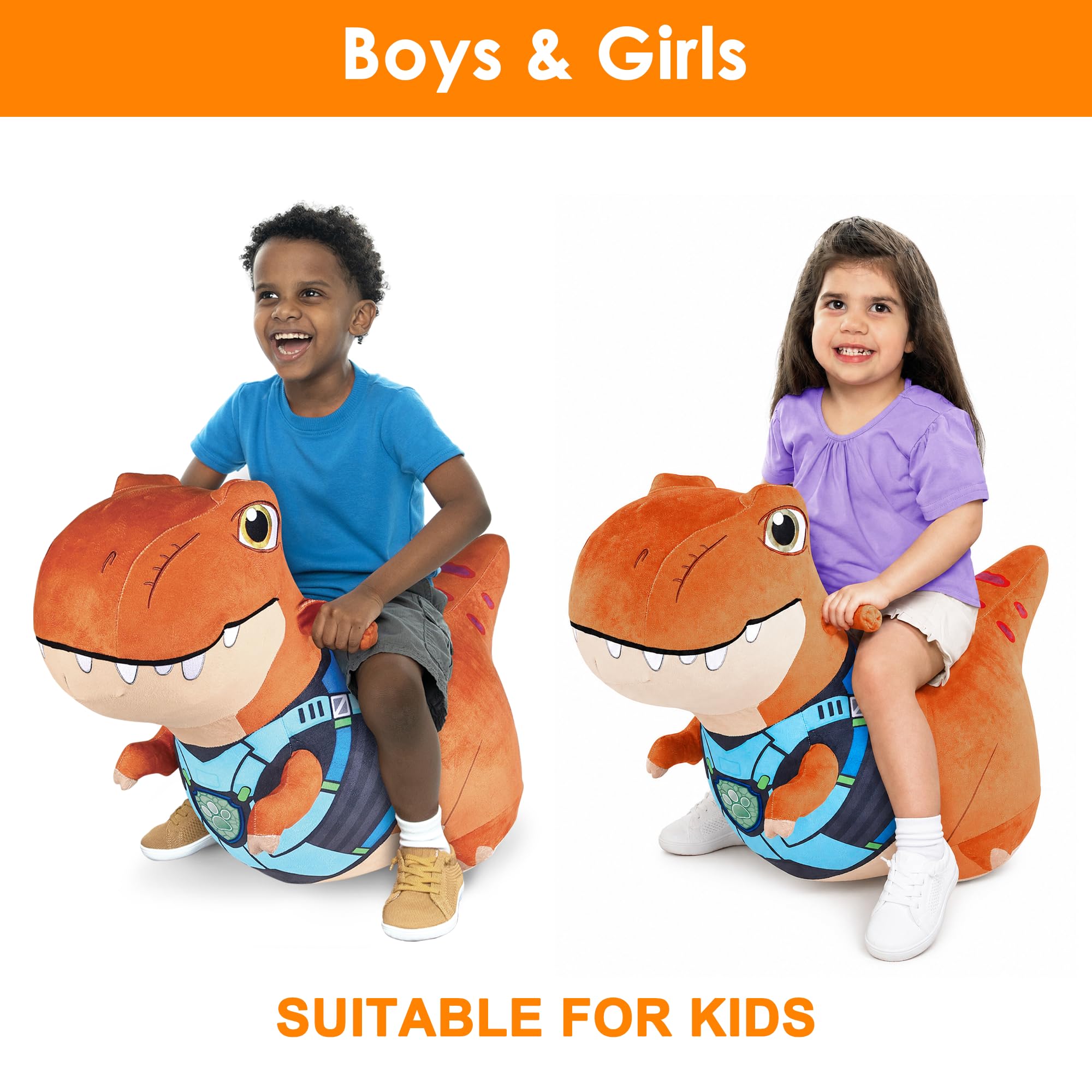
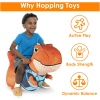
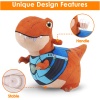
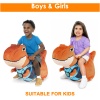
This is an inflatable ride-on hopper shaped like Timmy, one of the dinosaur characters from PAW Patrol: The Dino Movie. It arrives flat in the box along with a hand pump, and once inflated it becomes a soft, rounded bouncing ball with a sculpted dinosaur head, a plush cover and a handle at the front for your child to hold onto. A child sits astride the body, grips the handle with both hands, and pushes off with their legs to hop forward across the floor, the yard or the playroom.
The manufacturer, iPlay iLearn, lists a minimum age of 18 months and a maximum of 120 months, with the sweet spot for confident independent bouncing sitting around ages three through six. Younger toddlers near the bottom of that range will typically need a hand steadying the toy at first, which is completely normal; balancing on a moving inflatable is a skill that develops over weeks rather than minutes. Older children in the five-to-six range tend to use it for faster hopping races and obstacle courses rather than gentle rocking. If you are shopping for a child who already loves the PAW Patrol pups and has energy to burn indoors on rainy days, this sits in a useful middle ground between a stationary toy and something that requires a large outdoor space.
Each unit includes the Timmy bouncy dinosaur and the hand pump needed to inflate it. There is nothing else to buy or assemble beyond that first inflation.
Design, Materials and How It Is Built
The construction follows the familiar hopper pattern: an inflatable bladder inside a plush outer cover. The plush layer is what separates this style of hopper from the bare vinyl bouncing balls many parents remember from their own childhood. It gives the surface a warmer, softer feel against bare legs, keeps the toy from sticking to skin on humid days, and cuts down the squeaky rubber noise that a plain vinyl hopper makes on hard flooring. It also means the toy reads as a stuffed animal when it is sitting in the corner of a room, rather than as sports equipment.
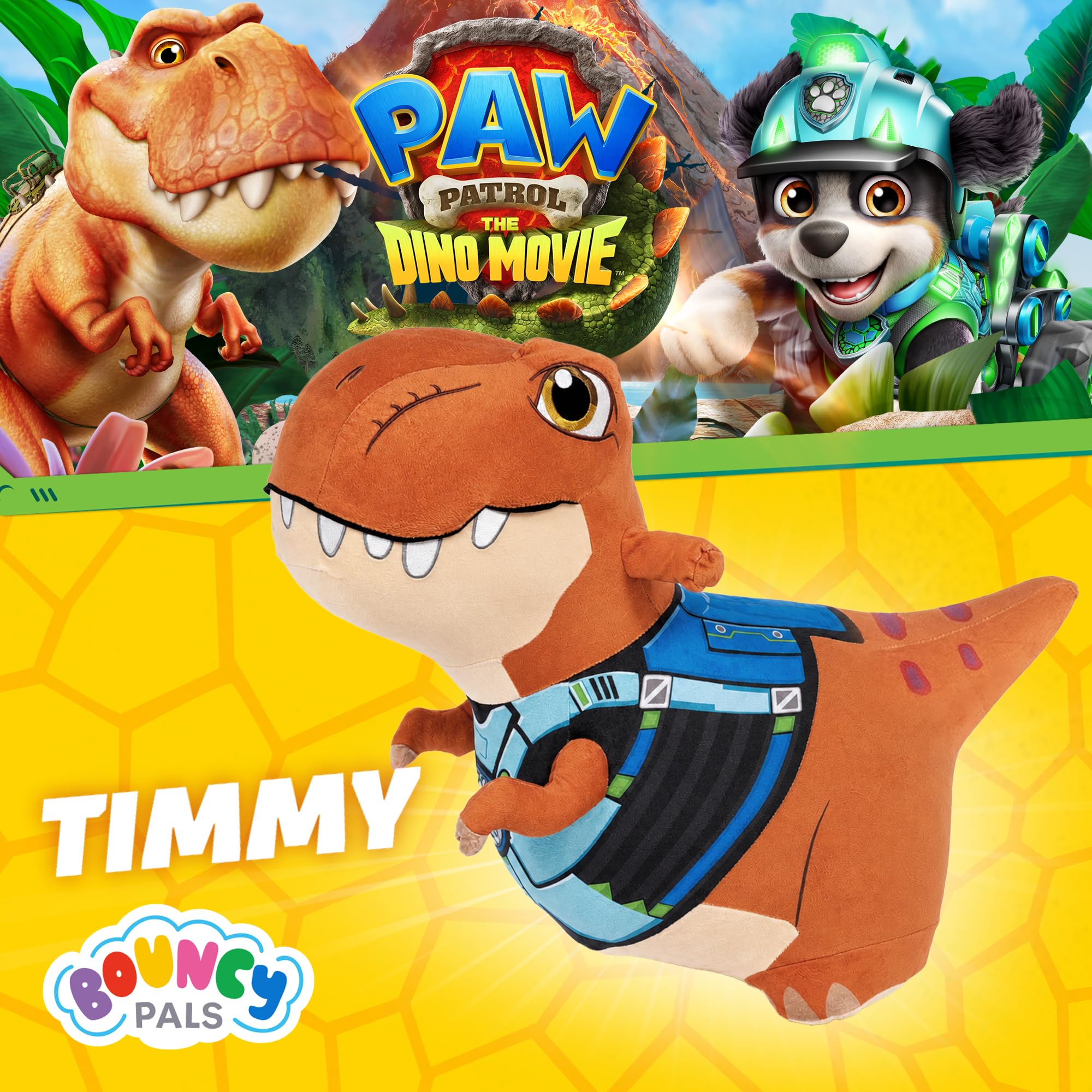
Timmy’s face, snout and dinosaur features are sculpted and stitched into the cover rather than printed on, so the character detail survives being sat on repeatedly. The handle sits forward on the body where a dinosaur’s neck would be, positioned so a child leans slightly forward into a natural bouncing posture rather than sitting bolt upright. That forward lean matters more than it sounds: it keeps a child’s centre of gravity over the ball instead of behind it, which is the main reason hoppers tip backward.
The rounded base is wide enough to stay upright when a child climbs on and off, and the inflatable body flexes under weight, giving the bounce its spring. Inflation level changes the character of the toy noticeably. A firmer inflation produces a livelier, faster bounce suited to older or more confident children; a softer inflation is slower, more forgiving and easier for a smaller child to control. It is worth experimenting with the pump over the first few sessions to find the pressure that matches your child rather than inflating it to maximum firmness by default.
Deflated, the whole thing folds down to a size that fits in a closet, a car trunk or a suitcase, which makes it practical for taking to a grandparent’s house or on a long trip.
What Children Actually Do With It
Hopping toys occupy an unusual niche in a toy collection because the play is entirely physical and self-directed. There are no batteries, no sounds, no app and no instructions past the first inflation. A child gets on and figures out how to move, and the toy responds only to what they do with their own body.
That has real developmental value at this age. Staying balanced on a rounded, moving surface works the core and postural muscles continuously. Pushing off and landing builds leg strength and teaches a child to time their effort with the rebound, which is genuine coordination practice. Steering requires shifting weight rather than turning a wheel, so children learn to control direction through their whole body. Physical therapists and occupational therapists frequently use bouncing equipment for exactly this reason, particularly with children who seek out movement and pressure input; a hopper delivers a rhythmic, repetitive sensation that many children find calming as well as fun.
In practice, the play tends to evolve. Early on it is simple bouncing in place. Then comes travelling across the room, then racing a sibling down a hallway, then obstacle courses built out of cushions and cardboard boxes, then some version of a rescue mission where the dinosaur has to reach a stranded toy at the far end of the yard. Because the toy carries a character, that last stage arrives faster than it does with a plain ball; children who know Timmy from the movie tend to narrate what they are doing rather than just bouncing silently.
It also solves a specific parenting problem: how to let a child expend serious physical energy without leaving the house. On a rainy afternoon or a cold week, a hopper in a cleared living room is one of the few indoor options that genuinely tires a child out. Outdoors, it works on grass, patios, driveways and any flat surface free of sharp debris.
Safety, Supervision and Keeping It in Good Shape
Bouncing toys carry an obvious falling risk, and the sensible precautions are straightforward. Use it on a flat, open surface with clearance around it: away from stairs, fireplaces, glass doors, coffee table corners and hard furniture edges. Carpet, a rug or grass gives a softer landing than tile or concrete. Shoes off or grippy socks helps indoors, since a child’s feet do a lot of the steering work. Supervise younger children throughout, and stay within arm’s reach of a toddler at the lower end of the age range who is still learning to balance.
One child at a time is the rule. Two children on a hopper double the load on the seams and take away the balance point entirely. It is also worth being explicit with children that the toy is for bouncing while seated, not for standing on, throwing or using as a step stool.
Check the inflation before each session. An underinflated hopper sags and becomes unpredictable; an overinflated one is too rigid and bounces a child harder than they expect. Inflatables also lose a little air naturally over days, and air pressure inside shifts with temperature, so a toy left in a cold garage overnight will feel softer in the morning and firmer once it warms up. Keep it away from sharp objects, pet claws, gravel and hot surfaces, and store it out of prolonged direct sun, which degrades both the plush and the bladder over time. The plush cover can generally be spot-cleaned with a damp cloth and mild soap, then left to air dry fully before storage.
As with any toy at this age, keep the packaging and any small parts away from children, and give the toy a quick look-over now and then for seam wear or slow leaks.
Where Timmy Fits in the PAW Patrol Universe
PAW Patrol: The Dino Movie brings dinosaurs properly into the PAW Patrol world, introducing new characters alongside the pups children already know from Adventure Bay. Timmy is one of those dinosaur characters, and this hopper is built around him specifically rather than being a generic dinosaur with a logo applied.
That distinction matters for how a child plays. Recognition is what turns a piece of physical play equipment into a character toy. A child who has seen the film and knows Timmy will bring the story to the bouncing, and the toy becomes a companion in a game rather than a device for getting exercise. It also connects naturally to the rest of a PAW Patrol collection at home. The pup figures, vehicles and plushies a child already owns can join whatever rescue scenario the dinosaur is currently starring in, and the hopper becomes the large, physical piece at the centre of it.
For parents, the practical appeal is that this is one of the few PAW Patrol items that is genuinely active. Most of the range sits on the floor or gets carried around; this one asks a child to move. If your household already leans toward the pups, a movie-tie-in dinosaur that doubles as gross-motor play covers a gap that figures and plushies do not, and it makes a straightforward birthday or holiday gift for a preschooler or early-elementary child who prefers being in motion to sitting still.