A Handheld Pup Pad for Young Rescue Fans
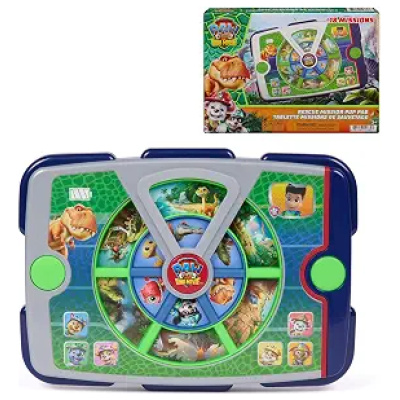
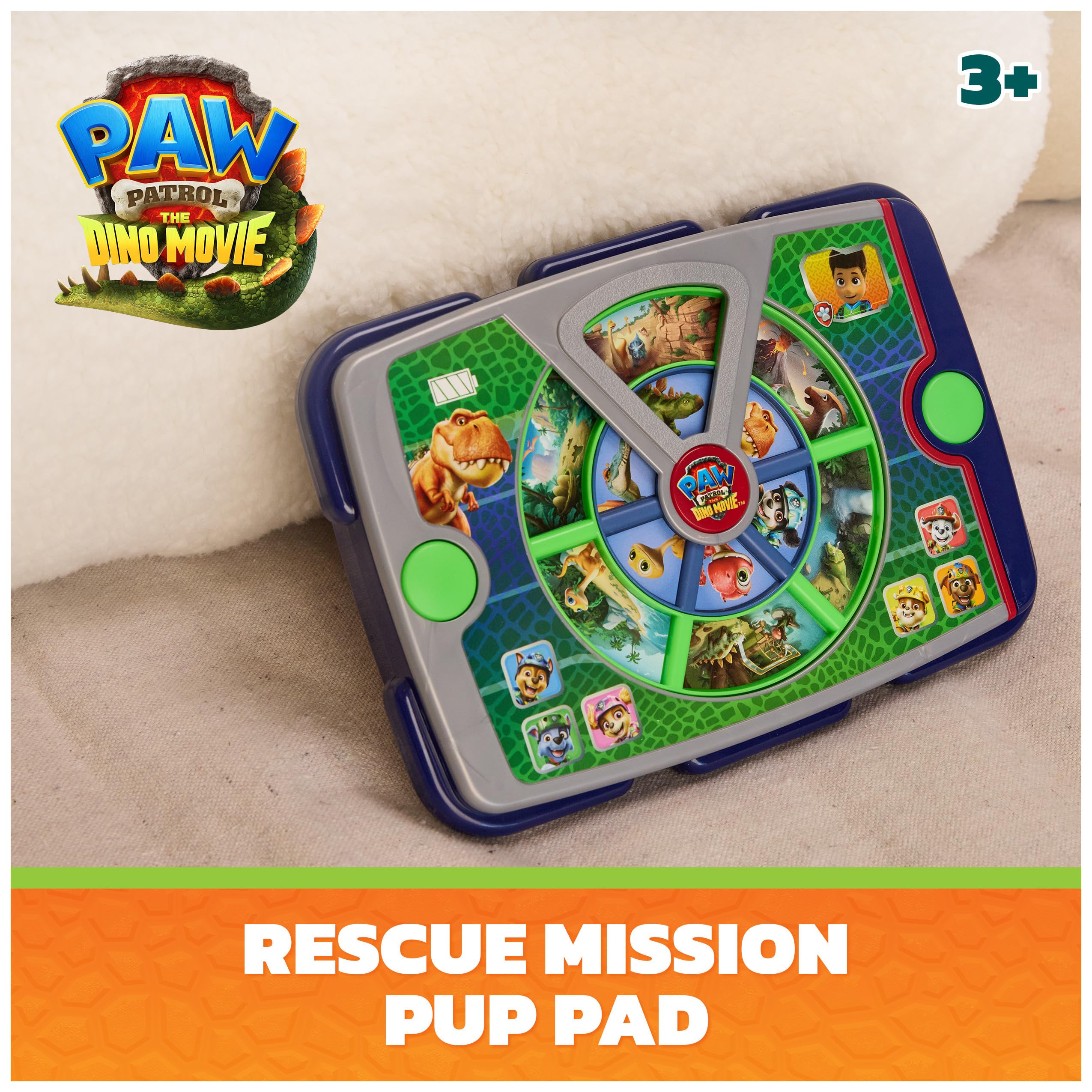
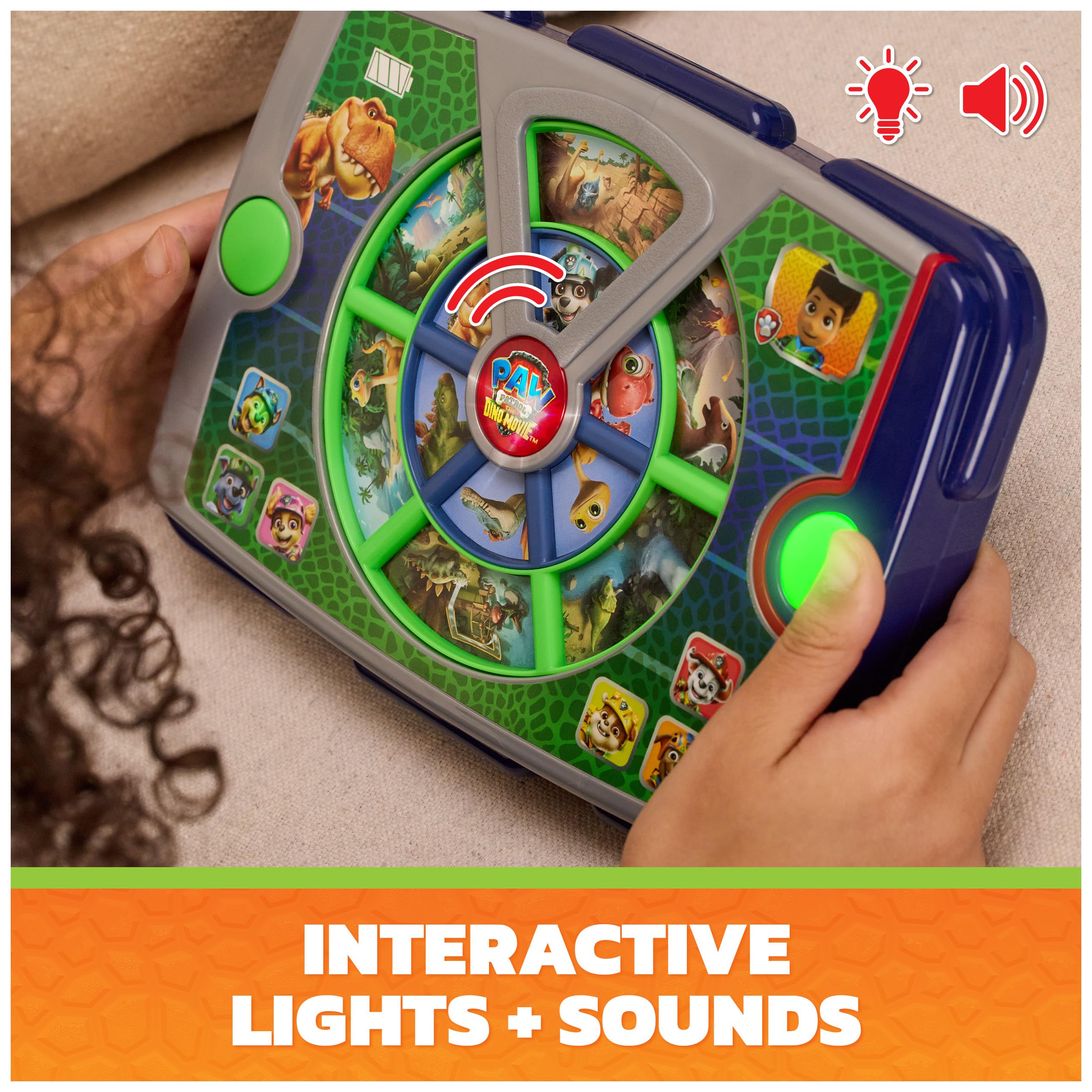
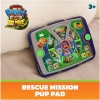
The Rescue Mission Pup Pad is a handheld electronic toy modeled on the mission device the PAW Patrol team uses to receive calls for help. It is built for children who already know the characters and want something they can carry, switch on, and operate themselves without a parent setting anything up first. Spin Master lists it for ages 3 and up, with the manufacturer age range running from 36 to 108 months, which puts it squarely in the preschool-through-early-elementary window.
This version ties into PAW Patrol: The Dino Movie, so the pad carries the dinosaur rescue theme through its artwork, its mission prompts, and its sounds. Children who have seen the film tend to recognize the format straight away and slot it into the play they are already doing. Children who have not seen it still get a straightforward pretend-play device: pick a mission, listen to the briefing, and act it out. No prior knowledge of the movie plot is needed for the toy to make sense.
Practically speaking, this is a self-contained toy rather than an accessory that needs a vehicle, playset, or figure to work. It functions on its own, which makes it a reasonable choice as a standalone gift, a travel item, or a first PAW Patrol electronic for a household that has mostly collected figures and vehicles so far. It is also a common pick for children who like to be the one giving instructions during group play rather than the one holding a vehicle.
Design Details and How the Dials Work
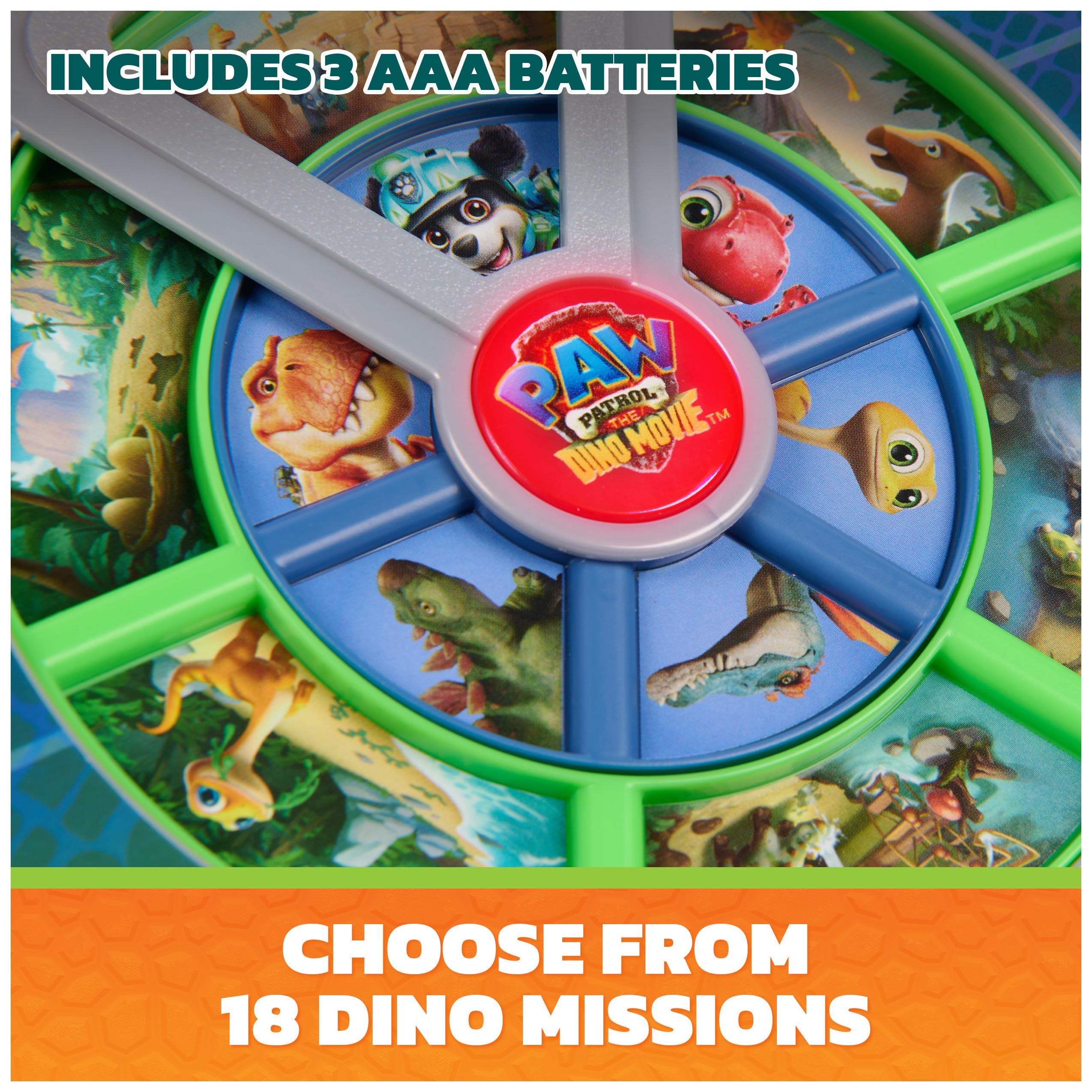
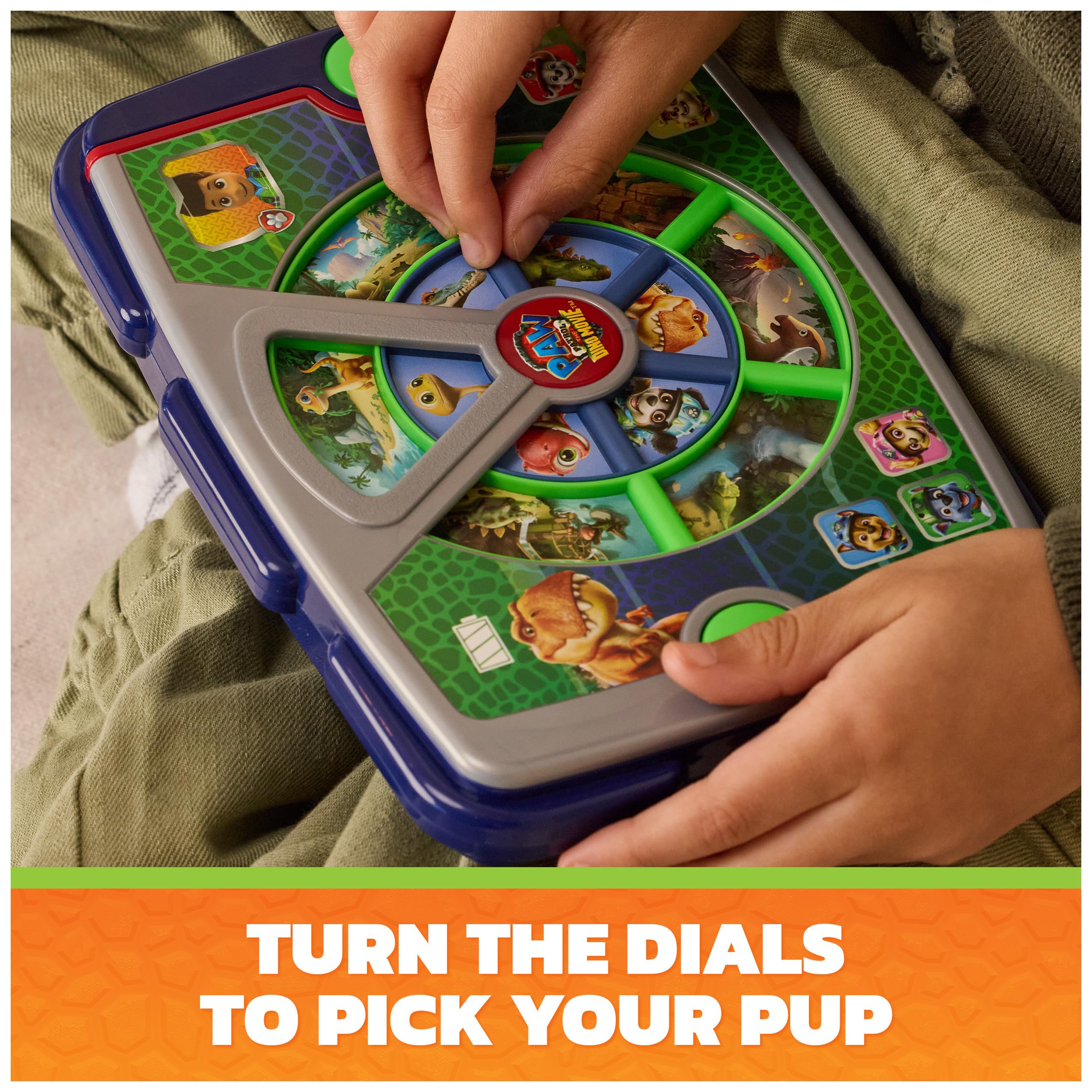
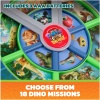
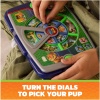
The pad’s central mechanic is its dials. Turning them selects from 18 distinct missions, each with its own audio prompt and light response. Because the input is physical rather than a touchscreen, a three-year-old can work it by feel: the dial has a definite grip, the movement is tactile, and there is immediate feedback when a mission locks in. This matters for the younger end of the age range, where fine motor control is still developing and precise taps on a smooth surface can be frustrating.
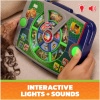
Eighteen missions give enough variety that a child does not exhaust the content in the first afternoon. Each one has its own combination of lights and sound effects drawn from the show and film, so the missions stay distinguishable from one another rather than blurring into a single repeated cue. Children generally learn the sequence and start anticipating which mission comes next, which becomes part of the appeal, they enjoy demonstrating the full set to whoever will listen.
The form factor is a flat handheld pad sized for small hands, with a chunky profile that suits being carried around rather than set on a table. The product ships as a single item, listed by the manufacturer under model number 6076494 with UPC 681147123823. Check the packaging for battery requirements and whether demo batteries are included before wrapping it as a gift, since electronics in this category vary and it is a familiar disappointment when a toy cannot be switched on the moment it is opened.
Play Value at Home and On the Go
The most common way this toy gets used is as a prop that organizes other play. A child selects a mission, announces it, and then directs whatever figures, vehicles, plush, siblings, or pets are available to carry it out. In that role the pad does something useful that a static figure does not: it supplies the premise. Children who stall out on “what should we play” often get moving faster when a device hands them a scenario, and the 18 missions mean the scenario changes each time.
It also works reasonably well as a solo toy. A child can sit with it, cycle through missions, and narrate their own responses, which is quieter than most vehicle play and does not require floor space. That makes it a candidate for car rides, waiting rooms, restaurant tables, and hotel rooms. If you plan to use it in public, note that it is a lights-and-sounds toy, so it will be audible; consider whether the volume level suits the settings you have in mind before relying on it as a quiet-time option.
There is a modest language and sequencing benefit alongside the pretend play. Missions are framed as problems that need a response, and children practice listening to a prompt, repeating it, and inventing the steps that follow. Parents often find they can extend it by asking which pup would be best for a given job and why. None of this is instructional in a formal sense, and the toy makes no educational claims, but the mission structure gives adults an easy hook for joining in rather than watching from the side.
Age Guidance, Care, and Everyday Durability
The stated minimum age is 3 years, and that guidance is worth following. Toys in this category are not intended for children under three, and the age marking reflects safety testing as well as how usable the controls are. The upper end of the manufacturer range is 9 years, though in practice interest tends to peak between roughly 3 and 6, with older siblings dipping in when the movie is fresh.
Construction is molded plastic in the style Spin Master uses across its PAW Patrol electronics, designed to survive being dropped on a hard floor, carried by one corner, and taken outside. Like any handheld electronic, it is not waterproof. Sand, bath water, and juice are the usual culprits behind a pad that stops responding, so it is worth setting a house rule about where it can go. Clean it with a slightly damp cloth and dry it right away rather than rinsing it.
Two housekeeping points are worth knowing up front. The manufacturer lists no warranty on this item, so keep your receipt and check the retailer’s return window if something arrives faulty. And the battery compartment on toys of this type is normally secured with a screw, keep a small screwdriver on hand, keep loose batteries away from young children, and remove the batteries if the pad is going into storage for a long stretch so nothing corrodes inside.
Why It Fits the PAW Patrol Universe
The pup pad has been part of PAW Patrol since the beginning. It is how Ryder reaches the team, how missions get assigned, and how the show signals that the story is about to start. Handing a child their own version puts them in the position of the person who calls the pups in, which is a genuinely different role from the one they get with a vehicle or figure, and for many children it is the one they most wanted.
The Dino Movie theming extends that into the film’s dinosaur rescue storyline, keeping the pad current with what children are seeing on screen while staying compatible with everything else in the collection. It sits comfortably alongside Chase, Marshall, Skye, Rubble, Rocky, Zuma, and the wider cast, and it works just as well with the film’s newer faces. Because it directs play rather than being the object of it, it tends to increase the use a household gets out of the figures and vehicles it already owns.
For parents deciding between this and another PAW Patrol toy, the useful distinction is function. Figures and vehicles are things to move; this is a thing to operate and announce with. If your child is the one narrating, assigning jobs, and telling everyone else what to do, the pup pad matches how they already play, and the 18 missions give that instinct plenty to work with.