What This Backpack Is and Who It’s For
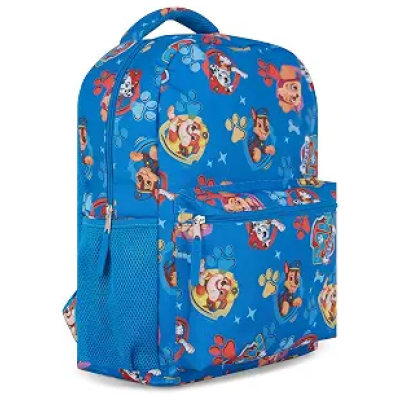
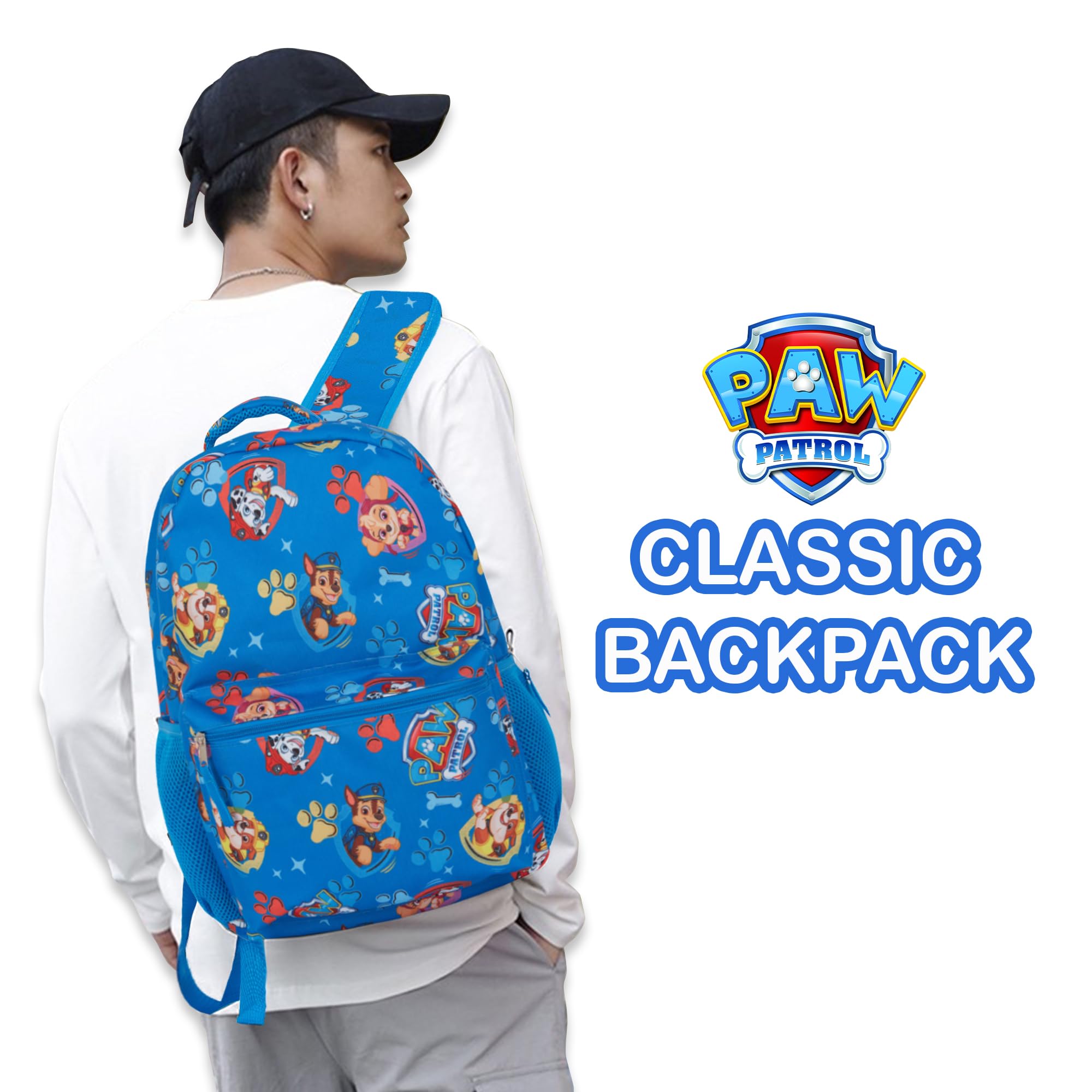
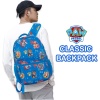
This is a full-size PAW Patrol school backpack in blue, built for kids who are ready to carry their own gear to preschool, daycare, kindergarten, or elementary school. It features the core PAW Patrol team across the front panel, Chase, Skye, Marshall, Rubble, Rocky, Zuma, Everest, Liberty, and Ryder, so most kids will find their favorite pup somewhere in the lineup rather than having to settle for a single-character design.
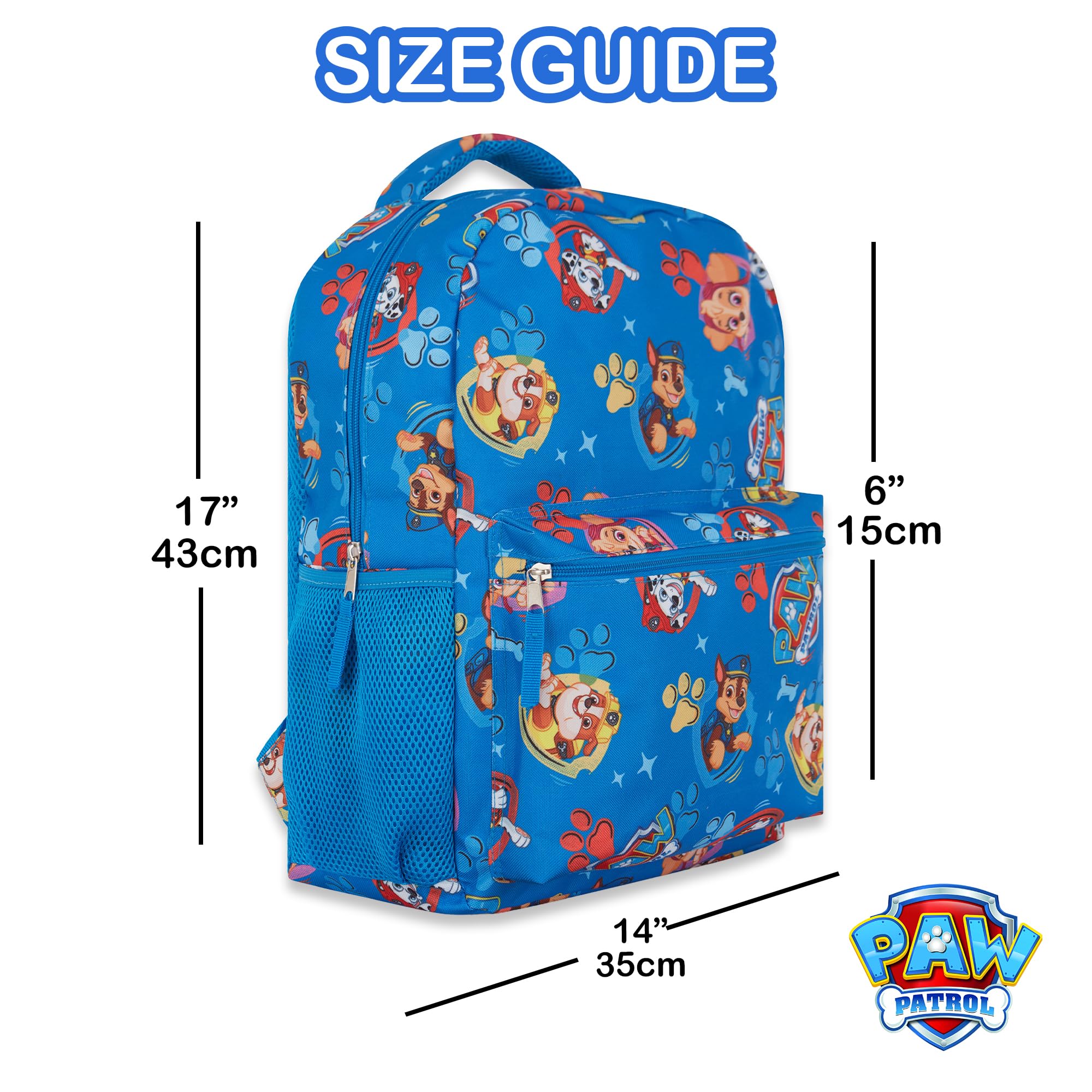
The sizing is genuinely flexible. Adjustable shoulder straps mean it can be shortened for a toddler’s frame or let out as a child grows, and the bag is roomy enough that an older sibling or a parent can carry it comfortably on a family trip. Practically speaking, that makes this a bag families tend to keep for more than one school year. If you have a two-year-old who wants a “big kid” backpack and a six-year-old who needs something that actually holds a folder without bending it, this sits in the range that works for both.
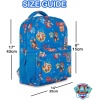
It’s worth being honest about scale: this is a standard school-size backpack, not a mini toddler pack. For a very small two-year-old, it will look large on their back, and you may want to keep it lightly loaded at first. For kids four and up, the proportions land where you’d expect a regular school bag to land.
Design and Everyday Features
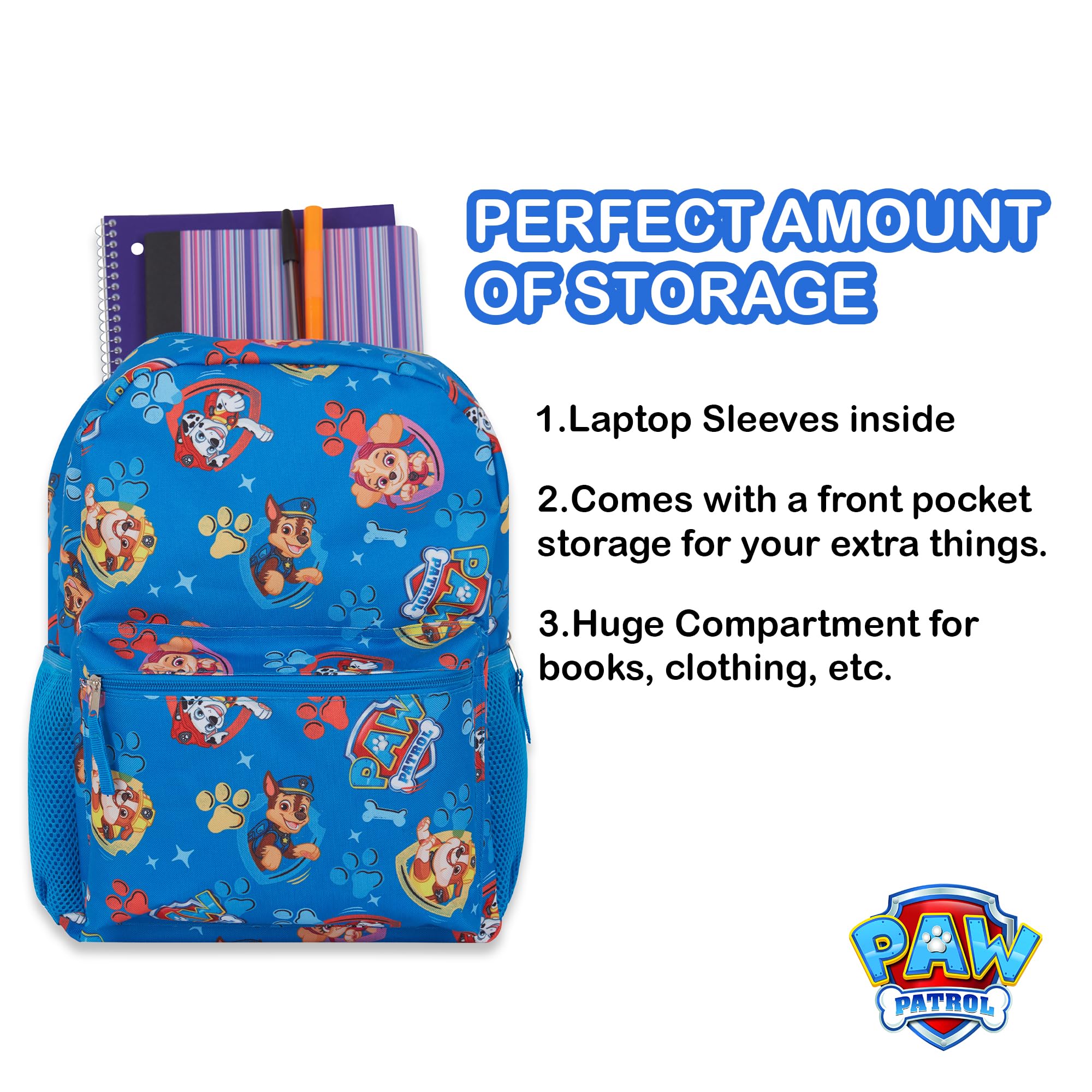
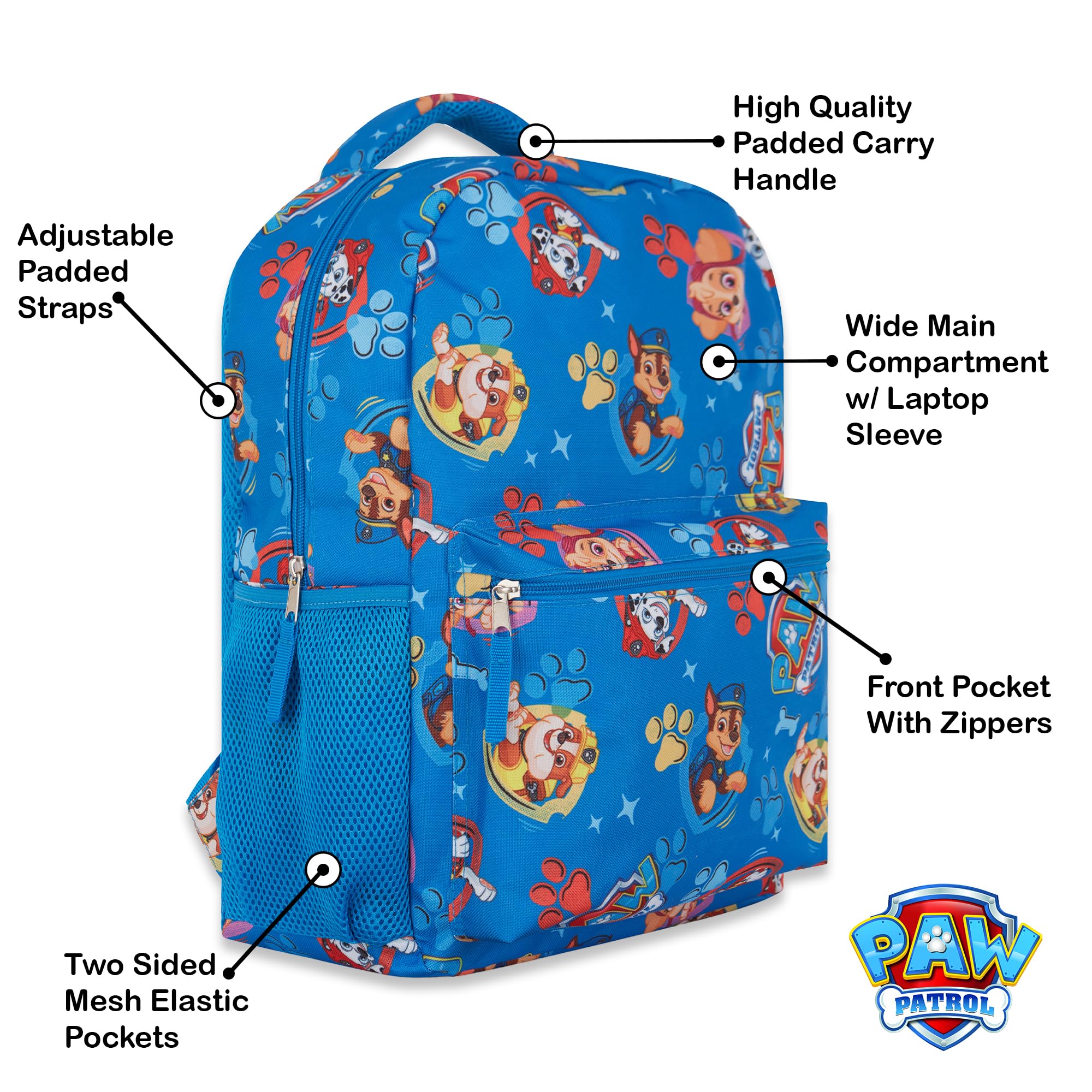
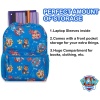
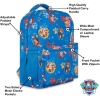
The bag is organized around three compartments plus a utility pocket. The main compartment is the deepest and handles the bulk of the load, folders, a change of clothes, a jacket, library books. The second compartment gives you somewhere to put the things you don’t want crushed under everything else, and there’s a padded sleeve area designed to hold a laptop or tablet, which is what makes this bag carry over into upper-elementary years and, for adults, into everyday commuting use.
The utility pocket on the outside is the one your child will actually use most. It’s the right spot for a snack, a small water bottle pouch, hand sanitizer, or the note from the teacher that would otherwise get lost in the bottom of the bag. Getting a kid into the habit of “important things go in the front pocket” is easier when there’s exactly one obvious front pocket rather than five competing options.
Everything closes with zippers, which is deliberate. Zippers are the closure most kids master early, and unlike buckles or drawstrings, they don’t require adult help at the classroom cubby. The shoulder straps are a standard two-strap harness, adjustable on both sides so you can even out the fit rather than letting the bag pull to one shoulder.
The exterior is water resistant. That’s a meaningful distinction from waterproof, it will shrug off a walk through drizzle, a spilled juice box, or a bag set down on wet playground mulch, and the contents inside stay dry. It is not designed to be submerged or to survive being left out in a downpour, so a rainy-day plan still means a rain cover or a hood over the bag.
How It Works in Daily Use
The lunch box question comes up often, so here it is plainly: the bag is sized to carry a standard soft-sided lunch box inside one of its compartments, which is usually the setup parents want for younger kids. A lunch box that rides inside the backpack doesn’t swing, doesn’t get left on the bus seat, and doesn’t need a second thing for a five-year-old to keep track of. Rigid or oversized lunch containers may fit better clipped to the outside or carried separately, depending on the shape.
Beyond school, this is a reasonable travel bag for a kid. On a flight or a long car ride, three compartments let you separate quiet activities from snacks from the tablet, and a child who packs their own bag is a child who stays occupied without asking you to dig through a suitcase. Same logic applies to overnights at a grandparent’s house or a weekend at the pool.
There’s a small developmental benefit worth naming. When a bag has clear internal divisions, kids start learning where things belong and can find their own homework folder without a parent unpacking for them. That routine, put it away in the same place every time, is one of the first real organizational habits kids build, and it’s easier when the bag itself does some of the teaching.
Durability, Safety, and Fit Notes
The construction points to the parts of a backpack that fail first. Zippers and strap anchors are where kids’ bags typically give out, and the zipper closures here are the pull-style found on standard school bags, worth a quick check every few months to make sure nothing has separated at the base of the track. The shoulder harness is a conventional two-strap design, which distributes weight across both shoulders instead of the single-strap slings that tend to pull kids’ posture to one side.
On loading: pediatric guidance generally suggests keeping a loaded backpack under about 10 to 15 percent of a child’s body weight. For a 40-pound kindergartner, that’s roughly four to six pounds, which is a folder, a lunch box, and a water bottle, not a full set of hardcover books. The capacity here exceeds what a small child should be carrying, so the limit is your child’s frame, not the bag.
Adjust both straps to the same length so the bottom of the bag sits at the child’s lower back rather than sagging below the hips. A bag that hangs too low pulls the shoulders backward and makes stairs harder to manage. Check the adjustment at the start of each school year; kids grow more than parents expect between September and June.
For cleaning, spot-clean with mild soap and water and let it air dry fully. Skip the washing machine and the dryer, heat and tumbling are hard on printed graphics and on the structure of a bag with a laptop sleeve. Between uses, empty it completely and leave it unzipped overnight if anything damp went inside.
Why the PAW Patrol Lineup Matters Here
Part of what makes PAW Patrol work for this age group is that every pup has a defined job. Chase handles police and traffic work, Marshall is the firefighter and medic, Skye flies, Rubble runs construction, Rocky recycles and repairs, Zuma covers water rescue, Everest handles snow, and Liberty joined the crew from Adventure City. Ryder is the kid who coordinates them all. The show’s basic idea, a problem shows up, the right pup gets called, everyone helps, is the same idea behind a kid packing their own bag: identify what you need, get it where it belongs.
Featuring the full team rather than one character has a practical upside. Favorites shift, sometimes in a single week, and a bag with nine pups on it stays relevant when your child moves from a Chase phase to a Skye phase. It also makes the bag easier to hand down to a younger sibling whose favorite is someone else entirely.
For kids just starting school, the familiar characters do real emotional work. A first day is a lot to handle, and having something recognizable on your back, a crew your child already knows solves problems and takes care of each other, makes the walk into a new classroom a little less daunting. That’s a modest thing, but parents of nervous four-year-olds tend to find it isn’t nothing.