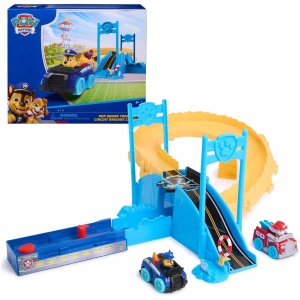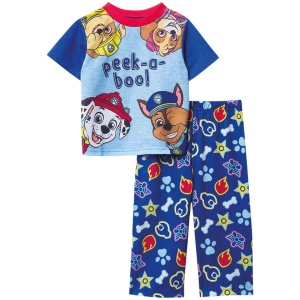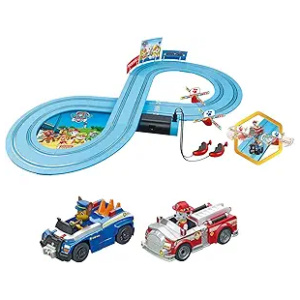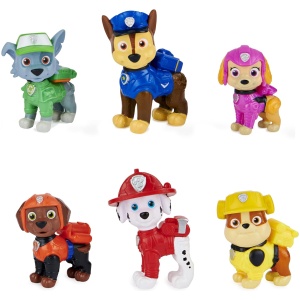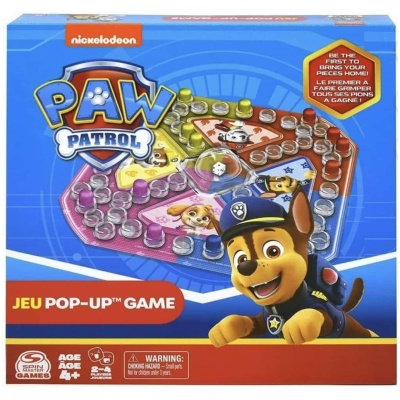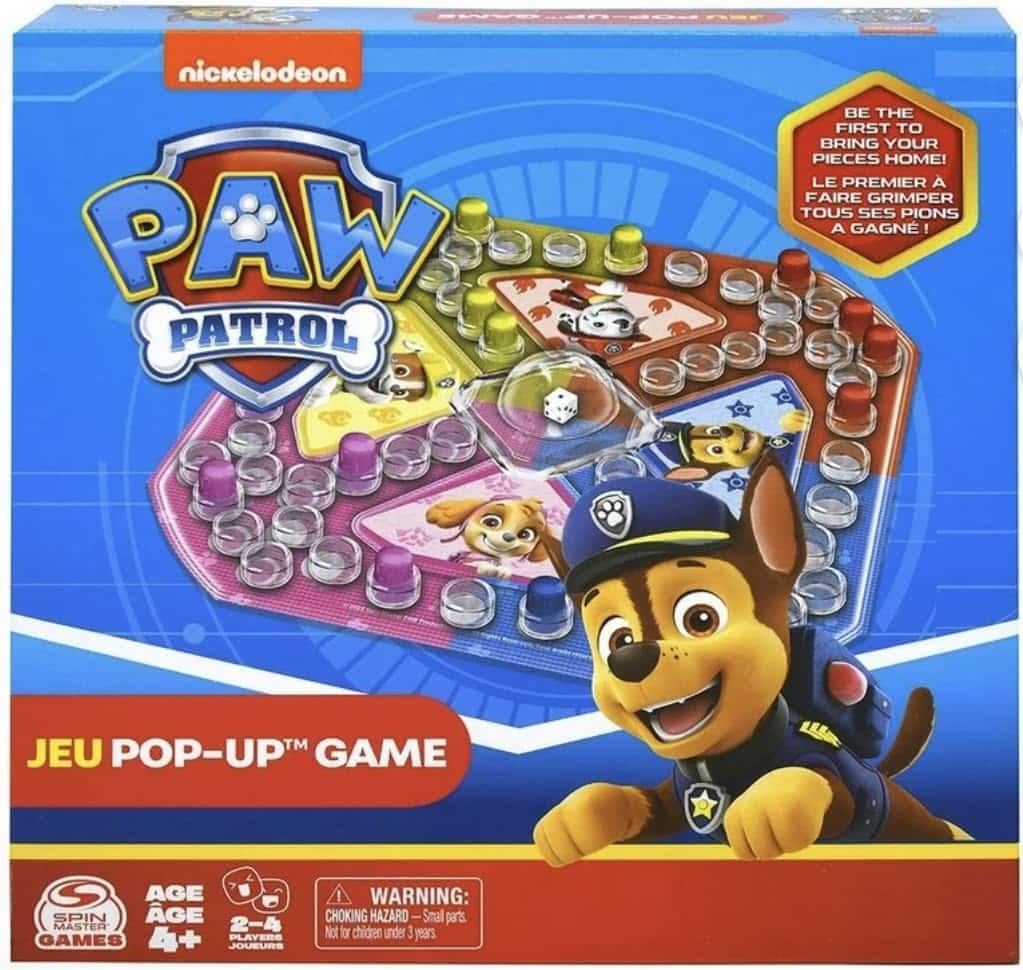
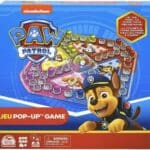
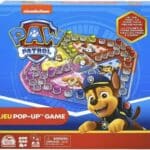
The box is small. You open it, and there is a plastic board, some colored pawns, and a folded instruction sheet. That is all. But if you have a four-year-old who has watched every episode of Paw Patrol three times, that box is a promise. The promise is not about winning. It is about the moment when the plastic pup pops up and your child shrieks.
What this game actually is
It is a board game for 2 to 4 players, aimed at children aged four and up. The board is about the size of a small laptop, roughly ten and a half inches square. The pawns are plastic, bright, and shaped like the Paw Patrol characters. You set them up, you take turns, and you race around the board. The central gimmick is a pop-up mechanism: when you land on a certain space, a plastic figure springs up. It is a simple physical surprise, not a digital one. No batteries. No screens. Just a spring and a piece of molded plastic.
The instructions are straightforward. A four-year-old can grasp the basic turn-taking after one round. Older siblings, say a six or seven-year-old, will understand the rules immediately. The game lasts about fifteen minutes. That is important. Fifteen minutes is long enough to feel like a real game, but short enough that nobody starts crying or wandering off.
What actually changes when you play it
You sit on the floor. The board is between you and your child. For those fifteen minutes, you are not telling them to brush their teeth or pick up their toys. You are both staring at the same plastic board, waiting for the pop. The game creates a shared focus. That is rare. A child who struggles with losing will learn, slowly, that the game ends and then you play again. The pop-up is not a punishment. It is just a surprise. Sometimes you pop, sometimes you don’t. That is the whole emotional arc.
For a parent, the real change is this: you have something to do together that does not require you to perform. You do not have to do voices. You do not have to build anything. You just move a pawn and wait. The game does the work.
What you get in the box
- A plastic game board, roughly 10.5 inches square and 1.75 inches tall. It is sturdy enough for a four-year-old to slam a pawn down on without breaking it.
- 16 colored pawns. Each one is a different Paw Patrol character. They are small, so keep an eye on them if you have a toddler who puts things in their mouth.
- One instruction sheet. It is written in clear English. No confusing diagrams.
- The whole thing is plastic. It wipes clean with a damp cloth. That matters when sticky fingers are involved.
- Ages 4 and up. That is the manufacturer’s recommendation. I would not push it much younger.
- 2 to 4 players. Works best with two or three. With four, the downtime between turns gets a bit long for the youngest players.
Who this game is for
It is for the parent who wants a board game that a preschooler can actually play without needing constant help. It is for the grandparent who wants something to pull out during a visit that does not require reading or complex rules. It is for the birthday party where three kids are sitting on the floor and you need something that does not involve a screen.
It is also for the child who loves the characters. If your kid does not know who Chase or Marshall is, the game loses a lot of its appeal. The pop-up is fun, but the character recognition is half the draw.
Who it is not for
It is not for a child who is used to complex strategy games. This is pure luck. No decisions. You roll, you move, you pop. That is it. If your kid is seven or eight and already playing checkers, they will be bored after two rounds.
It is also not for a family that values high production values. The plastic is functional, not premium. The pawns are not painted with fine detail. They are molded plastic with stickers. The stickers may peel over time if handled roughly. That is a limitation worth noting.
Honest verdict
This is a simple game for a specific age range. It does one thing—create a shared, low-stakes activity for a preschooler and an adult—and it does that thing well. It will not teach strategy. It will not hold the attention of an older child. But for a four-year-old who loves Paw Patrol, it is a reliable fifteen minutes of focused fun. The pop-up mechanism is genuinely surprising the first few times. After that, it becomes a familiar rhythm. That is fine. Familiarity is what young children want.
If you are looking for a game that a grandparent can play with a grandchild without needing to read a long rulebook, this works. If you want something that will survive a few years of play, the plastic is adequate. The stickers will not last forever, but the game will still function. For the price, it is a fair trade.
It is not a great game. It is a good game for a very specific moment in a child’s life. That moment is worth having a game for.
Features
- This classic pop-up game is an exciting race around the board!
- Includes a plastic game board, 16 colored pawns and easy-to-follow instructions.
- Plastic. Ages 4+.
- Approx. 10 1/2"sq x 1 3/4"H.
- Number of players: 2-4
- See more product details
Updated on 30/05/2026
Frequently asked questions
What are the most popular PAW Patrol toys?
Is 7 too old for PAW Patrol?
What are the rarest PAW Patrol toys?
Are there any limited edition PAW Patrol toys?
Verified customer reviews
Reviews sourced from Amazon · data updated on every sync