When Rubble Comes to Life: A Sensory Companion for Curious Hands
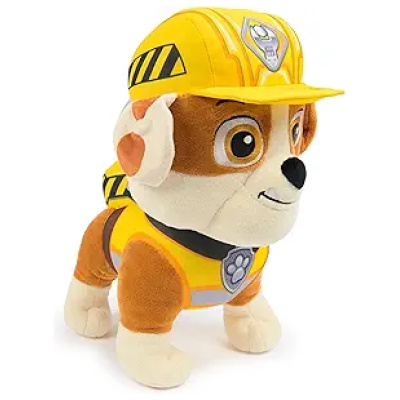
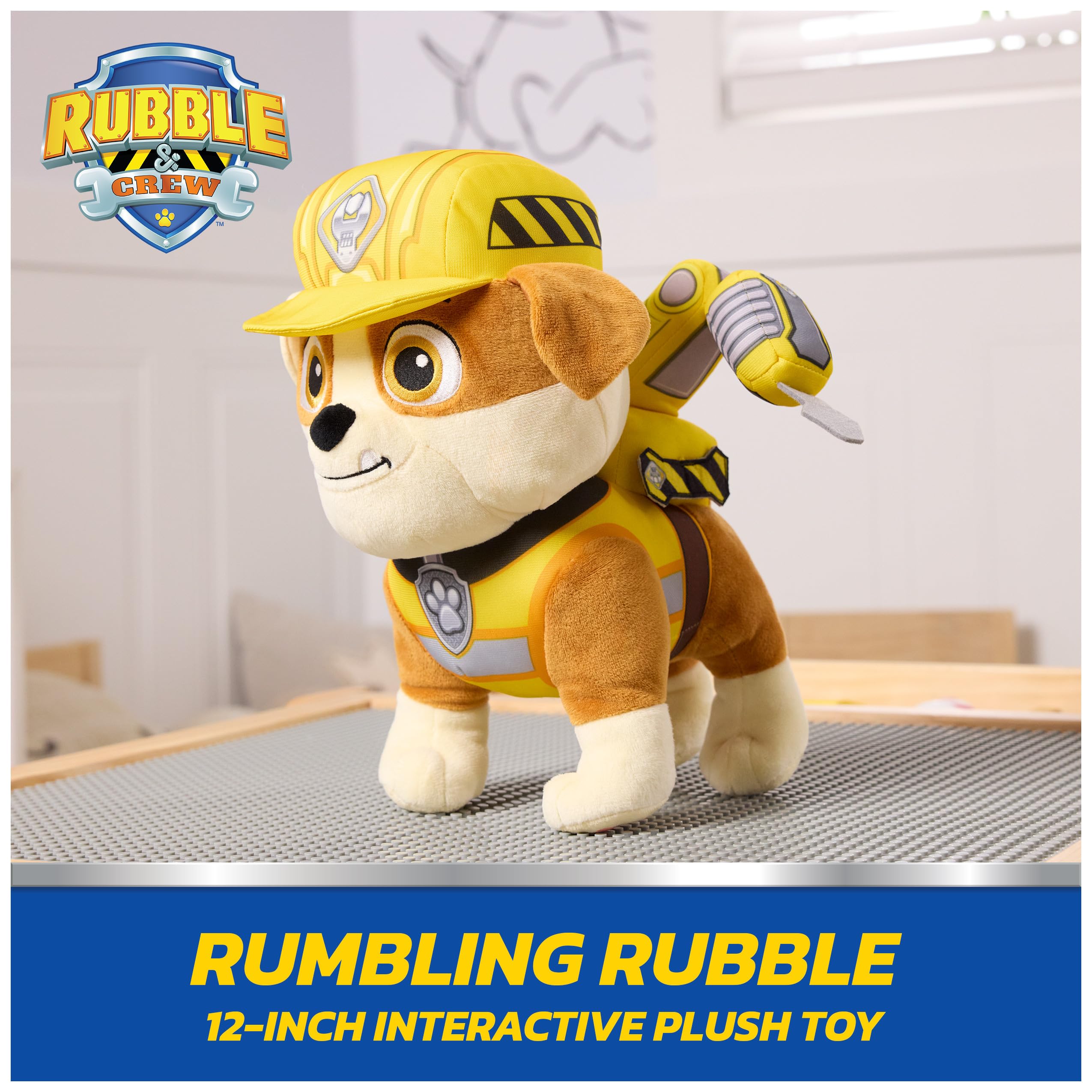
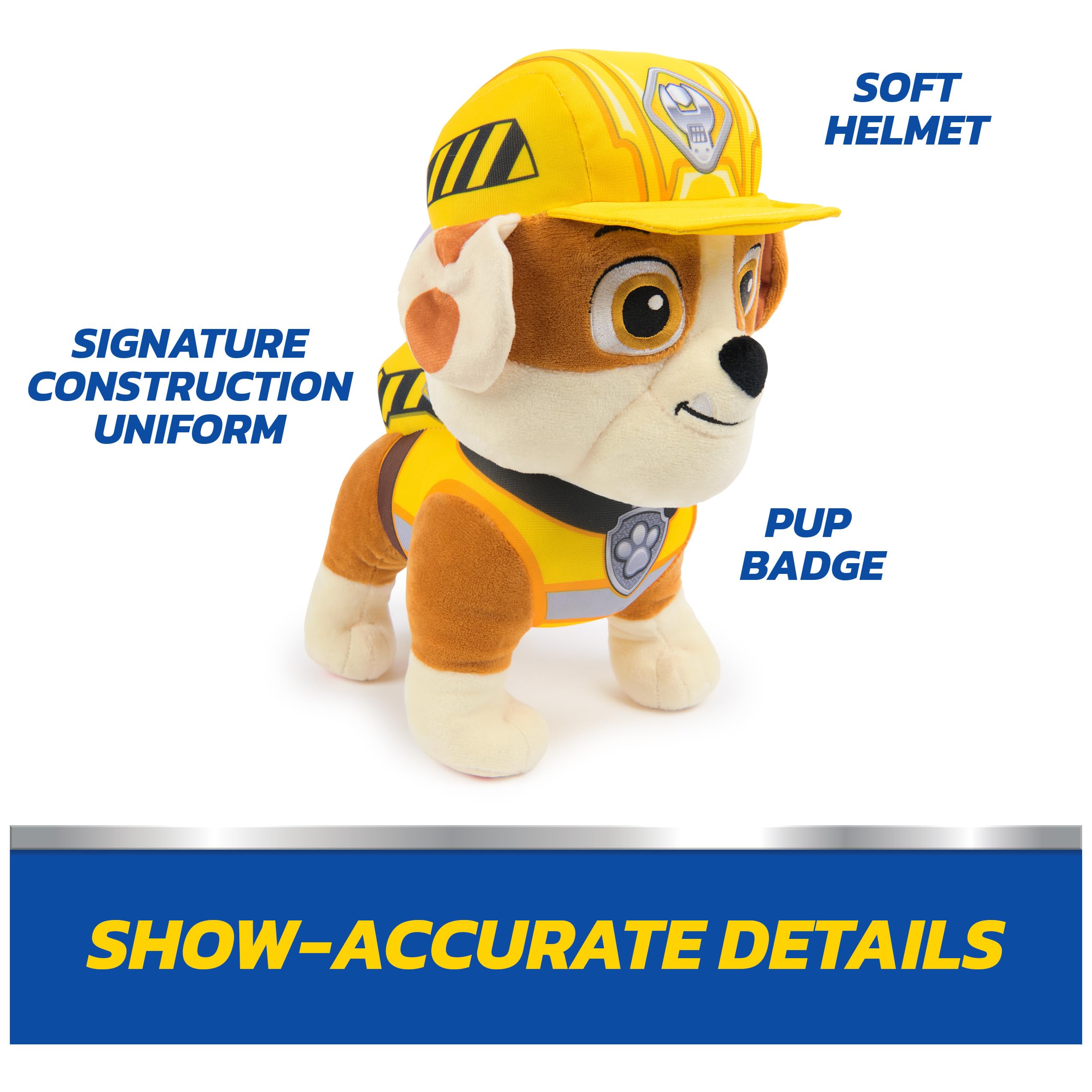
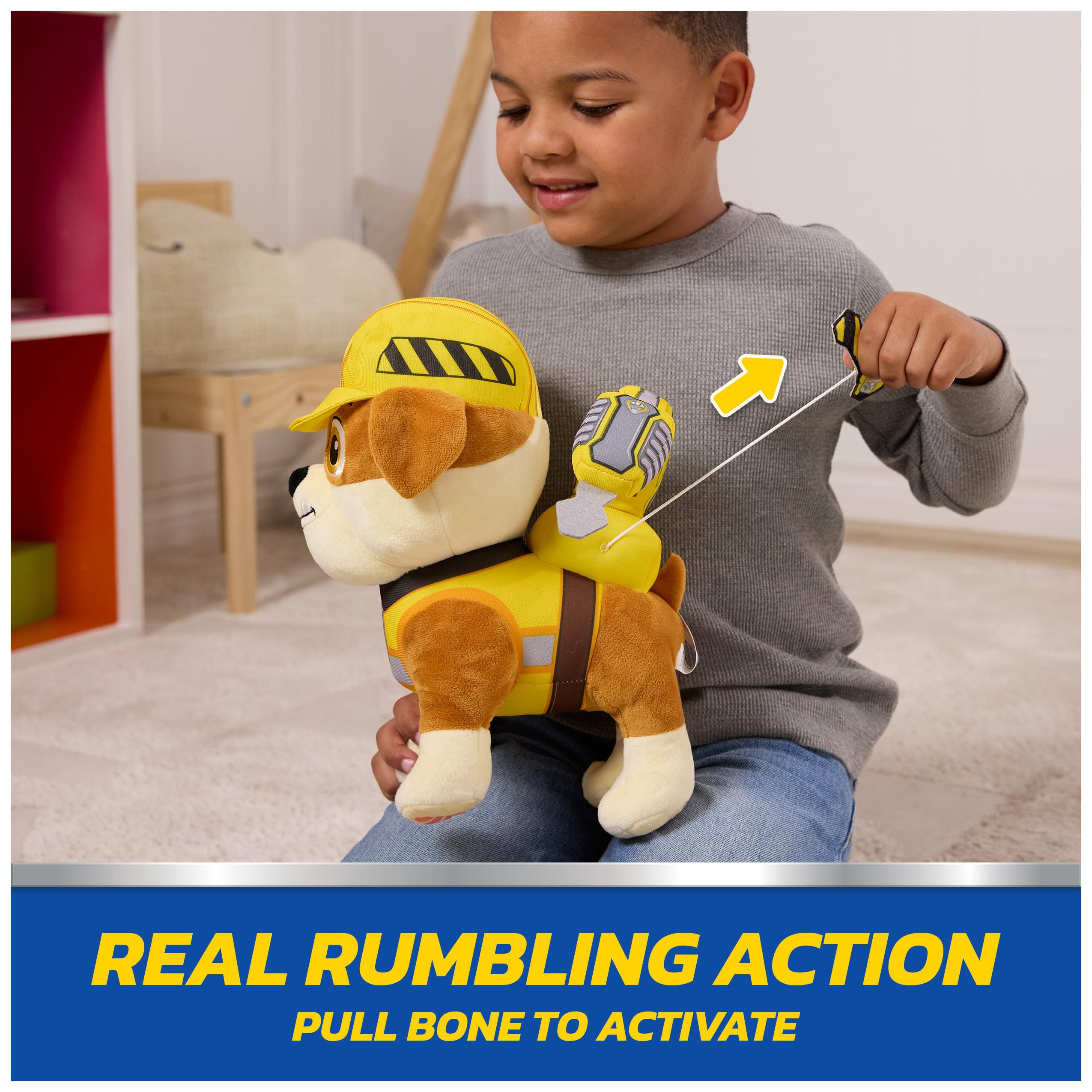
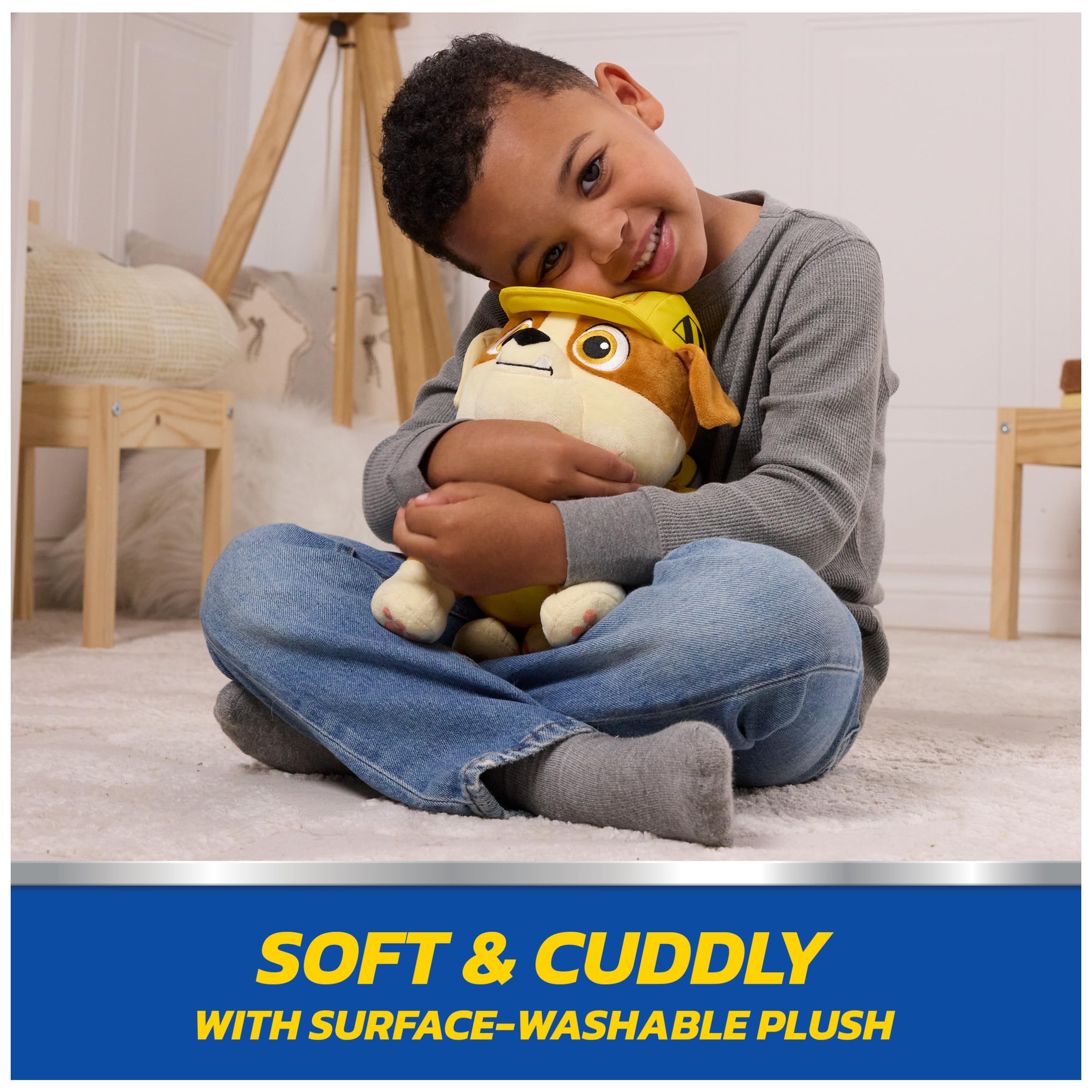
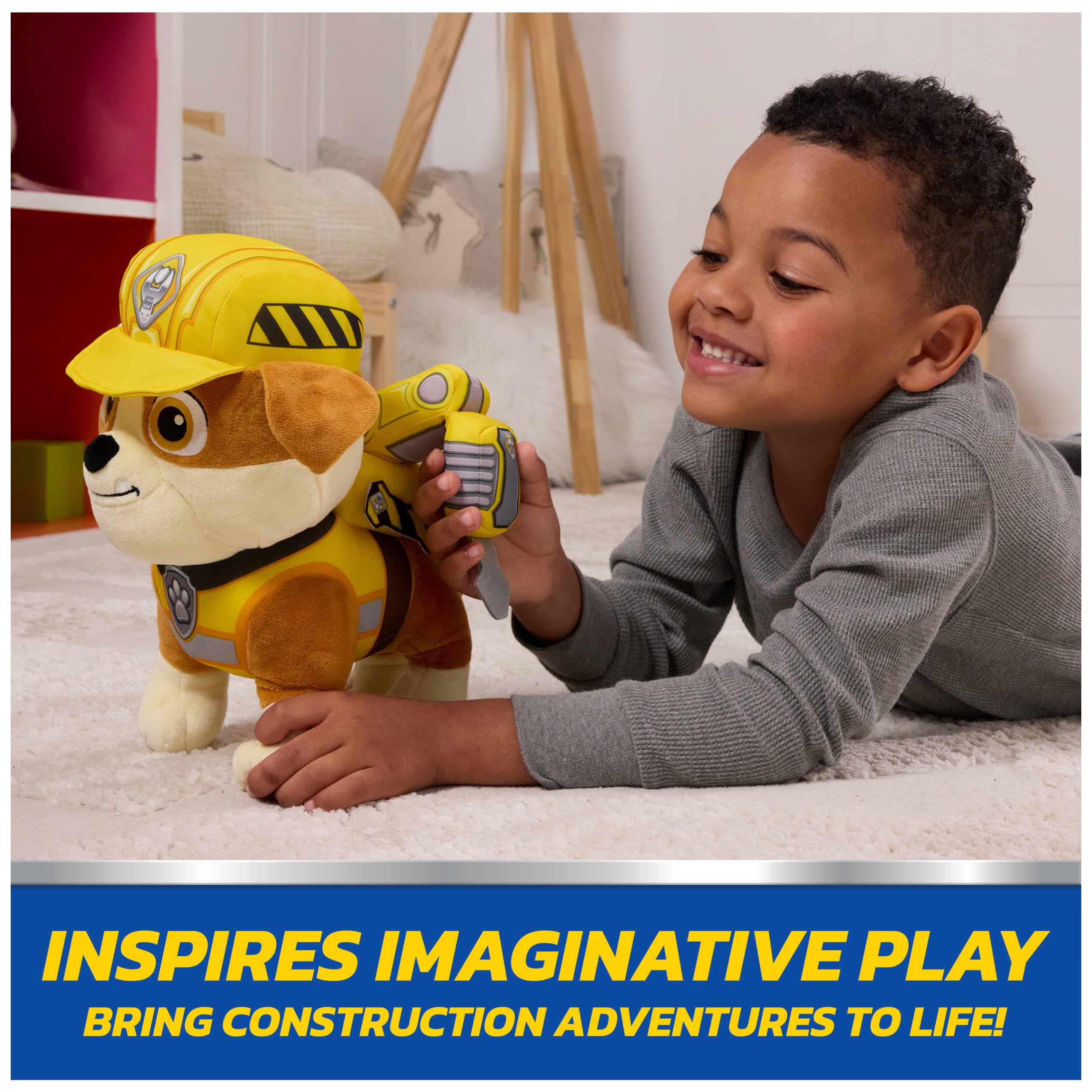
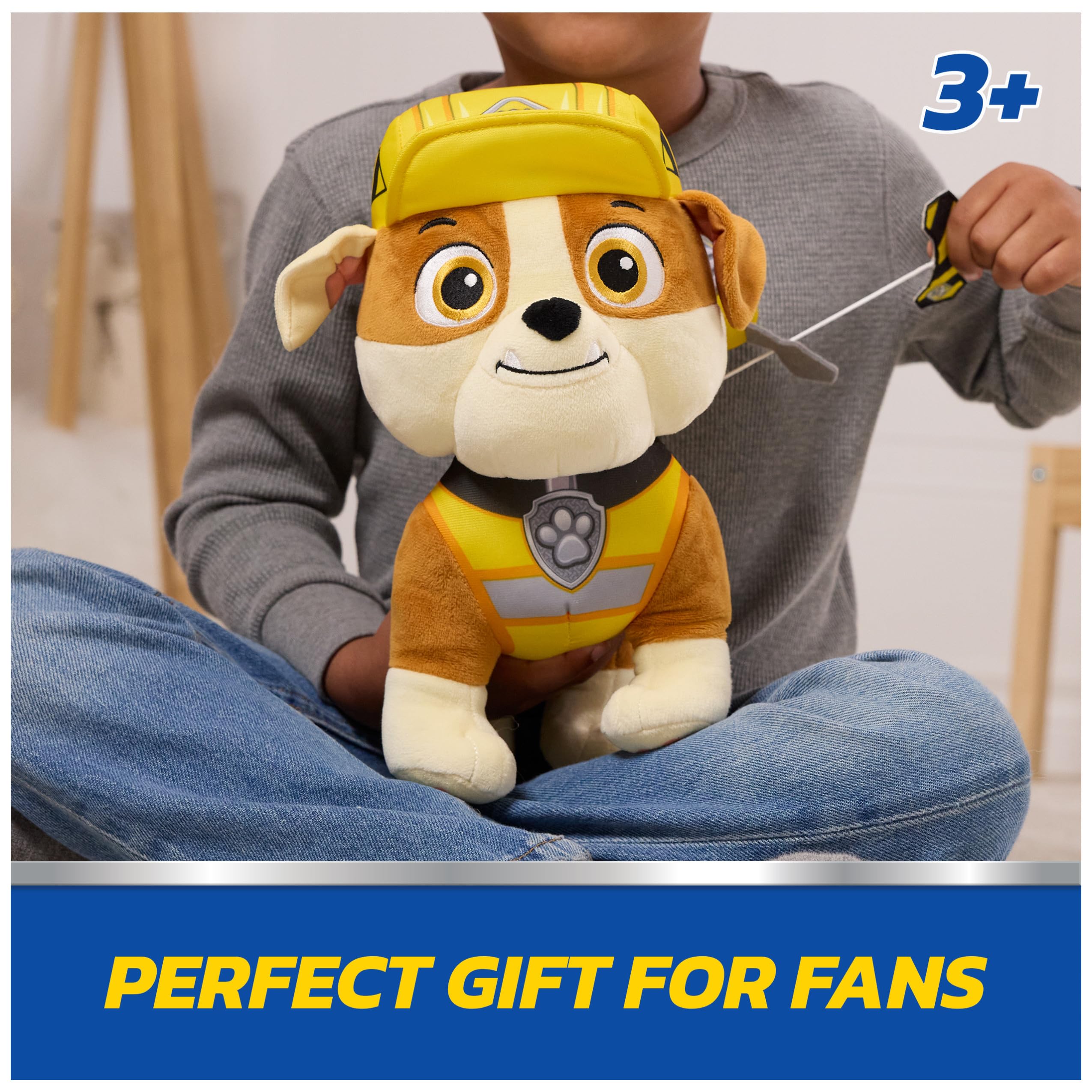
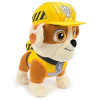
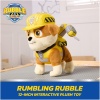
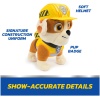
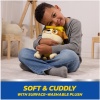
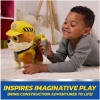
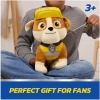
For parents of preschoolers who have watched their little ones follow Rubble’s construction adventures on screen, the transition from passive viewing to active, hands-on play is a natural and important milestone. The Spin Master Rubble and Crew Rumbling Rubble Plush Toy offers a bridge between the digital world of Adventure Bay and the tangible, reassuring world of a child’s own room. Designed for children aged three years and up, this 12-inch stuffed animal is not merely a static toy; it is an interactive sensory tool that responds to a child’s touch in ways that encourage exploration, cause-and-effect understanding, and emotional connection. Unlike many plush toys that simply sit on a shelf, this Rubble plush is engineered to rumble and vibrate when pressed, providing a multi-sensory experience that can be both calming and engaging. The toy’s construction reflects Spin Master’s attention to developmental appropriateness, with soft, huggable materials that invite repeated interaction. For parents seeking a toy that supports fine motor skill development through pressing and squeezing, while also offering the comfort of a familiar character, this interactive plush serves a dual purpose. It is a tool for quiet play, a companion for story time, and a gentle introduction to cause-and-effect relationships. The toy’s design also acknowledges that children at this age are often in a phase of intense sensory exploration, where texture, sound, and movement are key to understanding their environment. By integrating a gentle rumbling action, the toy provides a novel tactile feedback that can help a child focus or self-regulate. This is not a toy that demands a specific outcome or correct answer; instead, it invites open-ended play where the child is in control. The familiar face of Rubble, with his signature yellow hard hat and construction vest, ensures that the toy is immediately recognizable and beloved, reducing the learning curve and allowing the child to dive straight into imaginative scenarios. Whether your child is building a block tower that Rubble can “demolish” or simply snuggling with him during a quiet moment, this plush offers a reliable, responsive presence that grows with the child’s play patterns.
Understanding the Rumbling Mechanism: How Touch Triggers Response
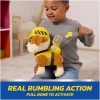
The core interactive feature of this Rubble plush is its rumbling function, which is activated by a simple press on the toy’s body. This is not a complex electronic system that requires batteries or charging; instead, it relies on a mechanical or vibration-based module embedded within the plush’s interior. When a child applies pressure to Rubble’s torso or specific areas, the mechanism engages, producing a low, gentle vibration that mimics the feeling of a small motor or a purring animal. This design choice is intentional: it provides a sensory output that is predictable and repeatable, allowing the child to learn that their action (pressing) leads to a consistent reaction (rumbling). For children in the three-to-five age range, this cause-and-effect relationship is a fundamental cognitive building block. The rumbling is not loud or startling; it is a subtle, tactile sensation that can be felt through the fabric, making it particularly appealing to children who are sensitive to auditory stimulation or who prefer quiet play. The mechanism is housed in a way that does not compromise the softness or huggability of the toy. The plush remains fully poseable and cuddly, with the rumbling module discreetly placed so that it does not create hard or uncomfortable spots. Parents should note that the toy is designed for indoor use and is not intended for submersion in water or exposure to moisture, as this could damage the internal mechanism. The rumbling function is not continuous; it typically lasts for a few seconds after each press, encouraging the child to repeat the action to maintain the sensory feedback. This repetitive interaction can be particularly beneficial for children who are working on fine motor skills, as it requires a deliberate, coordinated press rather than a random squeeze. The toy’s response is immediate, which helps maintain the child’s engagement and reinforces the connection between their action and the toy’s reaction. For children who enjoy sensory play, this rumbling feature offers a new dimension to traditional plush play, transforming a static object into an active participant in the child’s world. It is important to manage expectations: the rumbling is not a substitute for a full electronic toy with lights or sounds, but rather a focused, tactile experience that complements other forms of play.
Material Composition and Safety: What Parents Should Know About Construction
The Rubble Rumbling Interactive Plush is constructed from a blend of polyester fibers and synthetic fabrics, which are standard in the plush toy industry for their durability, softness, and ease of cleaning. The outer shell is made from a short-pile plush fabric that is gentle against a child’s skin, reducing the risk of irritation during prolonged cuddling or play. The stuffing is a hypoallergenic polyester fiberfill that provides the toy with its shape and squishability, while also being resistant to dust mites and mold, which is a consideration for families with allergy concerns. The internal mechanism is encased in a sealed fabric pouch to prevent direct contact with the stuffing or the child, adhering to safety standards for toys intended for children aged three and up. All materials used in the toy are compliant with the Consumer Product Safety Improvement Act (CPSIA) in the United States and equivalent regulations in other markets, meaning they have been tested for lead, phthalates, and other harmful substances. The toy’s seams are reinforced with double stitching, particularly around areas of high stress like the limbs and the head, to withstand the pulling, hugging, and pressing that are typical of active play. The eyes and nose are embroidered directly onto the fabric, eliminating the risk of small parts detaching and becoming choking hazards. This is a critical safety feature for children who are still in the oral exploration phase, as it ensures that no plastic or metal components are accessible. The hard hat and construction vest are also sewn into the design, not glued or attached with Velcro, further reducing the risk of small parts. The toy’s weight is balanced to allow for easy handling by small hands, and the 12-inch size is large enough to be huggable but not so large that it becomes cumbersome for a preschooler to carry around. For cleaning, the manufacturer recommends spot cleaning with a damp cloth and mild soap, as the internal mechanism is not designed for machine washing or submersion. Parents should avoid using bleach or harsh chemicals, as these can degrade the fabric and the mechanism’s housing. The toy is not intended for use in cribs or with children under three years of age due to the presence of the internal mechanism, which could pose a risk if tampered with. For families with multiple children, the toy’s durable construction means it can withstand shared play, though the rumbling mechanism may become less responsive over time with excessive force. Overall, the material choices reflect a balance between comfort, safety, and longevity, making this a suitable addition to a child’s toy collection.
Developmental Benefits: How This Toy Supports Fine Motor and Sensory Growth
The Rubble Rumbling Plush is more than a novelty; it is a tool that can support several areas of developmental growth in children aged three to five. The primary benefit lies in its ability to encourage fine motor skill development through the pressing action required to activate the rumbling. This action engages the small muscles in the hand and fingers, particularly the thenar eminence (the pad of the thumb) and the flexor muscles of the fingers. Repeated pressing helps strengthen these muscles, which are essential for later skills such as writing, buttoning, and using scissors. The toy does not require a specific grip, allowing children to experiment with different hand positions, using a single finger, the palm, or the whole hand, which promotes motor planning and coordination. Beyond fine motor skills, the toy offers significant sensory input. The vibration from the rumbling mechanism provides proprioceptive feedback, which is the sense of body position and movement. This type of input can be calming for children who are sensory seekers or who have difficulty with self-regulation. The gentle, rhythmic vibration can help a child focus during quiet activities, such as listening to a story or winding down before bed. The toy also supports cognitive development through cause-and-effect learning. When a child presses Rubble and feels the rumble, they are learning that their actions have predictable outcomes. This understanding is foundational for problem-solving and logical thinking. The toy’s open-ended nature means that a child can use it in various ways: pressing hard for a strong rumble, pressing softly for a subtle one, or pressing multiple times in succession to create a pattern of vibrations. This encourages experimentation and hypothesis testing. Socially, the toy can be a bridge for imaginative play. Children often project emotions onto their toys, and Rubble’s friendly face and interactive feature can facilitate role-playing scenarios where the child takes care of Rubble, makes him “work” on a construction site, or comforts him. This type of play supports emotional development and empathy. For children who are shy or have difficulty expressing themselves, the toy can serve as a non-judgmental companion that responds to their touch, building confidence in their ability to influence their environment. The toy’s size and weight are also appropriate for developing gross motor skills, as children will carry, hug, and move the toy around their play space. It is important to note that the toy is not designed to replace occupational therapy or specialized interventions, but it can be a valuable addition to a child’s play routine, offering targeted sensory and motor challenges in a fun, familiar package. Parents may observe that their child gravitates toward the toy during times of stress or excitement, using the rumbling as a self-soothing mechanism. This is a positive sign that the toy is meeting an emotional need.
Integrating Rubble into Daily Play Routines: Practical Ideas for Parents
To maximize the value of the Rubble Rumbling Plush, parents can incorporate it into a variety of daily activities that go beyond simple cuddling. One effective approach is to use the toy as a tool for transition times, such as moving from active play to a calmer activity. For example, after a period of running or roughhousing, invite your child to sit with Rubble and press his tummy to feel the rumble. This can serve as a physical cue to slow down and regulate their energy. The vibration can be paired with deep breathing exercises: ask the child to press Rubble while taking a slow breath in, then release the press while breathing out. This simple technique can help a child learn to self-calm. During story time, Rubble can become a character in the narrative. If you are reading a Paw Patrol book, have the child press Rubble to make him “rumble” when he is working on a construction task in the story. This adds a tactile dimension to the reading experience, keeping the child engaged and reinforcing comprehension. For children who are working on fine motor skills, create a simple game where the child must press Rubble with different parts of their hand: the thumb, the index finger, the palm, or even their elbow. This can be turned into a silly challenge that builds hand strength without feeling like a chore. The toy also works well in sensory bins. Place Rubble in a bin filled with dried beans, rice, or kinetic sand, and let the child dig him out. Once found, they can press him to feel the rumble through the sensory material, adding an extra layer of tactile exploration. For children who are learning about cause and effect, you can set up a simple ramp or incline and have the child place Rubble at the top. When they press him, the vibration may cause him to slide down slightly, demonstrating how movement can be initiated by force. This can lead to conversations about physics and motion in a playful context. The toy can also be used as a reward or motivator. For instance, after a child completes a non-preferred task like brushing teeth or tidying up, they can earn a few minutes of pressing Rubble to feel the rumble. This positive reinforcement can make routine tasks more manageable. For children who have difficulty with transitions, such as leaving the park or turning off the TV, Rubble can be a “transition buddy.” The child can hold Rubble and press him during the transition, using the sensory feedback as an anchor. Parents should also consider using the toy during car rides or waiting times, as the quiet, tactile nature of the rumbling can be soothing in overstimulating environments. The key is to let the child lead the play; observe what they naturally do with the toy and build on those actions. If they enjoy pressing Rubble repeatedly, create a game where they count the presses. If they prefer to hug him, use that as a moment for connection and conversation. By integrating the toy into existing routines, parents can extend its usefulness beyond novelty and into a consistent part of the child’s day.
Comparing Interactive Features: How This Plush Differs from Standard Stuffed Animals
To understand the value of the Rubble Rumbling Plush, it is helpful to compare it directly with a standard, non-interactive stuffed animal. A typical plush toy offers comfort, companionship, and a canvas for imaginative play, but it remains a passive object. The child must supply all the action and response. The Rubble plush, by contrast, introduces a dynamic element: the rumbling feedback. This changes the nature of the interaction from one-way (child to toy) to two-way (child to toy to child). The toy responds to the child’s input, creating a loop of cause and effect that can be more engaging for many children. In terms of sensory input, a standard plush provides only tactile and visual feedback, the softness of the fabric and the appearance of the character. The Rubble plush adds proprioceptive and vibratory input, which can be more stimulating for children who seek sensory experiences. This can make the toy more appealing to children who might otherwise lose interest in a static plush after a short time. The interactive element also extends the play value. A standard plush might be hugged, tossed, or used in pretend play, but the Rubble plush invites specific actions (pressing) that can be repeated and varied. This can lead to longer, more focused play sessions. From a developmental perspective, a standard plush does not actively encourage fine motor skill development in the same way. While a child can squeeze a standard plush, there is no specific feedback that reinforces the action. The Rubble plush’s rumbling provides immediate reinforcement, which can motivate a child to repeat the pressing motion, thereby strengthening hand muscles. In terms of emotional regulation, a standard plush can be comforting through its presence and texture, but the Rubble plush offers an additional tool: the vibration can be used as a self-soothing mechanism. A child who is upset can press Rubble and feel the rumble, which can help them focus on a physical sensation and calm down. This is a feature that a standard plush cannot replicate. However, it is important to note that the interactive element also introduces a potential limitation: the toy requires the child to be in a certain state of mind to use it effectively. A child who is too tired or overstimulated may not have the coordination or patience to press the toy correctly. In such cases, a standard plush might be more appropriate for simple comfort. Additionally, the interactive mechanism adds weight and complexity to the toy. The Rubble plush is slightly heavier than a comparable standard plush of the same size, and it requires care to avoid damaging the mechanism. Standard plush toys are often machine washable, while the Rubble plush is spot-clean only. For families who prioritize ease of cleaning, this is a consideration. The price point of an interactive plush is typically higher than a standard one, reflecting the added engineering and materials. Parents should weigh these factors against the potential benefits. For a child who is particularly drawn to sensory play, who enjoys cause-and-effect toys, or who needs additional support with fine motor skills or self-regulation, the Rubble Rumbling Plush offers distinct advantages over a standard stuffed animal. For a child who is content with a simple cuddly companion, a standard plush may suffice. The Rubble plush is not a replacement for all stuffed animals, but rather a specialized tool that can complement a child’s existing toy collection.
Longevity and Play Patterns: What to Expect Over Months of Use
When investing in an interactive toy, parents naturally wonder about its durability and how it will hold up over time. The Rubble Rumbling Plush is designed for regular, gentle use, and with proper care, it can remain a functional and beloved toy for several years. The most critical component is the rumbling mechanism. This is a mechanical or vibration module that is rated for thousands of activations. Under normal play conditions, where a child presses the toy a few dozen times per day, the mechanism should last for at least several months to a year. However, the lifespan depends on the force and frequency of use. If a child presses very hard or uses the toy as a pounding tool, the mechanism may wear out faster. The mechanism is not user-serviceable, so if it stops working, the toy will still function as a standard plush, but the interactive feature will be lost. The fabric and stitching are generally robust. The short-pile plush fabric resists pilling and fading better than longer-pile fabrics, and the double stitching on seams helps prevent tears. The embroidered facial features are unlikely to come loose, as they are tightly stitched into the fabric. The hard hat and vest are sewn on, so they will not detach, but they may show signs of wear over time, such as fraying at the edges or slight discoloration from dirt. The toy’s shape may change slightly with repeated hugging and pressing. The polyester fiberfill can compress over time, making the toy feel less plump. This is normal and does not affect the functionality. To extend the toy’s life, parents should encourage gentle play and avoid situations where the toy might be thrown, dropped from heights, or used as a pillow for heavy pressure. The toy should be kept away from pets, as claws and teeth can damage the fabric and mechanism. For cleaning, spot cleaning is the only recommended method. Using a damp cloth with a small amount of mild detergent, gently blot the soiled area and allow it to air dry completely. Avoid soaking the toy, as moisture can seep into the mechanism and cause corrosion or short circuits. Do not use a washing machine, dryer, or iron. If the toy develops an odor, a light sprinkle of baking soda followed by vacuuming can help, but ensure the baking soda does not get into the mechanism. Over time, the rumbling may become less intense or intermittent. This is often a sign that the mechanism is nearing the end of its life. There is no way to replace the mechanism, so the toy will then serve as a standard plush. Some children may not mind this, while others may lose interest. To maximize the toy’s interactive lifespan, parents can rotate it with other toys, so it is not used every single day. This reduces wear on the mechanism. It is also helpful to demonstrate to the child the correct way to press the toy, using a flat hand or palm rather than a single finger jab, to distribute pressure more evenly. The toy is not designed for outdoor use, as dirt, moisture, and rough surfaces can accelerate wear. Keeping it indoors on clean floors or furniture will help maintain its appearance. In terms of play patterns, many children go through phases of intense interest followed by periods of neglect. The Rubble plush may be a favorite for a few weeks, then set aside for a few months, then rediscovered. This is normal. The toy’s familiar character and interactive feature make it likely to be revisited, especially if the child continues to watch Rubble and Crew episodes. For siblings, the toy can be a source of shared play, but parents should monitor for rough handling that could damage the mechanism. Overall, the Rubble Rumbling Plush is a well-constructed toy that can provide months of interactive play, but its longevity is directly tied to how it is used and cared for. Parents who set clear expectations for gentle play and follow the cleaning guidelines will get the most value from this toy.