A Pocket-Sized Zuma for Everyday Adventures
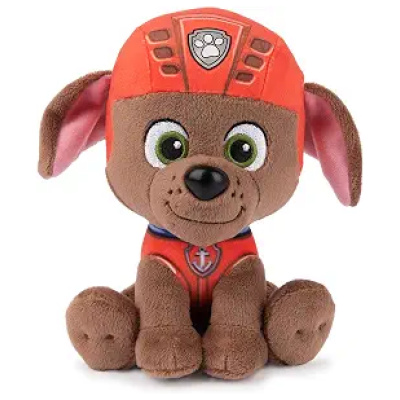
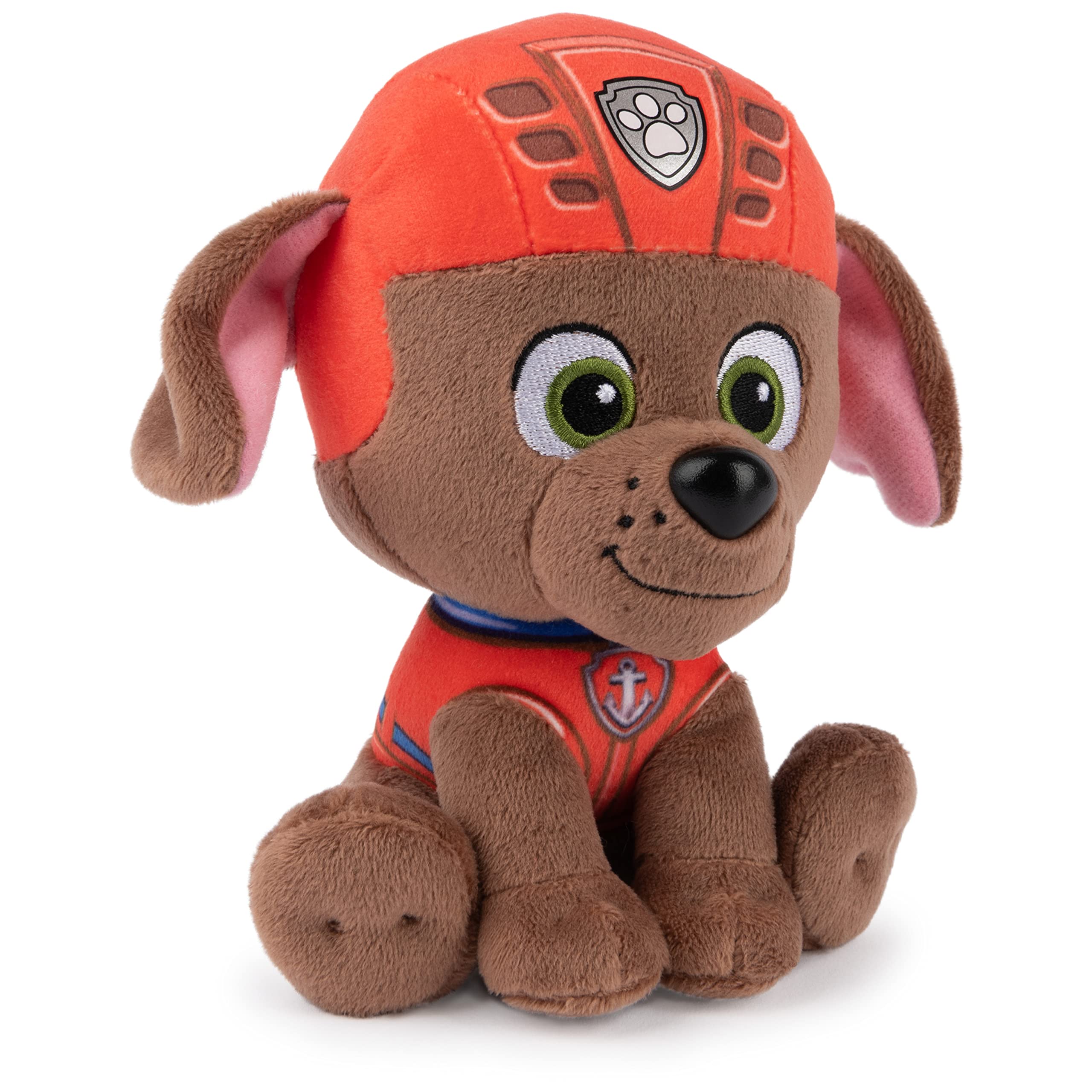
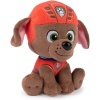
This is a 6-inch plush version of Zuma, the water rescue pup from PAW Patrol, made by GUND. It is a soft stuffed animal rather than an action figure or a vehicle playset, which means it is built for holding, hugging, carrying and sleeping next to rather than for rolling across the floor or launching gadgets. If your child has a favorite pup and that pup happens to be the cheerful chocolate Labrador in orange, this is the version of him they can take along without worrying about losing small parts.
The recommended age is 12 months and up, which makes it one of the more accessible PAW Patrol items for younger children. Many PAW Patrol toys are aimed at ages three and up because of small pieces and moving mechanisms. A plush has none of those constraints, so it works for a one-year-old who is just starting to recognize the characters as well as for a five- or six-year-old who watches the show regularly and wants a companion that looks like the pups on screen. Parents often buy this size as a first PAW Patrol toy for a toddler, as a gift for a birthday party where they are not sure what the child already owns, or as a second copy of a beloved plush that has become impossible to separate from at bedtime.
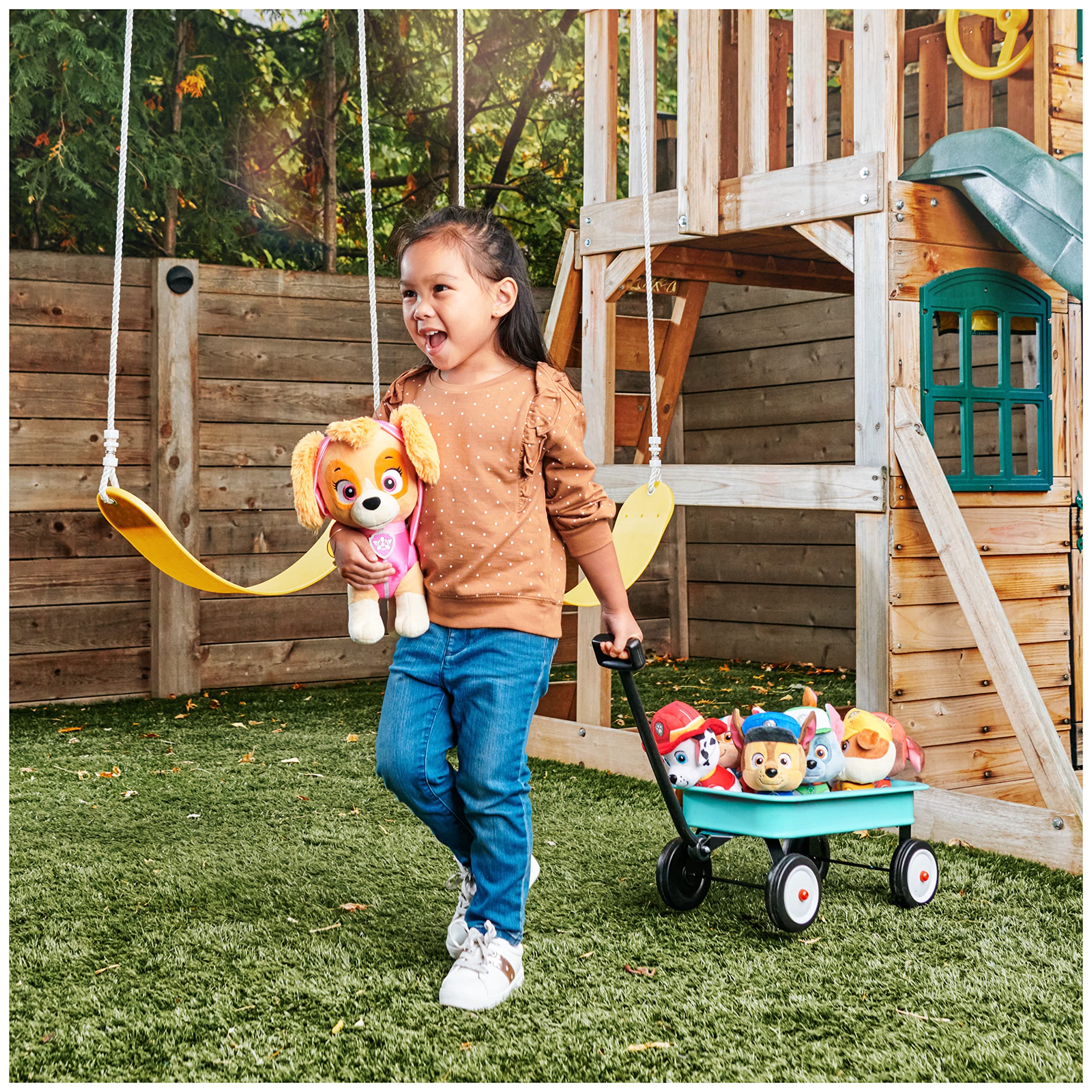
It also fills a specific gap for families who already have the larger PAW Patrol toys. Bigger plush and vehicle sets stay home. A 6-inch pup fits in a backpack pocket, a diaper bag, a car seat cup holder or a coat pocket, which makes it the one that actually travels.
How the Plush Is Made and What It Looks Like
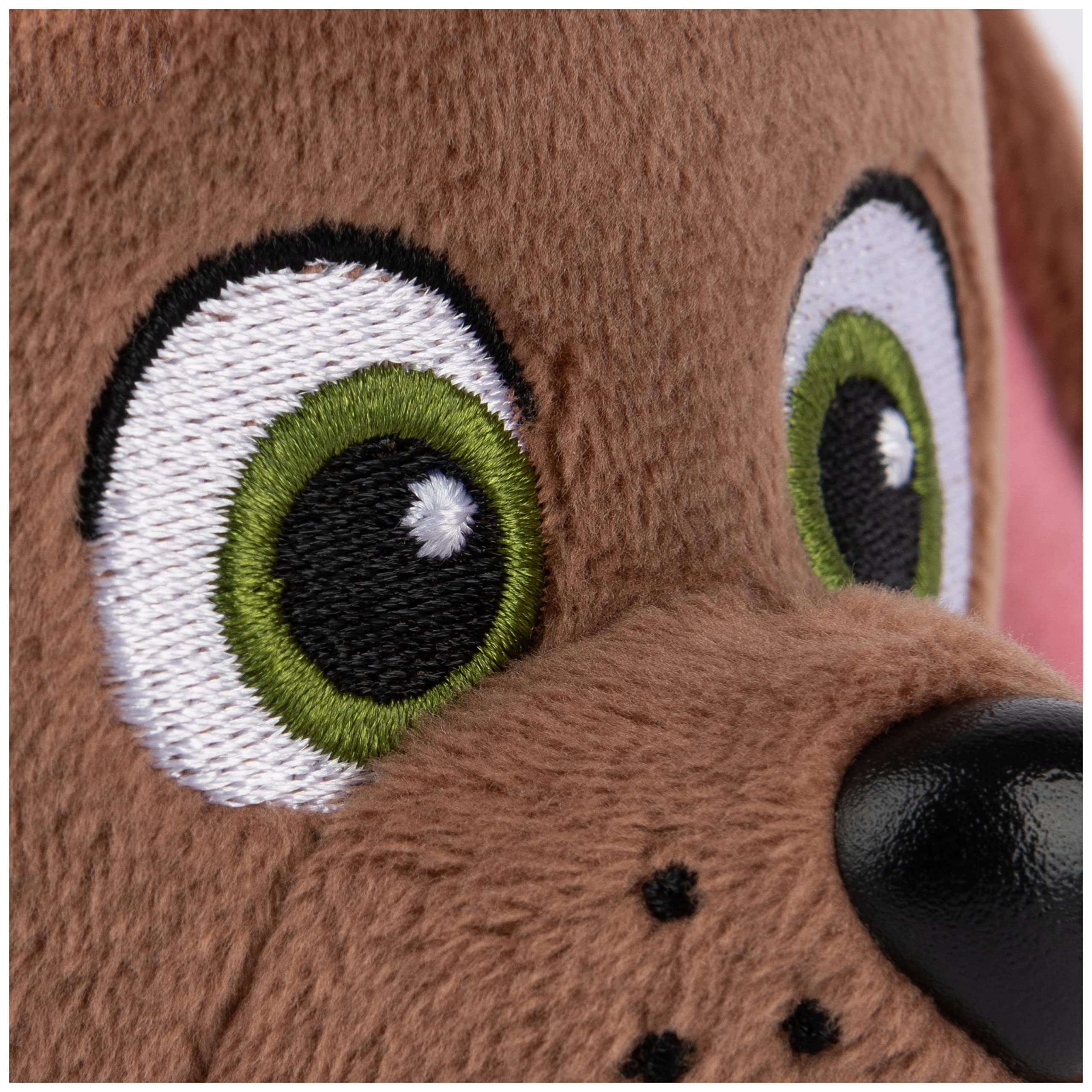
GUND has been making plush toys for well over a century, and the construction here follows their usual approach: soft outer fabric, even stuffing, and embroidered or securely attached features rather than loose add-ons. The result is a pup that keeps its shape after being squeezed, dropped and carried by one ear for a week straight.
Zuma is rendered in his show colors, with the brown coat of a chocolate Labrador and his orange gear. His face is designed to be recognizable at a glance, with the friendly, slightly open-mouthed expression the character has in the series. The proportions are softened compared to the animated model, which is typical of plush adaptations and part of why they read as cuddly rather than as scaled-down statues. Children who know the show identify him immediately.
The tactile side matters more than it might appear. The plush surface, the slight give of the stuffing, the different textures where his gear meets his coat, all give small hands something to explore. Young children process a lot through touch, and a toy that offers varied surfaces gets handled more thoughtfully than one made of a single smooth material. This is part of why plush toys tend to become comfort objects while hard toys usually do not.
At 6 inches, the scale is deliberate. It is large enough to have presence and to be held with two hands by a toddler, and small enough to be gripped in one hand by an older child while they do something else. It sits upright on a shelf, tucks under an arm, and does not take over a bed the way a large plush does.
What Children Actually Do With It
The play here is open-ended and screen-free, which is the honest appeal of a character plush. There are no batteries, no sounds, no lights and no instructions. Whatever happens is invented by the child.
In practice that usually means roleplay. Children who watch PAW Patrol know that the pups get called in when something goes wrong, and they replay that structure with whatever is around. Zuma becomes the one who handles anything involving water, so he ends up in the bath scenario, the swimming pool made of a blanket, the rescue of a toy that fell behind the couch. Children narrate, assign problems, and work out solutions, which is genuine problem-solving practice dressed up as play. A plush is a good vehicle for this because it does not dictate a single correct use.
He also works as a social prop. Children introduce a plush to other toys, to siblings, to visiting relatives. They explain who he is and what he does. For a two- or three-year-old, describing a character out loud is real language practice, and having a favorite to talk about makes it happen naturally.
The other main use is comfort. A small plush that goes to daycare, to a grandparent’s house, to a doctor’s appointment or to bed gives a child something familiar in an unfamiliar place. Parents often find this the most valuable function over time, well after the roleplay phase has moved on to other toys.
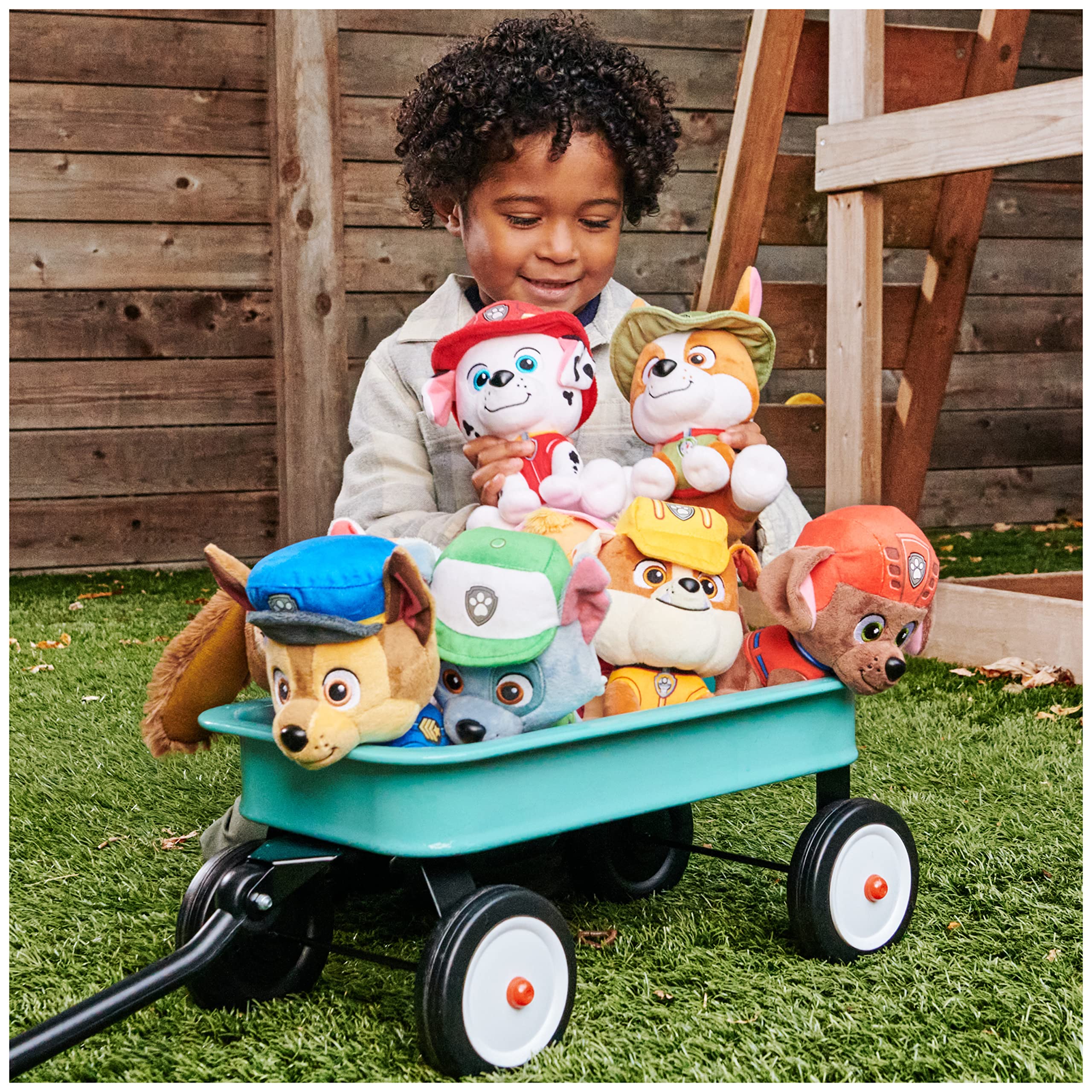
If you already own other pups from the line, the collecting instinct kicks in too. Children like lining them up, assigning missions and noticing who is missing. Zuma is often the one people add after Chase, Marshall and Skye, and having the full team available changes the play from single-character to group storytelling.
Durability, Cleaning and Age Suitability
The manufacturer sets the minimum age at 12 months. Plush toys avoid the small-parts hazard that drives the three-and-up rating on most character toys, and the features here are attached rather than loose. As with any soft toy for an infant or toddler, it is worth checking seams and attachments periodically, particularly once a child starts teething and chewing on everything within reach.
Cleaning is the practical question with any toy that goes everywhere. Plush toys of this size are generally best surface-cleaned with a damp cloth and mild soap, then air-dried fully before being returned to a crib or bed. Check the sewn-in care tag before washing, since instructions vary by product and that tag is the authoritative source. Avoid high heat, which can damage synthetic fibers and make the surface feel rough. If a plush becomes a nightly essential, some parents keep a second one so one can be cleaned while the other is on duty.
On longevity: soft toys do not break in the way mechanical toys do, but they do age. Expect the fabric to soften and flatten in the places that get held most. Most families treat that as a feature rather than a defect. The stitching is the part to watch, and a quick repair with a needle and thread at the first sign of a loose seam usually adds years.
The product ships as a single plush, model number 6056511, with no included accessories and no manufacturer warranty. That is standard for plush at this size. There is nothing to assemble, no batteries to buy and nothing to charge.
Zuma’s Place in the PAW Patrol World
PAW Patrol is built around a team of rescue pups led by a boy named Ryder, each with a specialty and matching gear. Chase handles police and traffic work, Marshall covers fire and medical, Skye flies, Rubble digs, Rocky recycles, and Zuma runs water rescue. He drives a hovercraft, wears diving gear, and is the one the team calls when something goes wrong at the bay.
Zuma’s personality is a big part of why children pick him. He is relaxed and even-tempered compared to some of the more excitable pups, and he tends to stay calm when a mission gets complicated. Children who are themselves a bit quieter often gravitate to him, and parents notice that. He is also less universally marketed than Chase and Marshall, which means owning a Zuma feels like a specific choice rather than the default.
Within the wider PAW Patrol range, this plush occupies the soft, quiet end. The vehicles, the Lookout Tower, the transforming figures and the light-and-sound toys all deliver a different kind of play. A plush pup is what the same child reaches for when the loud toys are put away. Many families own both and use them for different parts of the day.
If you are building out the team, the 6-inch plush line makes that straightforward, since the pups are consistent in size and style and stand together as a set. If you are buying a single toy, Zuma stands on his own as a recognizable, well-made character plush that a child can carry anywhere from their first birthday onward.