What This Set Is and Who It’s For
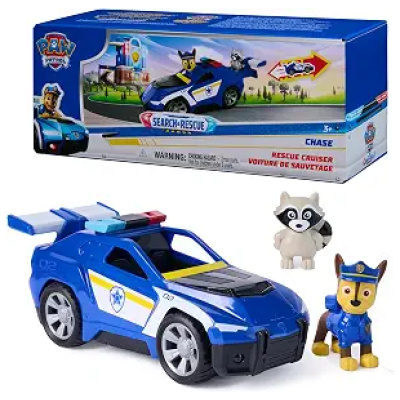
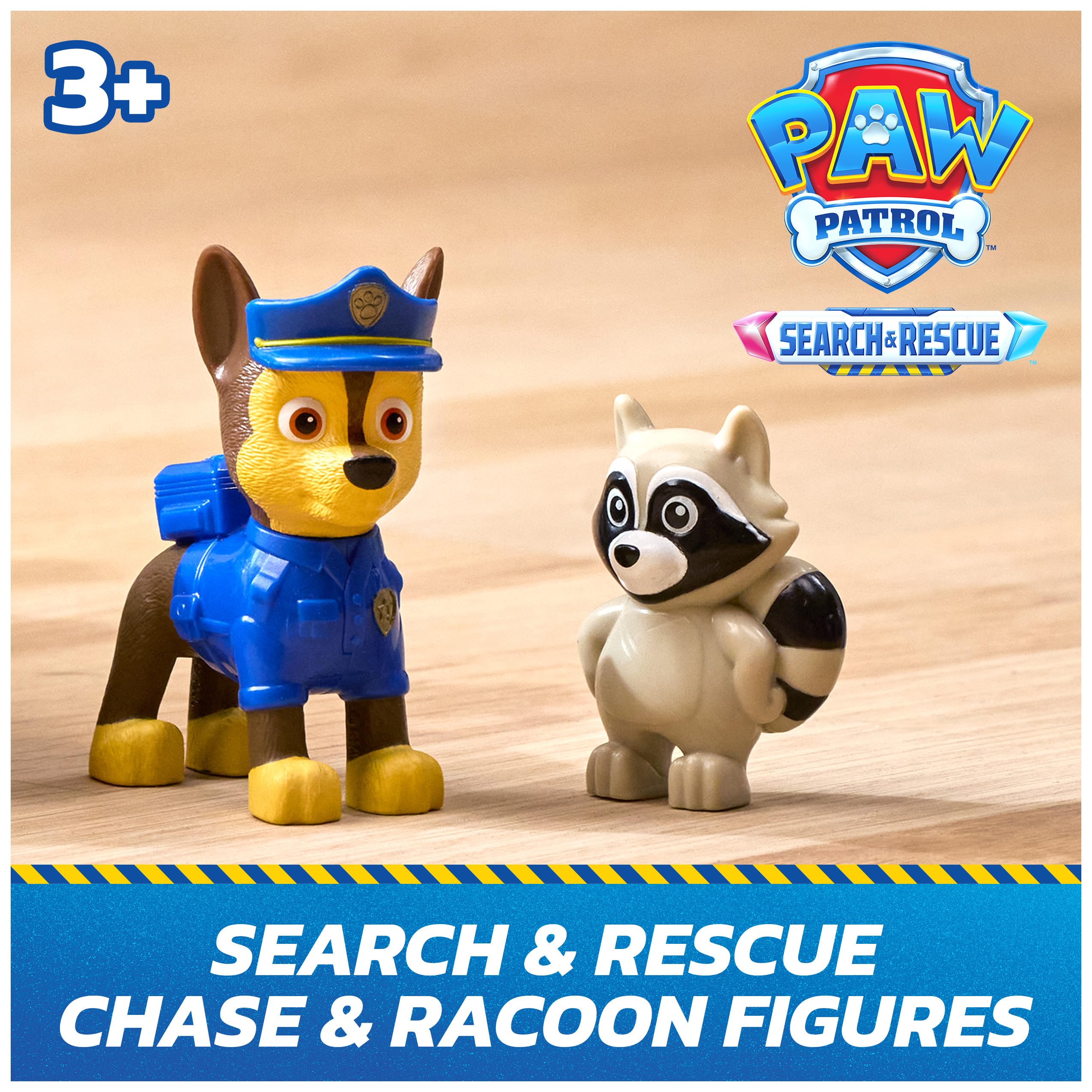
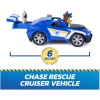
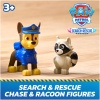
The Chase Rescue Cruiser is a pull-back police vehicle from the PAW Patrol Search & Rescue line, and it arrives ready to play right out of the box. Inside you’ll find three pieces: the cruiser itself, a Chase figure, and a raccoon figure that gives your child someone to rescue. That last detail matters more than it might sound. A vehicle on its own is a vehicle. A vehicle with a pup driver and a critter in need of help is a story waiting to happen, and most kids pick up the thread within seconds of opening the package.
This set is built for preschoolers, with a manufacturer minimum age of 36 months. In practice, the sweet spot runs from about three to six years old. Three-year-olds love the simple cause-and-effect of pulling the car back and watching it go. Four- and five-year-olds start narrating: who is in trouble, why, and how Chase is going to handle it. Six-year-olds often keep it in rotation as part of a larger collection, folding the cruiser into bigger scenarios with towers, other vehicles, and whatever else is on the floor that day.
It works well as a first PAW Patrol vehicle for a child who has been watching the show and asking about the pups, and equally well as an addition for a household that already has a shelf of them. Because it’s a single self-contained set rather than a playset with a dozen loose accessories, it suits birthdays, holiday stockings, and the kind of small occasion where you want something that will actually get played with rather than admired and shelved.
Design and Key Features
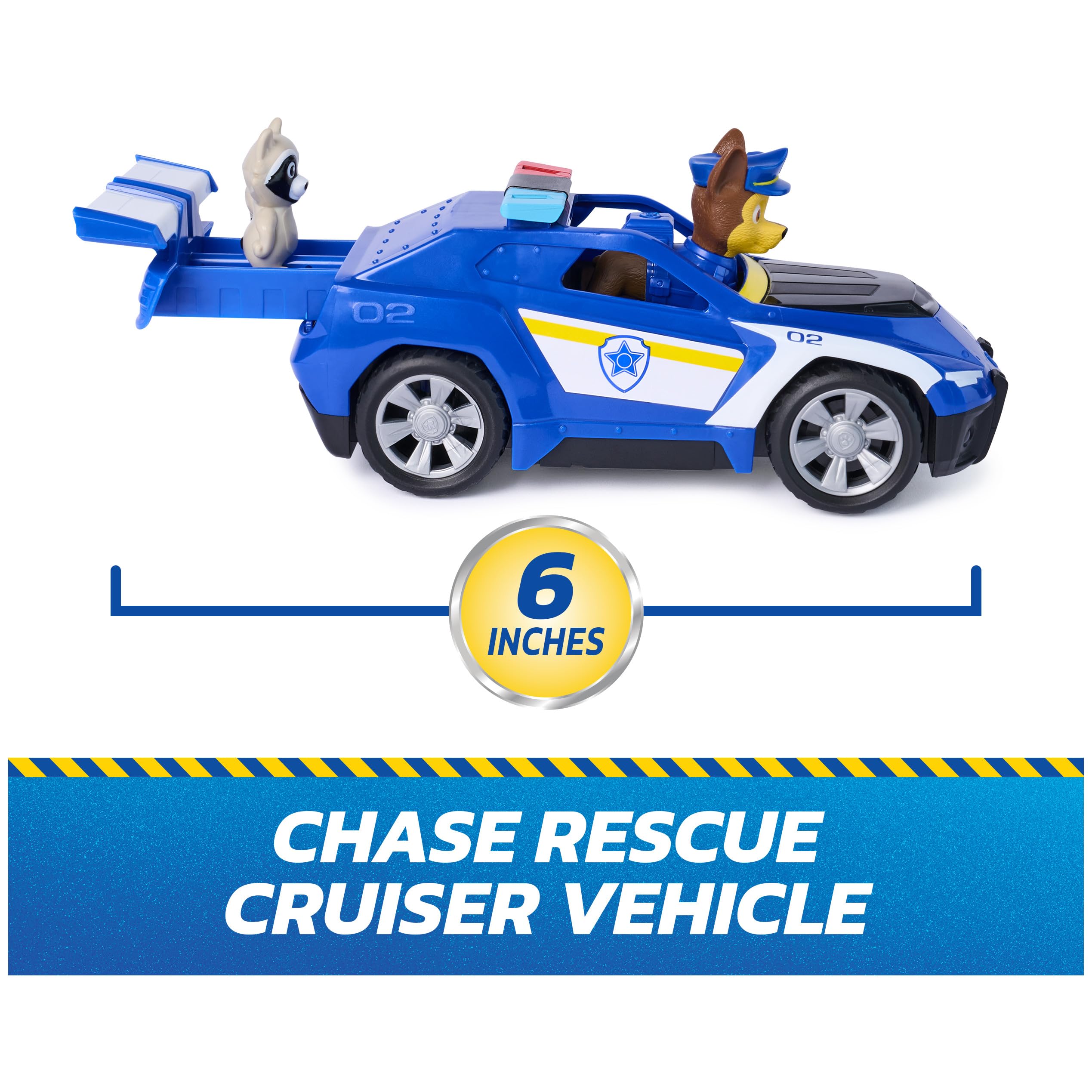
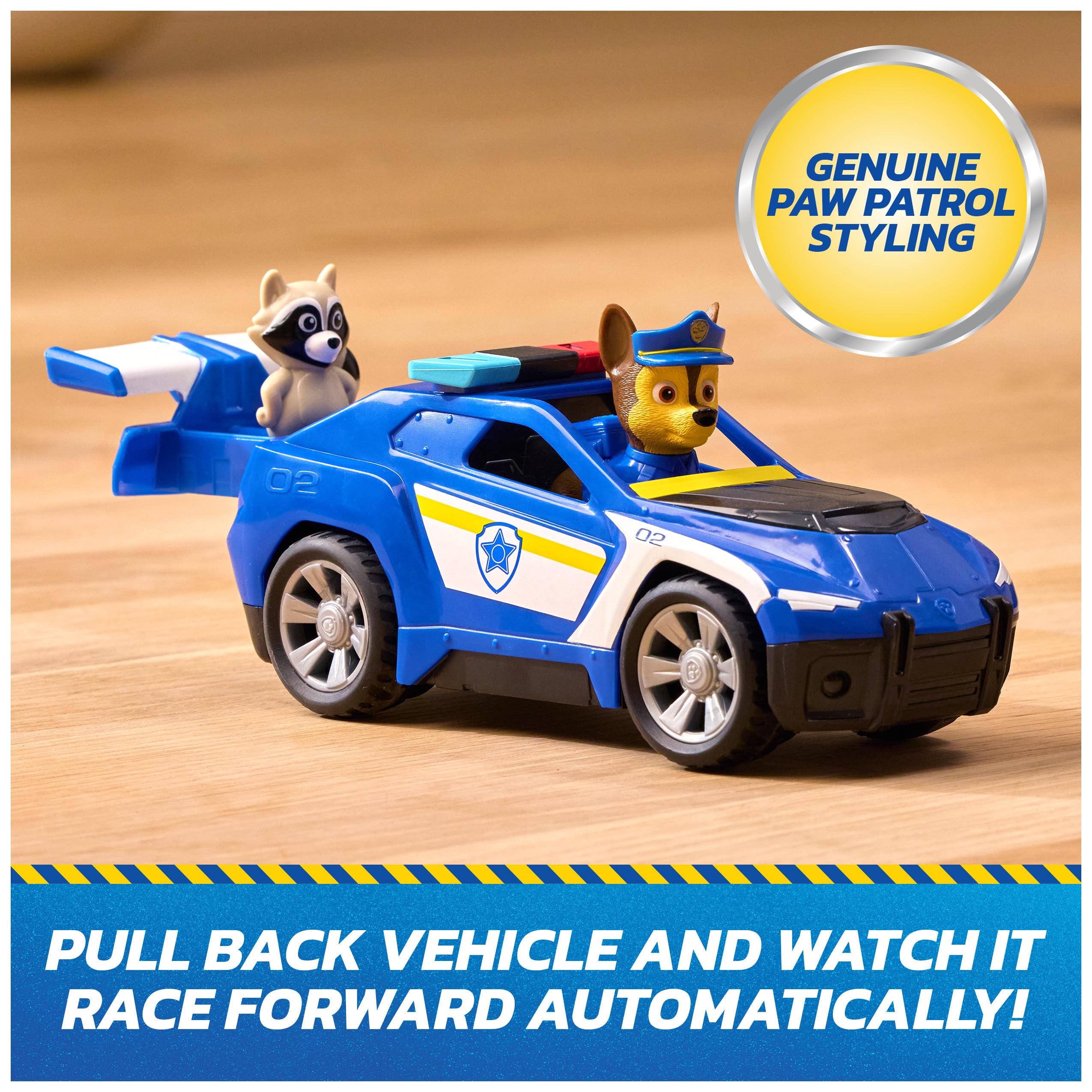
The cruiser follows the police-car look that Chase is known for: blue-and-white body, light bar detailing, and the proportions of a chunky preschool vehicle rather than a scale model. The shape is deliberately wide and low, which keeps it stable when a young child sends it across the floor at speed and makes it easy to grab with one small hand.
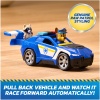
The pull-back-and-go mechanism is the mechanical heart of the toy. Draw the cruiser backward a few inches along a flat surface, let go, and it rolls forward on its own. There are no batteries to install, no switches to find, and nothing to charge before the fun starts. The motor is entirely mechanical, so it works the same on day one and a year later, and it works on a kitchen floor, a hallway runner, a coffee table, or a stretch of driveway.
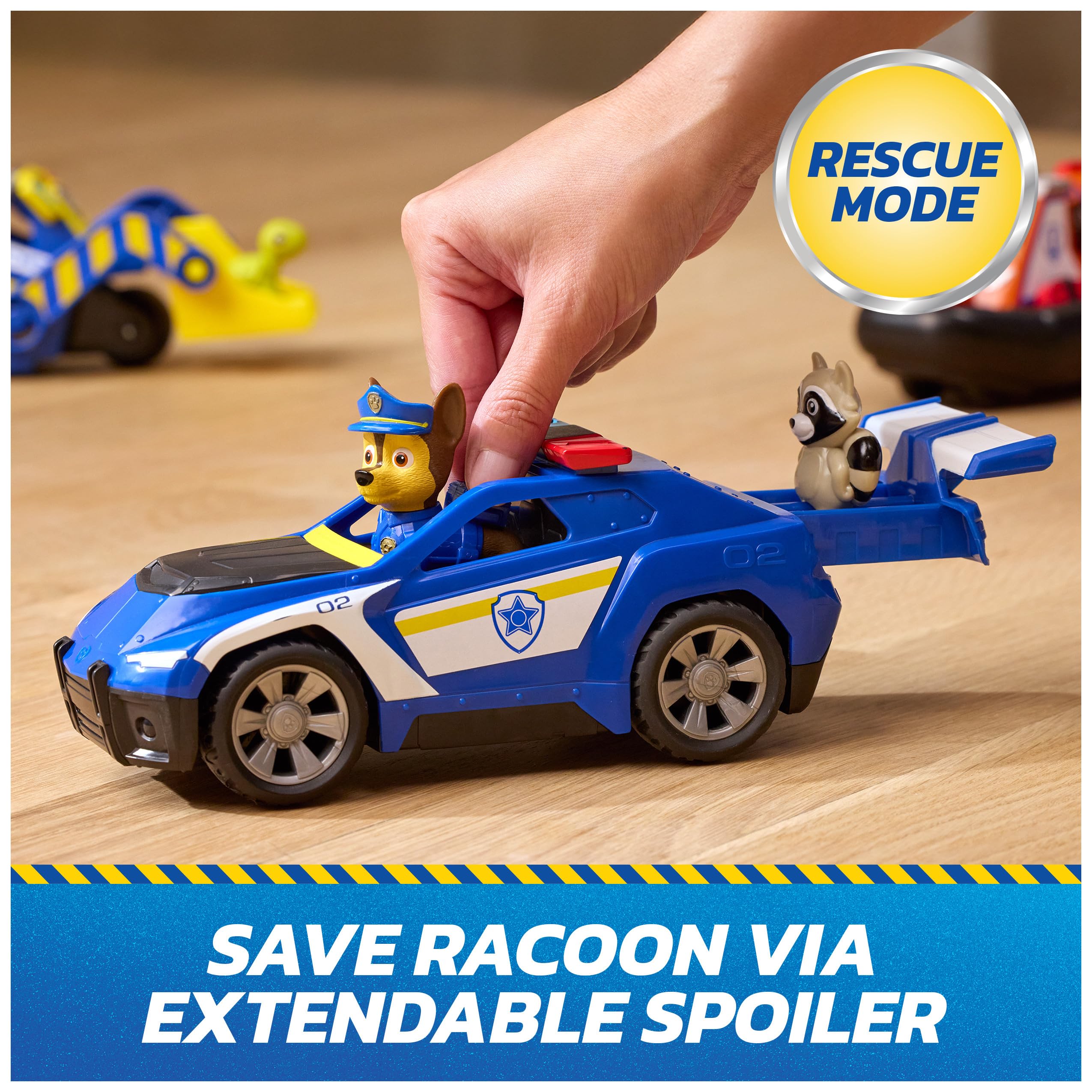
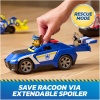
Chase and the raccoon come as separate figures, sized to match the vehicle and the rest of the preschool PAW Patrol range. Chase sits in the cruiser as the driver; the raccoon is the character in trouble, which is a small but smart piece of design. Rescue play needs someone to rescue, and including the animal in the box means a parent doesn’t have to improvise one from another toy bin. The figures are solid molded pieces without small removable parts, which keeps cleanup simple and reduces the number of things that can vanish under the sofa.
The set carries model number 6074774 and comes from Spin Master, the company behind the PAW Patrol toy line since the beginning. That consistency shows up in the details: the scale matches other vehicles in the range, the color and character likeness track the show, and the figure size is compatible with the towers and playsets many families already own.
How Kids Actually Play With It
The first thing nearly every child does is test the pull-back action over and over. That’s not wasted time. Loading the mechanism, aiming, releasing, and watching where the cruiser ends up is real practice in motor control and prediction, and preschoolers repeat it because they’re calibrating, not just because it’s fun.
The second phase is where the raccoon earns its place. Once a child has the mechanics down, the rescue story starts: the raccoon is stuck somewhere, Chase gets a call, the cruiser races over, and the situation is resolved. Kids invent the obstacle themselves, behind a cushion, on top of a book stack, at the far end of the hallway, and that invention is the whole point. It’s open-ended pretend play with just enough structure from the characters to give a child a place to start when a blank room feels too blank.
It also travels well. The cruiser and two figures fit in a tote bag or the seat pocket of a car, need no power, and make no electronic noise, which makes them a reasonable choice for restaurants, waiting rooms, flights, and long drives. Plenty of parents keep a quiet, self-contained set like this one in reserve for exactly those moments.
Playing alongside another child works naturally here, too. One takes Chase, another takes the raccoon, and they trade lines back and forth. Turn-taking, negotiating what happens next, and speaking in character are all things preschoolers are practicing at this age, and a two-figure set gives them a low-stakes way to do it. For a child playing alone, the same setup supports the running narration that so many kids this age do while they build a world on the rug.
Durability, Safety, and Age Guidance
This is a preschool toy, and it’s constructed like one. The molded plastic body, fixed wheels, and internal pull-back motor are designed to handle floor play, drops from couch height, and the general enthusiasm of a three-year-old. There is no screen, no battery compartment, and no electronics, which removes the most common failure points in toys aimed at this age group.
The 3+ age rating is a genuine safety guideline, not a difficulty rating. Toys in this category can include parts that pose a choking hazard to children under three, so keep the set away from babies and younger toddlers, and supervise mixed-age play when an older sibling brings it out around a crawling brother or sister. If your household includes children on both sides of that line, a simple rule about where the pups live, a shelf, a bin, the older child’s room, tends to work better than case-by-case reminders.
Care is straightforward. Wipe the vehicle and figures with a damp cloth and let them air-dry. Avoid submerging the cruiser, since water can get into the pull-back mechanism and shorten its life. If the car starts rolling short distances, check the wheels for hair or carpet fibers wound around the axles; clearing them usually restores the original distance. Nothing here requires tools, replacement parts, or a trip to the battery drawer.
Where It Fits in the PAW Patrol World
Chase is the German Shepherd police pup and, for a lot of kids, the entry point to the whole series. He’s the one who takes charge, follows the plan, and shows up when someone needs help, traits that translate directly into the kind of play this set encourages. A child who already knows Chase from the show doesn’t need any explanation of what the cruiser is for; they simply pick it up and continue a story they’ve been following on screen.
The Search & Rescue line focuses on exactly that: finding someone and bringing them to safety. Pairing the cruiser with a raccoon rather than another pup keeps the emphasis on the rescue itself, and it reflects the show’s steady message that helping others is what the team does. That’s a gentle thing for a preschooler to be rehearsing over and over on the living room floor.
Because it shares scale and style with the rest of the preschool PAW Patrol range, this cruiser slots into a collection without looking out of place. Chase can ride in his own vehicle or swap into another pup’s; the raccoon becomes a character in scenarios far beyond this box; and the cruiser can dock at a tower or lookout that’s already in the house. For families building a collection piece by piece, that compatibility is what turns a set of individual toys into one big shared world, and it means a set bought this year still works with whatever arrives next.