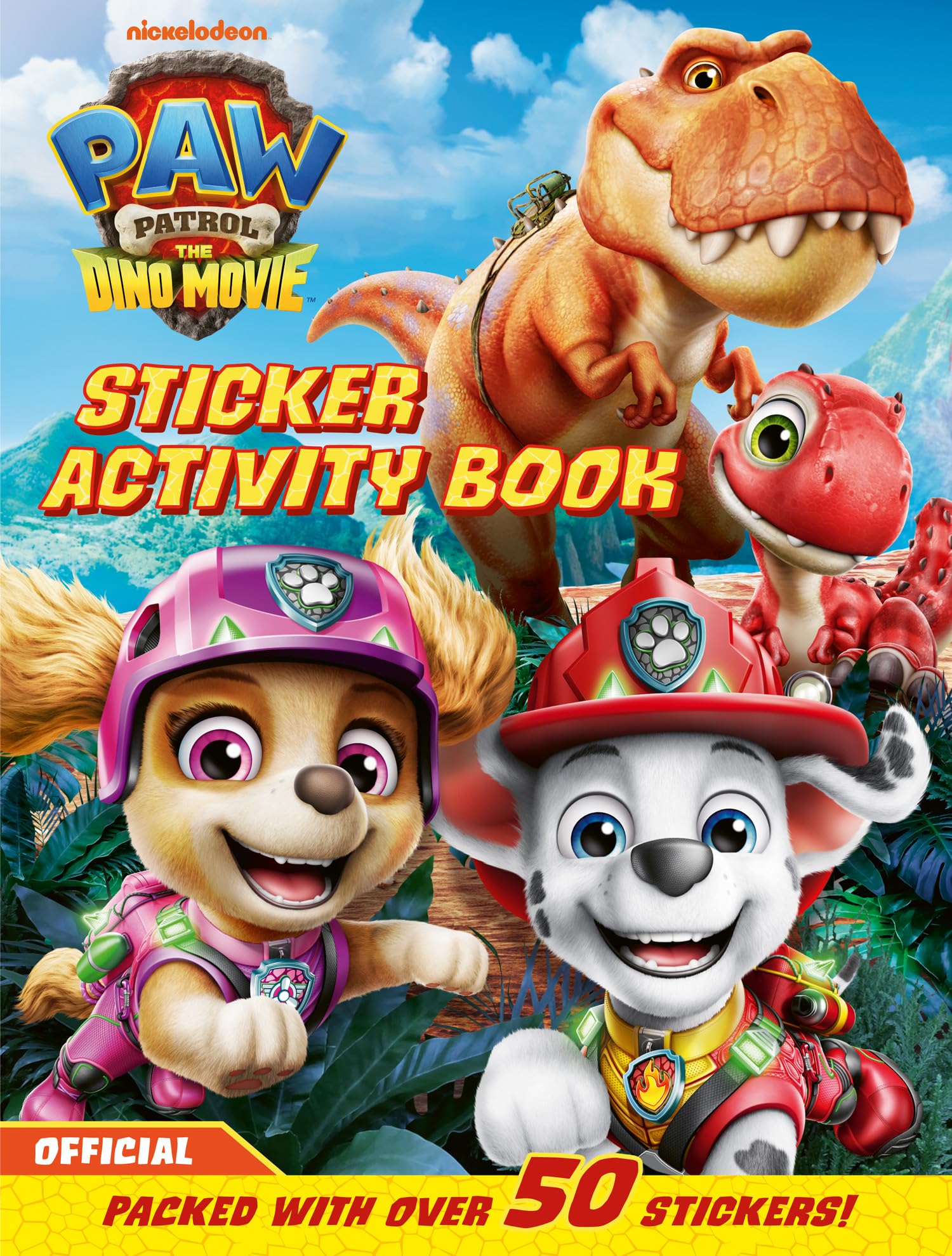
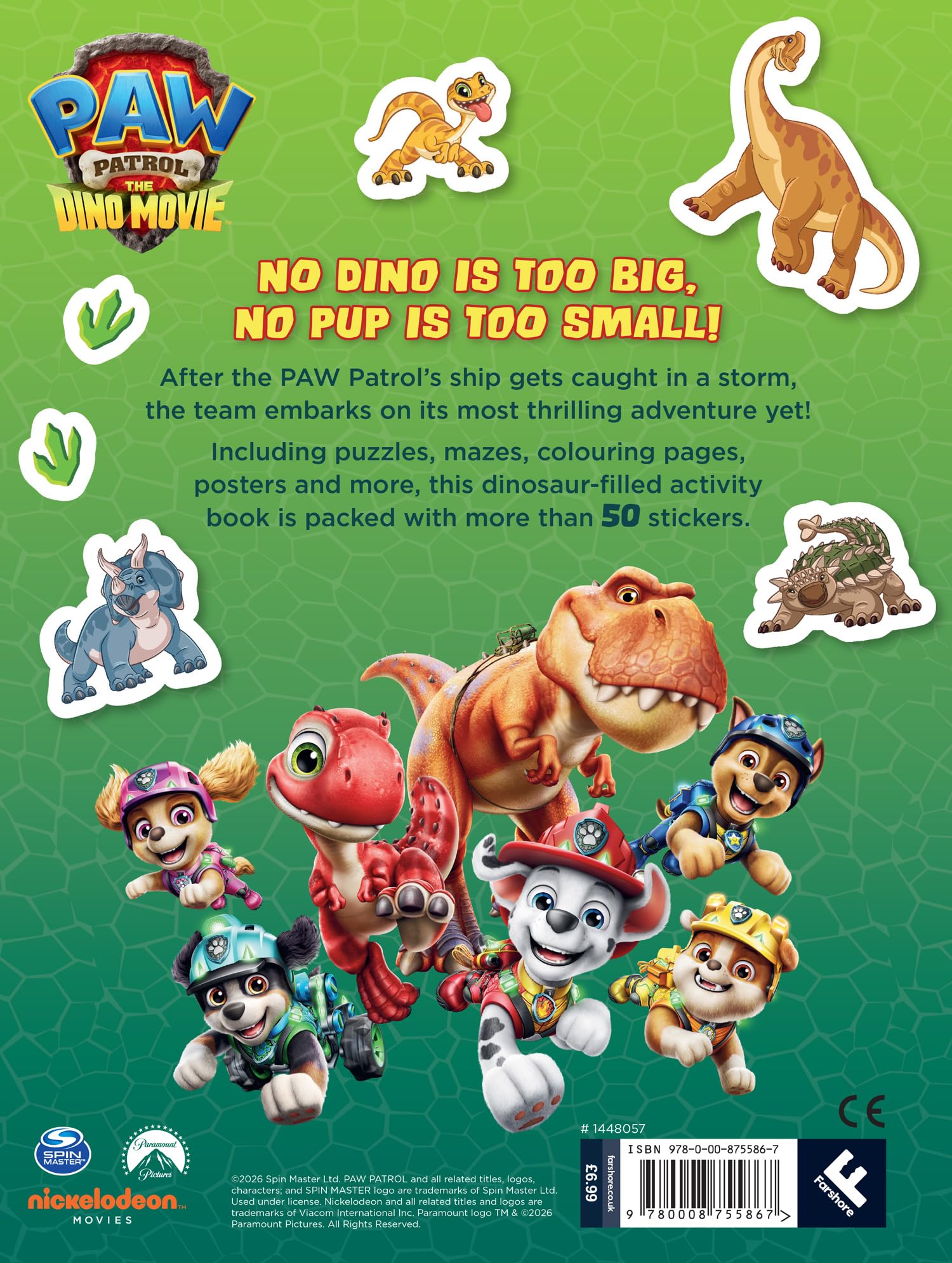
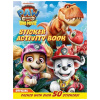
A Sticker Activity Book Tied to PAW Patrol: The Dino Movie
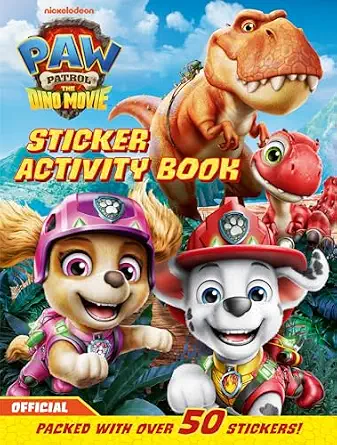
This is a softcover sticker activity book based on PAW Patrol: The Dino Movie, the film that sends Ryder and the pups into a world where dinosaurs are part of everyday rescue work. It is written in English and built for children who already know the show and want something to do with the characters when the screen is off. If your child asks to watch the same episode three times in a row, this is the paper version of that loyalty: familiar faces, familiar colors, and a set of pages they can work through at their own pace.
The audience here is roughly preschool through early elementary, children who can hold a crayon with intent, peel a sticker without tearing it in half, and follow a simple instruction like “put the pup in the truck.” Younger children in that range will treat it mostly as a sticker book and place things wherever they like, which is a completely reasonable way to use it. Older children will start noticing the puzzles, the matching pages, and the spots where a sticker is clearly meant to go, and they will want to get it right. Both approaches work with the same book.
For parents, the appeal is simple. It is a self-contained activity that does not need batteries, charging, a login, or supervision beyond the occasional “yes, that sticker goes there.” You hand it over with a pencil or a few crayons and your child has something to do. It is the kind of item that lives in a bag, a car door pocket, or a drawer near the kitchen table and gets pulled out when you need fifteen or twenty minutes.
What the Pages and Stickers Are Like
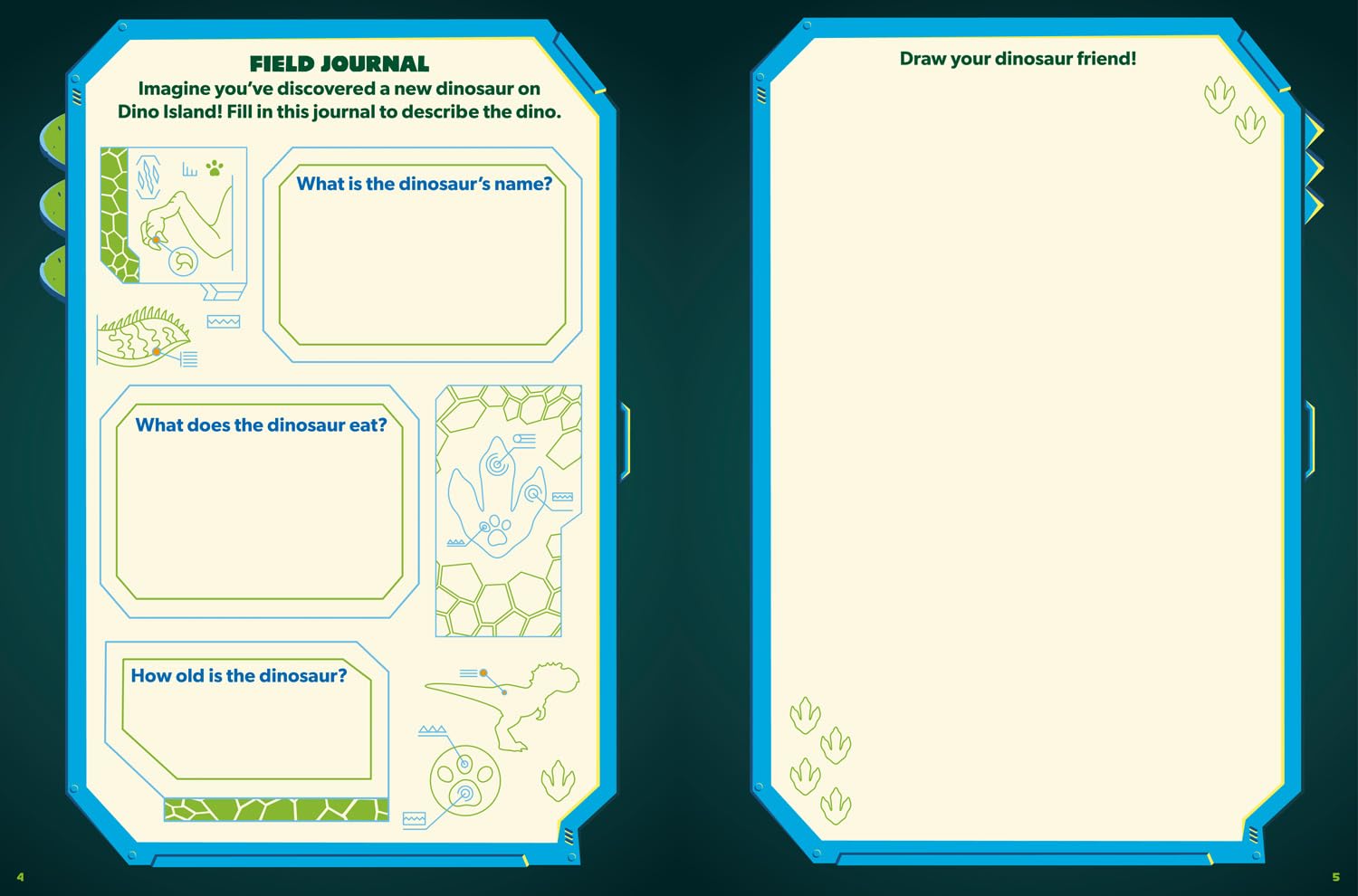
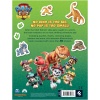
Sticker activity books in this line follow a familiar structure: illustrated activity pages printed in full color, plus sheets of stickers bound into the book that children peel and apply as they go. The activities are the kind aimed squarely at this age group, coloring, spotting differences, matching, counting, mazes, and scenes with blank spaces waiting to be filled in. The reading load is light. Instructions are short, and much of the book can be understood from the pictures alone, which matters if your child is still an early reader or prefers to work independently rather than wait for an adult to read each line.
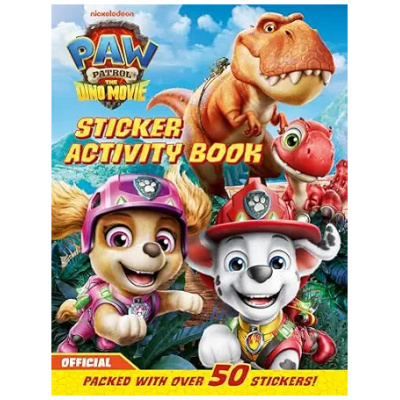
The artwork uses the show’s established look, so the pups are drawn the way your child expects to see them. Chase, Marshall, Skye, Rubble, Rocky and Zuma all carry their signature colors and gear, and the Dino Movie setting brings prehistoric scenery, dinosaur characters, and the film’s own additions into the mix. That visual consistency is doing real work: children at this age recognize characters by silhouette and color long before they read names, and a book that matches the show they watch feels immediately theirs.
The format is a large flat page, 8.5 by 11.22 inches, which gives coloring and sticker placement enough room. Small hands are not precise, and a bigger page is more forgiving. A sticker landing slightly off center still looks fine on a page this size, whereas a cramped layout turns every placement into a near miss. The book is thin at roughly 0.08 inches and weighs about 6.8 ounces, so it lies reasonably flat once opened and does not fight back when a child leans on it.
One practical note about stickers generally: they are not intended to be repositionable. Most paper stickers in books like this go down once and stay there. If your child is the type to agonize over placement, it helps to say up front that there is no wrong answer, or to let them practice on a scrap page first.
How It Actually Gets Used
The most common use is exactly what you would expect, a quiet solo activity at a table while an adult is doing something else nearby. Sticker books tend to hold attention in bursts of ten to thirty minutes, which is usually enough to get dinner on the table or finish a phone call. Because the activities are separable, there is no pressure to finish in one sitting. A child can do two pages, close it, and come back to it days later without losing the thread.
Travel is the other obvious use. It is flat, light, and needs nothing but the book itself, so it packs into a backpack or carry-on without much thought. Planes, long car rides, and waiting rooms are where a book like this earns its place. It does not make noise, does not need a surface beyond a lap or a tray table, and does not require an adult to run it. Bringing a small pouch of crayons or a chunky pencil alongside it makes the activity pages usable too, rather than just the sticker portions.
There is genuine developmental value in the format as well, though it is worth being plain about it rather than overstating. Peeling and placing stickers is a fine motor task: it uses a pincer grip, requires two hands working together, and asks for a bit of spatial judgment about where something goes. Matching and spotting activities exercise visual discrimination. Counting pages give early number practice in a context your child cares about. None of this is instruction, it is practice disguised as a favorite show, which is generally how skills at this age get built anyway.
It also works as a shared activity. Sitting alongside your child and asking which pup they want to place next, or which dinosaur is the biggest, turns it into conversation. For children who resist being read to but like being near an adult, a sticker book on the table between you is a low-pressure way to spend time together.
Size, Materials and Age Guidance
The physical details: 8.5 x 0.08 x 11.22 inches, 6.8 ounces, English language, ISBN-10 0008755868, ISBN-13 978-0008755867. It is a paper product with a softcover, which sets clear expectations about durability. Pages can crease, corners can bend, and a determined toddler can tear a sheet. That is normal for the category and not a defect. Treated reasonably, it holds up through repeated sessions; treated like a toy, it will show wear quickly.
Because it is consumable, plan for it to be finished. Once the stickers are placed and the pages colored, the book is largely done, though many children happily revisit their own completed pages. Some parents buy activity books like this in pairs for siblings specifically to avoid the “she used my sticker” problem, which is worth considering if you have two children close in age.
On safety: this is a book, not a toy, and it carries the usual considerations for paper products with small adhesive pieces. Sticker sheets, backing paper, and torn scraps can present a choking hazard for children under three, so it is best used by children old enough not to put things in their mouths, with an adult nearby for those at the younger end. Keep the sticker sheets out of reach of infants and toddlers between uses. There are no batteries, no small plastic components, and no coatings that need special handling.
Storage is straightforward. Flat and dry is best, a drawer, a shelf, or a folder in a bag. Humidity is the main enemy of unused sticker sheets, since adhesive can weaken or pages can curl if the book sits somewhere damp for a long stretch.
Where It Fits in the PAW Patrol World
PAW Patrol has been built on a consistent idea since it began: a group of pups with distinct jobs, distinct vehicles, and distinct personalities, led by a boy named Ryder, who help their community and look out for one another. Chase handles police and traffic work, Marshall covers fire and medical, Skye flies, Rubble digs, Rocky recycles and repairs, and Zuma takes the water. Children learn those roles fast, and much of the appeal of any PAW Patrol product comes from letting them apply what they already know.
The Dino Movie extends that framework into a dinosaur setting, giving the pups a new environment and new challenges while keeping the structure children recognize. A sticker book tied to the film lets a child revisit that world on their own terms, deciding where each pup goes, which scene to complete first, and how the pages come together. It is a different mode of engagement than watching: slower, hands-on, and directed by the child rather than the runtime.
That is the honest case for this book. It is not a substitute for the film and it is not a toy that will last for years. It is a well-matched companion to something your child already likes, in a format that occupies hands and attention for a while, travels easily, and asks nothing of you beyond handing it over. For a child in the middle of a PAW Patrol phase, particularly around the release of the Dino Movie, that combination tends to be enough.