What This Tattoo Set Is and Who It Is For
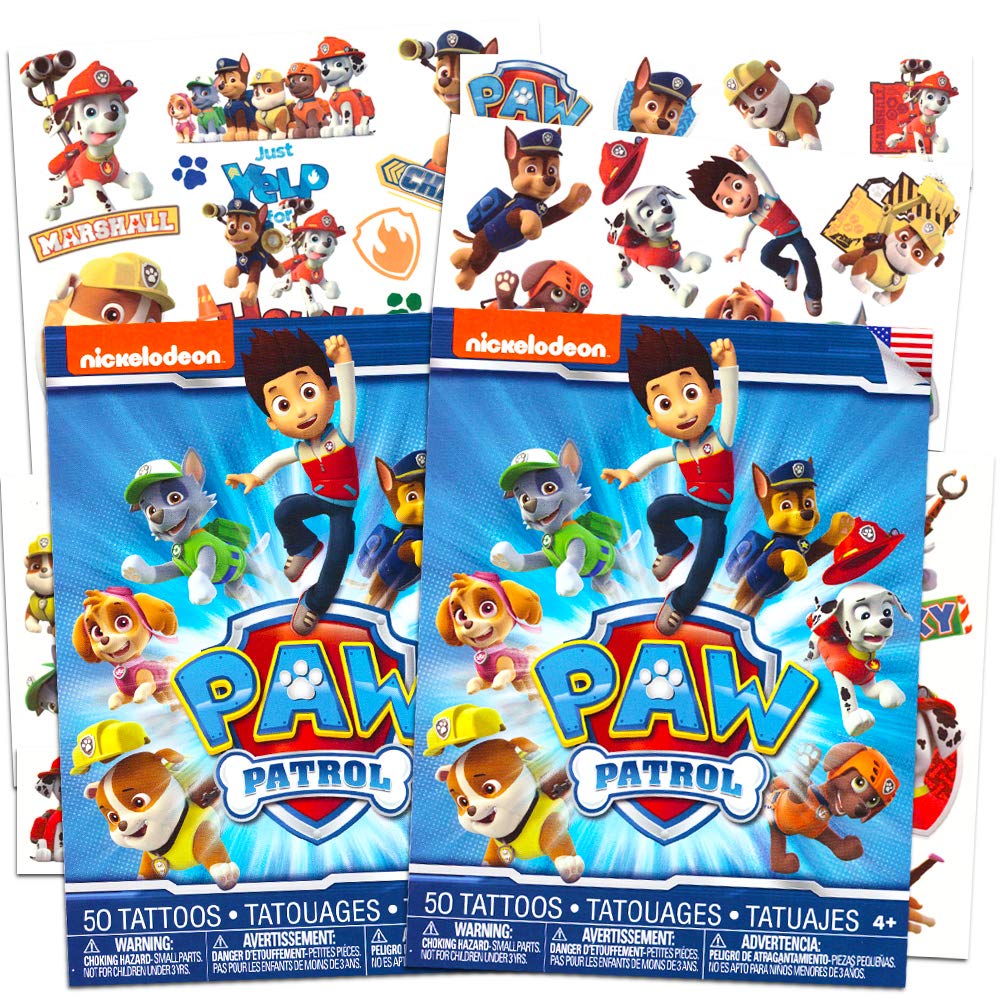
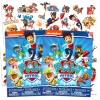
This is a bundle of 100 individual temporary tattoos featuring the Paw Patrol pups, packaged as a flat sheet set that measures roughly 6 by 9 inches and weighs about 2 ounces. Each tattoo is a small, pre-cut design backed with a protective film, applied with nothing more than a damp cloth and about thirty seconds of patience. There is no adhesive backing to peel, no marker or ink to manage, and nothing for a child to swallow or spill. You tear off one design, press, wait, and lift.
The set is aimed squarely at parents and caregivers of children roughly two to eight years old, which is the core Paw Patrol audience. That covers the toddler who cannot yet name every pup but recognizes Chase’s blue hat instantly, and the six or seven year old who can recite which vehicle belongs to whom. Because the tattoos are small and applied one at a time, they work across that whole range without needing different versions for different ages.
It is also a practical buy for anyone who needs a lot of one thing. A hundred pieces is enough to cover a birthday party guest list several times over, restock a classroom prize box for most of a semester, or fill out carnival and field day reward tables. Parents who have run a party before know the arithmetic problem: you need something every child can take home, it has to be small, and it cannot be one more plastic object that ends up under the couch by Tuesday. A tattoo solves that. It goes home on a forearm rather than in a goodie bag.
Characters, Artwork, and How the Sheets Are Organized
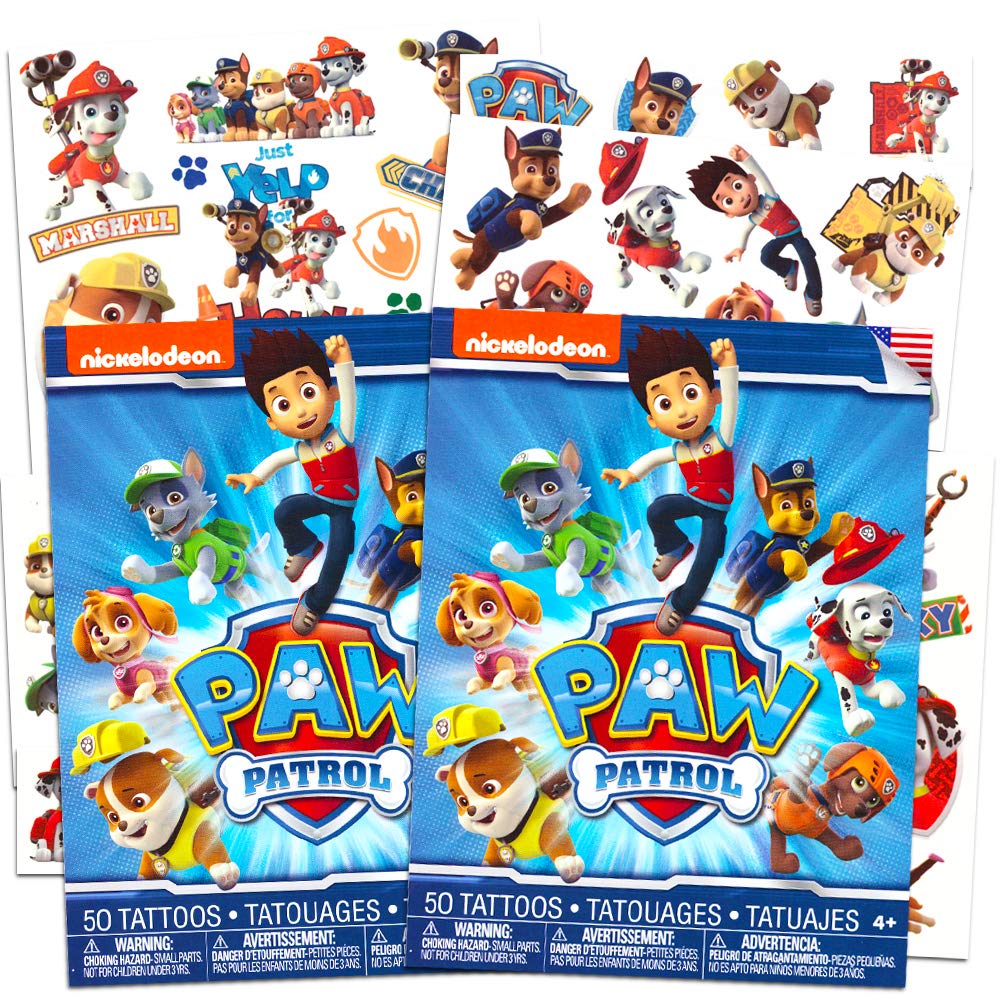
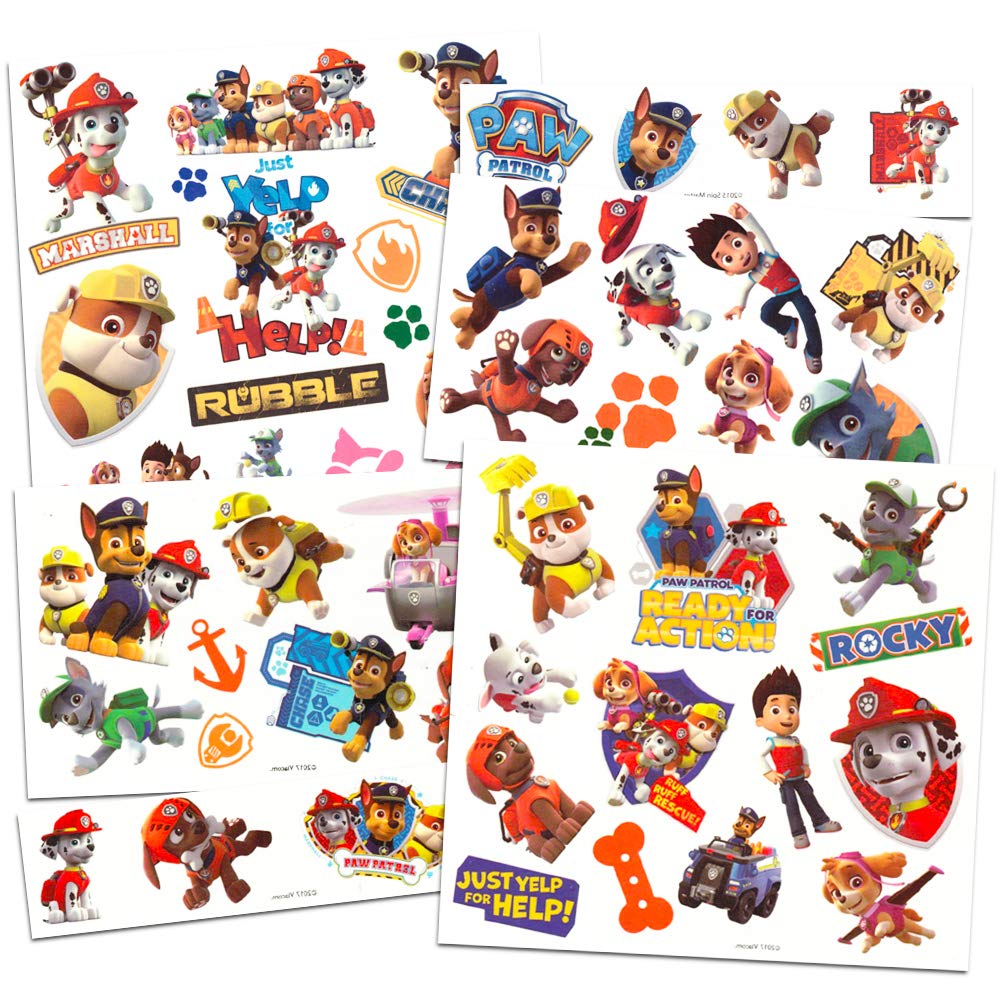
The lineup covers the pups children ask for by name. Chase, the German Shepherd police pup in his blue and navy gear, is usually the first one requested. Marshall, the Dalmatian firefighter with his red helmet, is a close second and tends to be the favorite of kids who like the clumsier, funnier characters. Skye brings the pink aviator look with her helmet and goggles, and she is often the design that goes fastest with children who want a pup that flies. Rocky, the recycling pup in green, and Zuma, the chocolate Labrador in orange with his water rescue gear, round out the main set. Note that some listings misspell Rocky as “Rocku” it is the same green recycling pup.
Designs are printed in full color with the bold outlines and flat, saturated fills that match how the characters look on screen. That matters more than it sounds. Small tattoo art can go muddy when a design carries too much shading, and a two year old will not recognize a pup rendered in six shades of gray. These keep the silhouettes clean: the helmet shapes, the badge symbols, the vehicle colors. A child can identify their pup at arm’s length, which is the whole point when they are showing it to a friend across a party table.
Beyond character portraits you get supporting designs, paw print badges, rescue insignia, vehicle motifs, and lettering elements. These are useful as filler when a child wants three or four tattoos at once and you would rather not use up your Chase supply. The mixed assortment also means siblings are less likely to argue over an identical design, since there is enough variety on a sheet for each kid to claim something of their own.
Party Favors, Classroom Prizes, and Everyday Use
The most common use is party favors, and the format fits that job well. You can hand each guest a single tattoo at the door as an arrival activity, which occupies the awkward stretch when half the guests have shown up and half have not. You can also tuck two or three into each treat bag, or set up a small station where an adult applies them between games. At a costume party or Halloween event, a pup tattoo finishes off an outfit that is otherwise just a jacket and a hat.
Teachers and daycare staff use sets like this as classroom incentives. A tattoo is a reward a child genuinely wants, it costs almost nothing per use, it does not go stale like candy, and it does not require a note home about allergies. The same logic applies to swim lessons, dental visits, haircuts, and pediatrician offices, any situation where a small child needs a reason to sit still and a reason to feel good afterward. Carnivals, church festivals, library reading programs, and school field days all run on this kind of small-prize inventory.
At home, the tattoos have quieter uses. They give a reluctant child something to look forward to on a long car ride. They turn a rainy afternoon into a fifteen minute activity. Some parents use one as a low-stakes way to mark a milestone, a first day of preschool, a lost tooth, a night sleeping in a big kid bed. Because you have a hundred of them, you can spend them freely without feeling like you are burning through something precious.
Applying Them, How Long They Last, and Age Guidance
Application is straightforward. Cut out the tattoo you want, peel off the clear top film, press the printed side firmly against clean, dry skin, then hold a wet cloth or sponge against the paper backing for about thirty seconds. Press evenly and do not let the child wiggle, most failed tattoos are half-transferred ones where a corner lifted early. Slide the paper off, let the skin air dry for a minute, and it is set. Apply to the forearm, the back of the hand, or the upper arm; skip areas near the eyes and mouth, and skip broken or irritated skin entirely.
Expect two to four days of wear under normal conditions. Swimming, bathing, and scrubbing shorten that considerably, and skin that gets a lot of friction, the inside of a wrist, for instance, will wear faster than an upper arm. When you want one off, rub it with baby oil, olive oil, or an alcohol-based wipe and it lifts without scraping. Adhesive tape pressed on and pulled off also works on stubborn edges.
On safety: these are cosmetic temporary tattoos, and standard guidance applies. They are intended for children roughly three and up, with adult supervision during application. Uncut sheets and small paper pieces should be kept away from children under three because of the choking hazard from the backing paper, not the ink. If your child has sensitive skin or a history of contact reactions, apply one small test design to the inner forearm and wait a few hours before doing a full set. Discontinue use if any redness or irritation appears. Store the sheets flat and dry, a humid bathroom drawer will degrade the transfer layer over time, while a closet shelf or drawer keeps them usable for months.
How It Fits the Wider Paw Patrol World
Paw Patrol works because the premise is legible to a small child: a group of pups, each with one clear job, one clear color, and one clear vehicle. Chase handles police work, Marshall handles fire, Skye flies, Rocky recycles, Zuma handles water, Rubble handles construction. That structure is why kids can follow the show before they can follow much else on television, and it is why the merchandise translates so well into small formats. A tattoo only needs to carry a helmet, a color, and a badge, and a child has everything they need to know which pup it is.
These tattoos slot in alongside the rest of a Paw Patrol collection rather than competing with it. A child with the plush pups and the vehicles can wear the matching badge to preschool. A child who is just discovering the show gets a low-commitment introduction to the character lineup. They also pair naturally with costume play, a pup hat and a jacket plus a paw print on the hand reads as a complete outfit to a four year old, which is the only audience whose opinion matters here.
The broader appeal of the franchise is that it is about helping. Every episode ends with a problem solved by a team, and the pups’ catchphrases lean on being useful rather than on winning. Wearing a badge for a few days is a small extension of that idea. It is not a lesson and does not need to be one, it is a child choosing which helper they want to be that week, which is most of what pretend play is anyway.