What This Is and Who It’s For
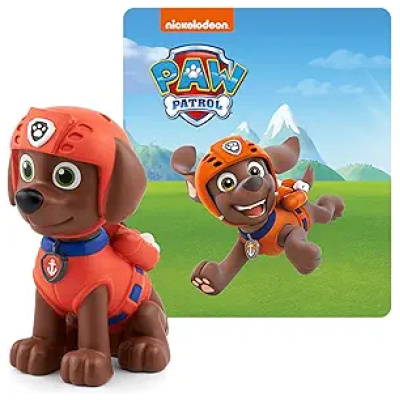
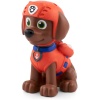
The Tonies Zuma audio figure is a hand-painted character figurine that plays stories, songs, and audio adventures when placed on a Toniebox audio player. It is not a standalone speaker or a battery-powered talking toy, it is a companion figure designed to work with the Toniebox system, which is sold separately. If your household already has a Toniebox, this figure adds Zuma, the water-rescue pup of the PAW Patrol, to your child’s collection of listening characters.
The intended audience is children roughly three years old and up, matching the manufacturer’s stated minimum age of 36 months. In practice, the sweet spot tends to be the two-to-eight range that PAW Patrol itself serves so well: old enough to handle a small figure independently, young enough to be genuinely delighted by a pup who talks back through the speaker. The manufacturer lists a maximum age of 1188 months, which is simply their way of saying there is no upper limit, plenty of older siblings and even adults end up listening along during car rides and quiet afternoons.
Parents often reach for this kind of product for a specific reason: they want a screen-free way for a child to enjoy stories. A Toniebox setup lets a child choose their own audio without a tablet, a phone, or a parent’s help. Zuma becomes the physical, tangible key to a set of stories, which is a very different experience from tapping an icon on a glowing rectangle.
Design and Key Features
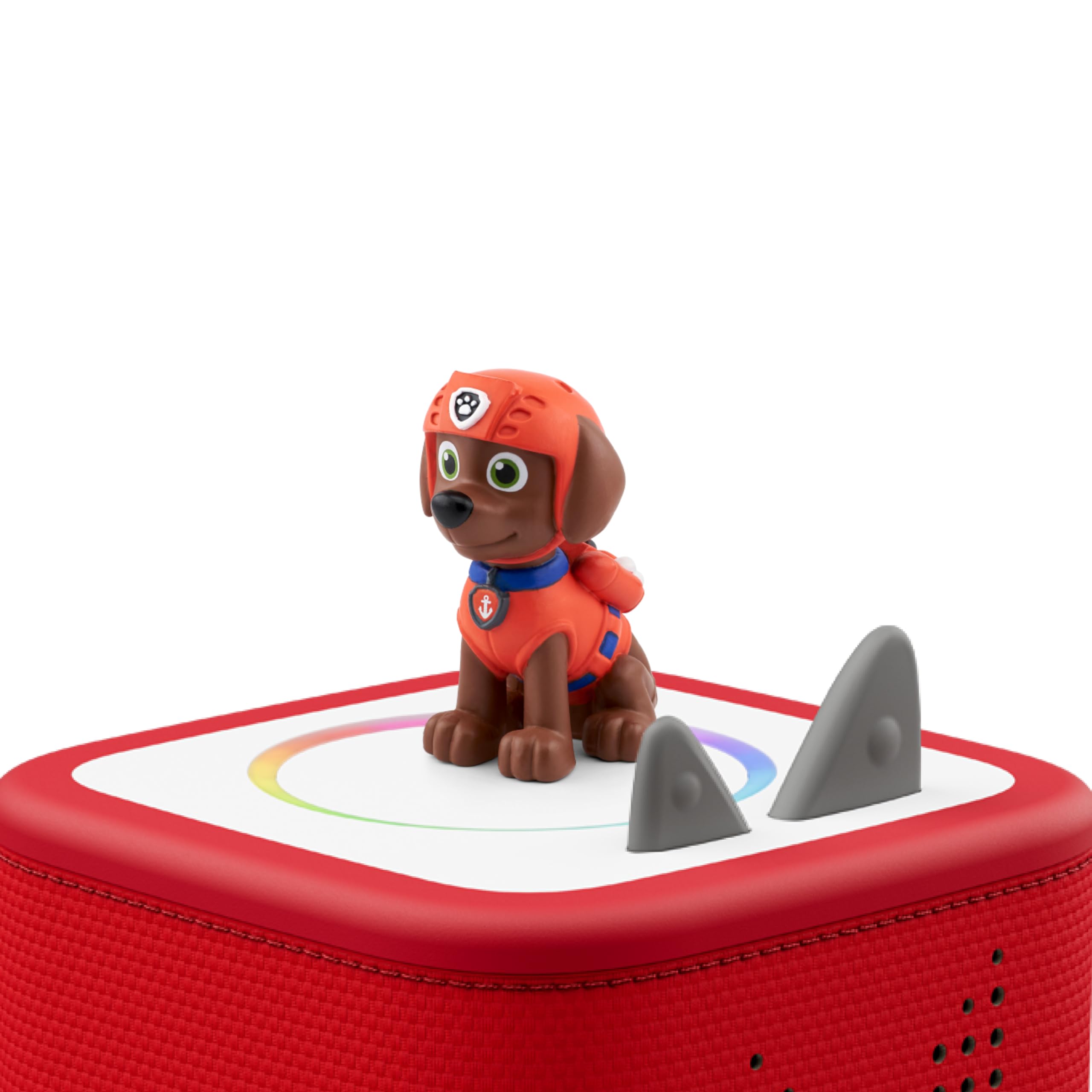
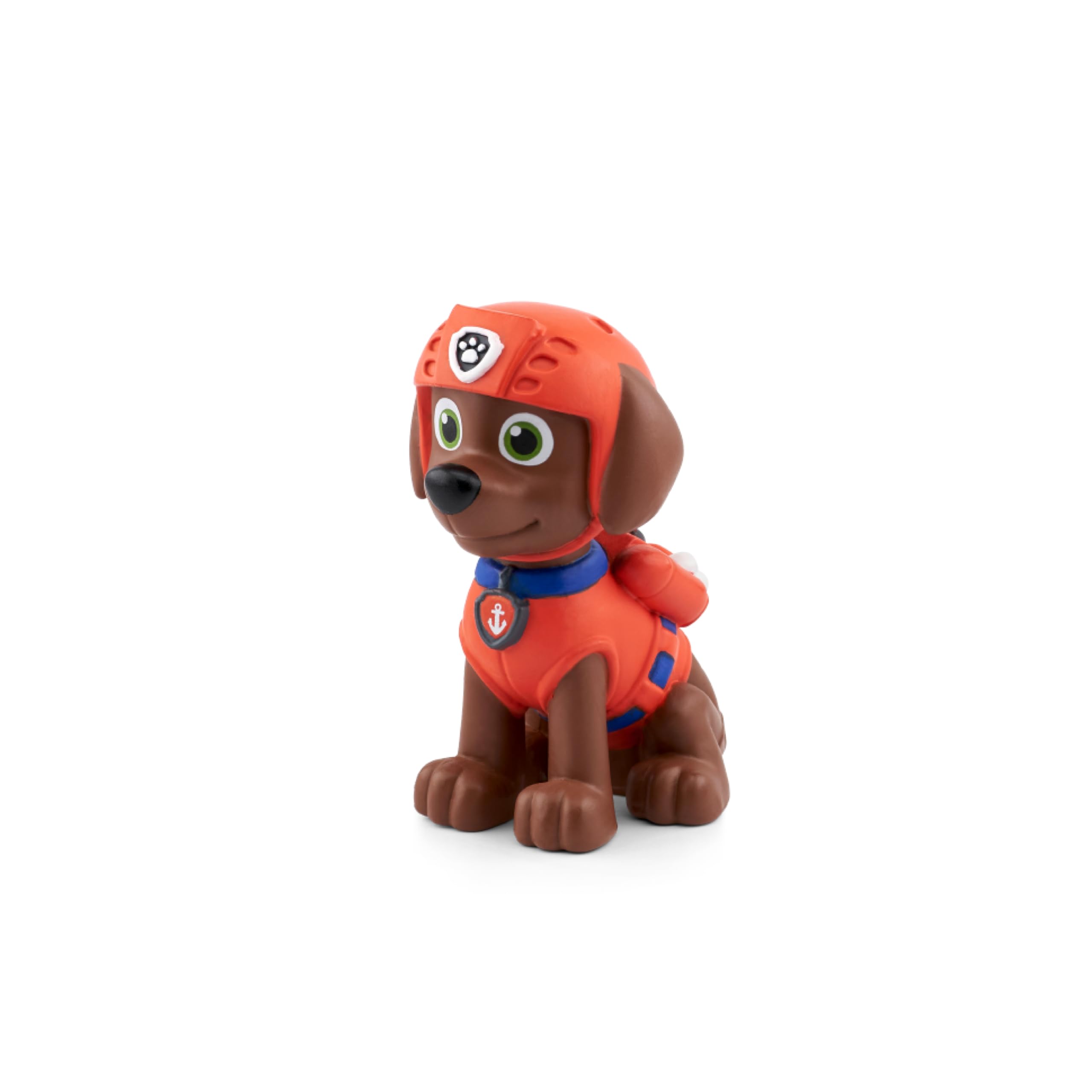
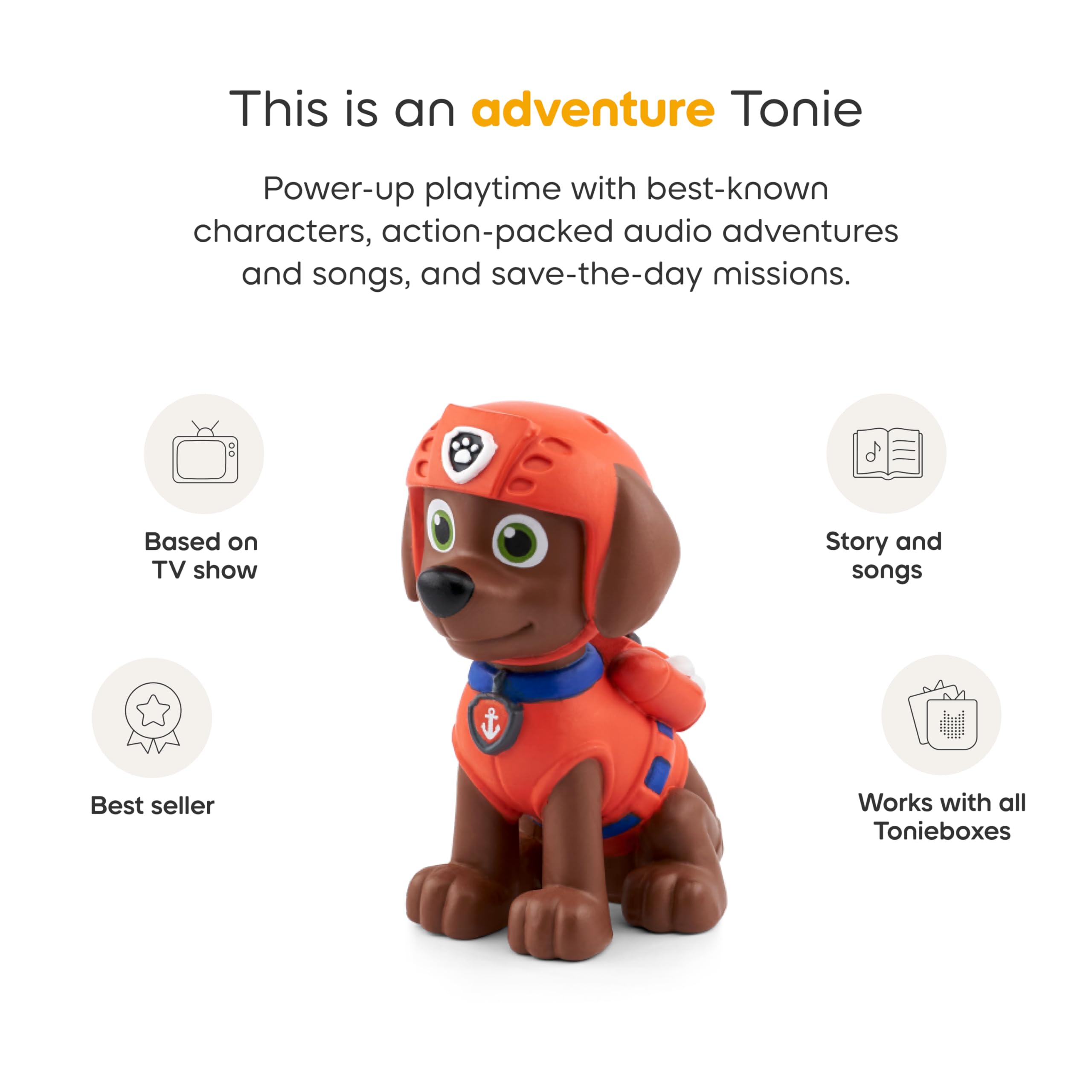
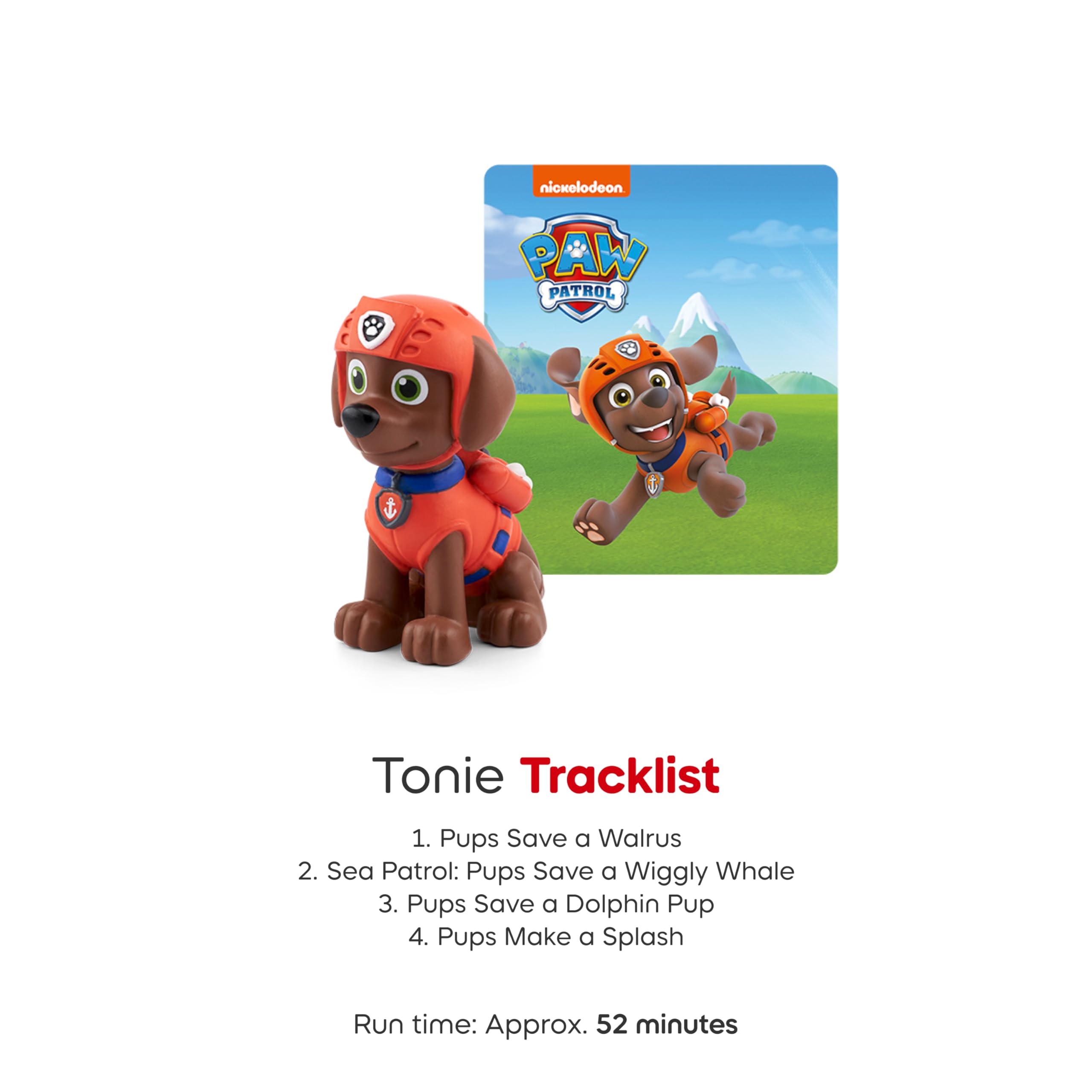
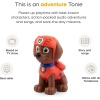
Zuma arrives as a single figure, individually molded and hand-painted in his familiar orange-and-tan colorway with his diving-themed pup pack. The sculpt is compact, sized to sit comfortably on top of a Toniebox and to fit in a small hand or a coat pocket. Tonies figures are made from a durable plastic body with a soft, slightly matte finish, and each one carries a magnetic base that both holds it securely to the top of the player and triggers playback.
The mechanism is deliberately simple. There are no buttons on the figure, no screen, no pairing process, and no charging. A child sets Zuma on the Toniebox, and the content associated with that figure begins to play. Lift him off, and playback stops. Put him back, and it resumes from where it left off. That single interaction is the entire user interface, which is why this format works so well for pre-readers who cannot yet navigate a menu.
This listing covers model name Zuma, model number 10002050, in a single-pack configuration. It ships in Frustration-Free Packaging, which means a plain recyclable box without plastic clamshells, wire ties, or the layers of tape that turn gift-opening into a scissors hunt. For a small item like this, that also makes it easier to wrap or slip into a stocking or party bag.
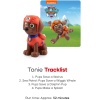
The figure’s content is stored and streamed to the Toniebox rather than living in the figure itself, so the first play requires a Wi-Fi connection on the box. After that initial download, the audio is cached and plays offline, worth knowing before a long drive or a flight, since a quick play-through at home ahead of time means it will work in the car with no signal at all.
Play Value and Everyday Use
The most practical thing about a Tonies figure is how it changes who is in charge of the listening. A three-year-old cannot reliably queue up an audiobook on a phone, but a three-year-old can absolutely carry a small pup across the room and set him on a box. That independence matters during the parts of the day when adults are stretched thin: making dinner, folding laundry, the long stretch between school pickup and bedtime.
Because Zuma is a physical object, he also does double duty. Off the box, he functions as an ordinary play figure, one more pup to line up with the rest of the team, to bring into the bath-adjacent rescue scenarios that Zuma’s water-rescue role naturally invites, or to stage alongside vehicles and playsets from the wider PAW Patrol range. Children tend to move fluidly between listening to a story and acting it out afterward, and having the character in hand supports that.
Audio play also fills gaps that screens fill badly. Car trips, rest time, the wind-down half hour before lights out, waiting rooms, recovery from illness, these are all moments where a story is welcome but a screen is not. Listening builds vocabulary and narrative comprehension in a way that is genuinely different from watching, because the child supplies the pictures themselves.
Collection-building is part of the appeal too. Each figure is discrete and self-contained, so the library grows one character at a time rather than as a subscription that renews whether or not anyone is listening. For families managing gift occasions across a year, a single figure is a reasonable, self-limiting present that slots neatly into what a child already owns.
Durability, Safety, and Age Guidance
These figures are built for the handling a young child actually gives a toy. The body is solid plastic rather than hollow, with no removable accessories, no batteries, no small parts to shed, and no exposed electronics. Dropped on a hardwood floor or knocked off a shelf, it holds up; painted detailing may scuff with heavy use over time, which is the normal wear pattern for hand-painted figures.
The manufacturer’s minimum age of 36 months should be treated as a real guideline, not a formality. The figure is small enough to present a choking hazard for children who still mouth their toys, so it is not suitable for infants or toddlers under three. Households with a mix of ages will want to store the collection somewhere a crawling sibling cannot reach, a shelf, a bin with a lid, or one of the display racks made for this purpose.
Cleaning is straightforward: wipe with a slightly damp cloth and let it dry. Do not submerge the figure, run it through a dishwasher, or leave it soaking, despite Zuma’s aquatic job description, the magnetic base and internal tag are not designed for immersion. Keep figures away from strong magnets and from prolonged direct sunlight, which can fade paint on any figure over the years.
Two practical notes worth stating plainly. First, the Toniebox player is required and is not included here; a figure on its own will not produce sound. Second, this is a single figure, not a multipack, the number of packs is listed as one, so a child expecting the whole team will need additional figures to get there.
Why Zuma Fits the PAW Patrol World
Zuma is the water-rescue member of the team, the one who handles hovercraft duty, dives when something goes overboard, and turns up whenever a rescue heads toward the bay. Among the core pups, he tends to be the easygoing one, which makes him a favorite for children who gravitate toward the calmer characters rather than the leaders. Having him available in audio form means his voice and his catchphrases come through directly rather than being imagined.
The broader appeal of PAW Patrol for this age group has always been its structure: a problem appears, a specific pup with a specific skill is called in, and the team resolves it together. That formula is unusually well suited to audio, because the stories are clear, the characters are distinguishable by voice, and the stakes stay gentle. A child who already knows the pups from the show can follow an audio adventure without visual cues, which is exactly the transition that makes screen-free listening work.
Within a collection, Zuma also fills a role. Chase, Marshall, and Skye are usually the first figures through the door; Zuma, Rubble, and Rocky are the ones that complete the original team and open up the group scenarios children like to build. If your child has been assembling the PAW Patrol lineup, on the shelf, on the Toniebox, or both, this is one of the pieces that makes the set feel whole.