What This Tonies Rocky Figure Is and Who It’s For
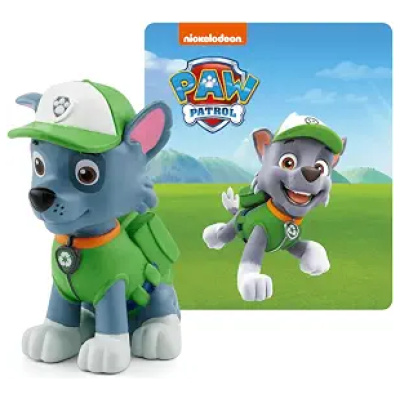
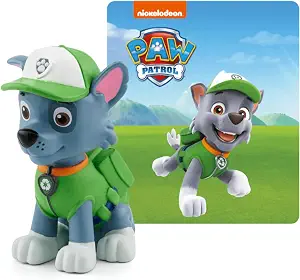
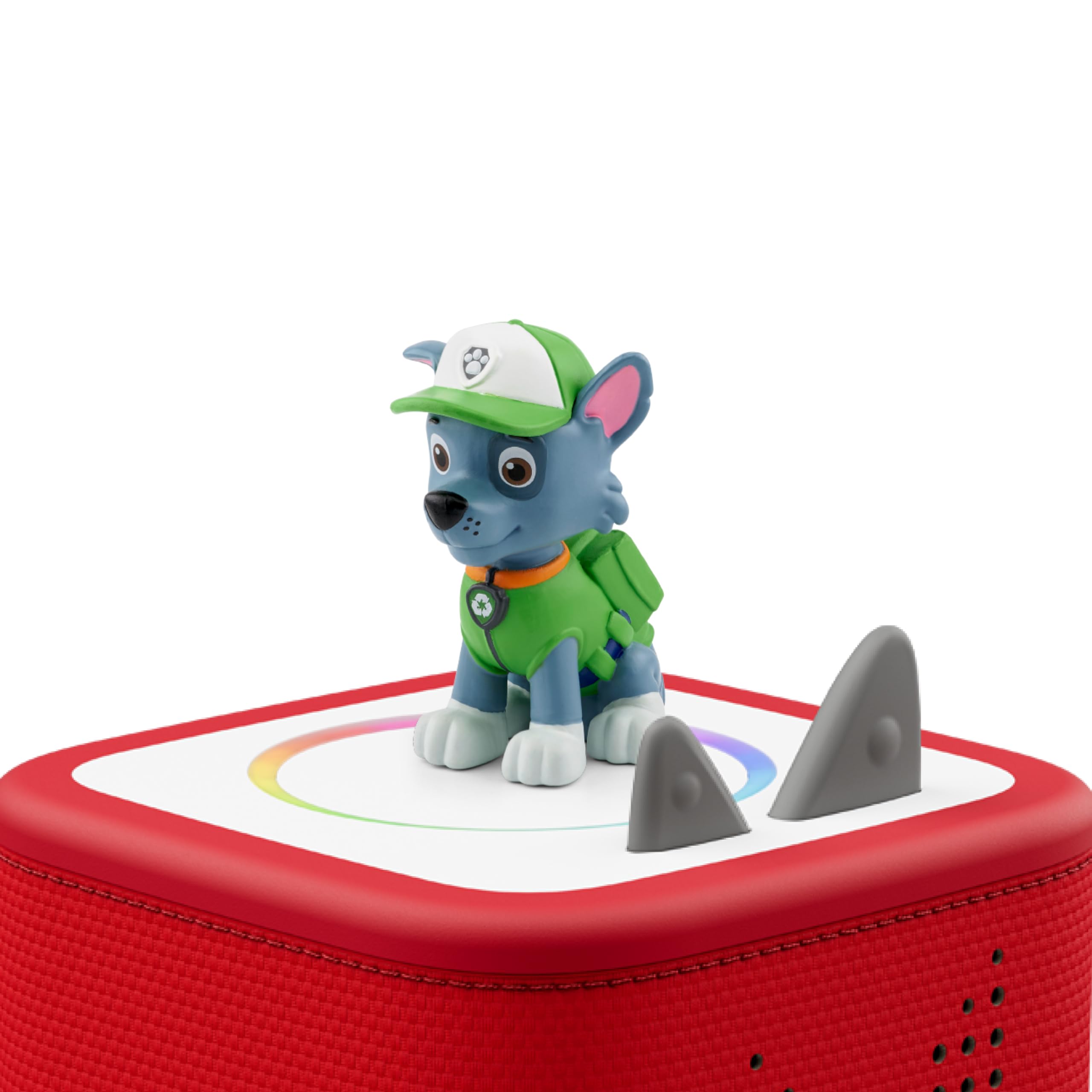
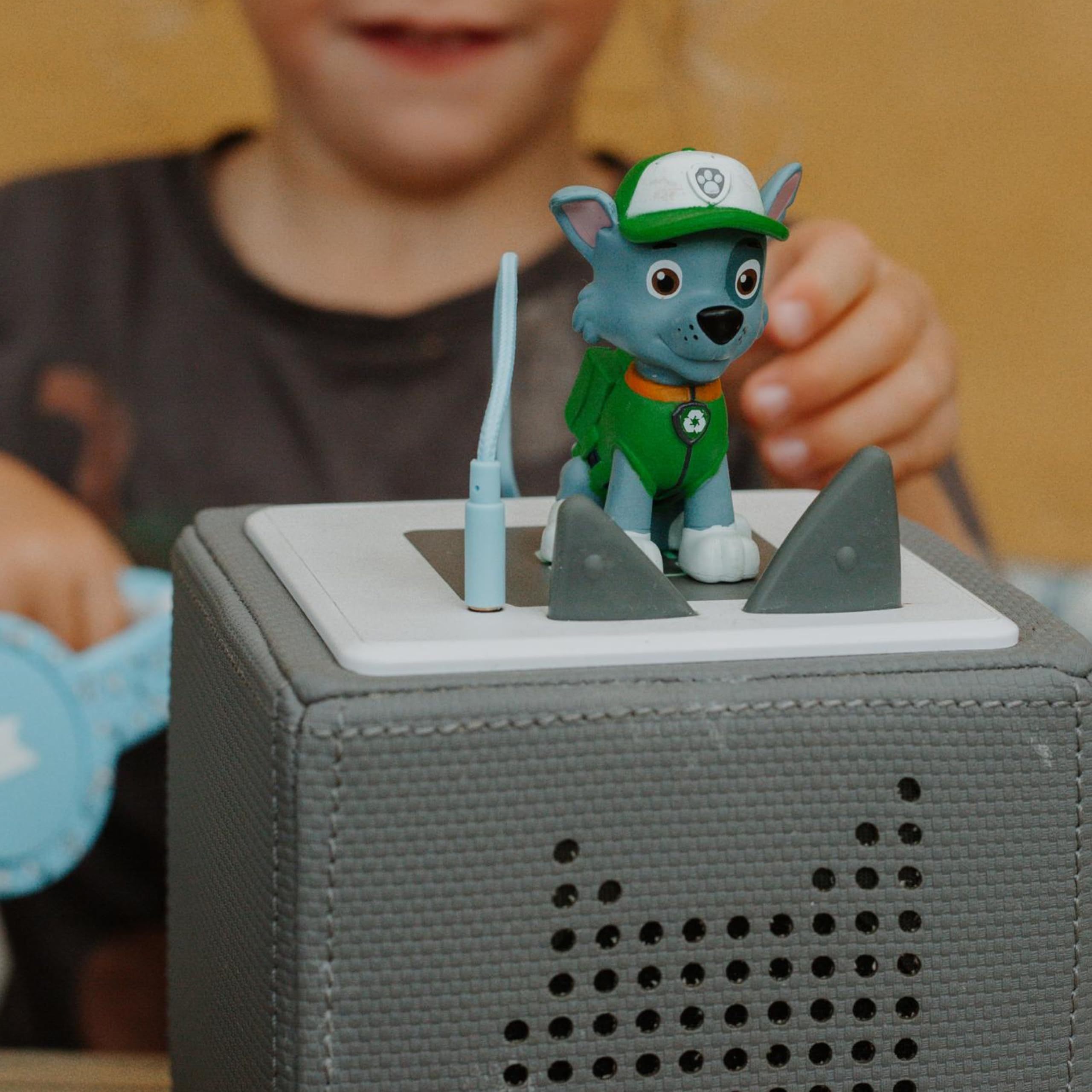
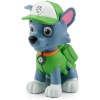
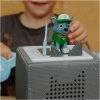
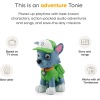
This is a Tonies audio character figurine shaped like Rocky, the recycling pup from PAW Patrol. Unlike a standard action figure, this hand-painted figure carries audio content and is designed to work with a Toniebox audio player. Place Rocky on top of the box and the stories tied to that character begin playing. Lift him off, and the audio stops. That single interaction is the whole interface, which is why the system works so well for children who cannot yet read a screen, navigate a menu, or manage a remote.
The manufacturer sets the recommended starting age at 36 months, or three years old, with an upper age guideline that stretches into the adult range. In practice, the sweet spot is roughly ages three through eight, which lines up closely with the core PAW Patrol audience. Younger children in that band tend to use it as a repeat-listening comfort object, playing the same story over and over. Older children in that band are more likely to use it independently, choosing which figure to place on the box depending on their mood that day.
It’s worth being clear about one thing up front: this figurine requires a Toniebox to play audio. The figure itself does not contain a speaker or a battery, and it will not produce sound on its own. If your household already has a Toniebox, Rocky slots straight into that collection. If you don’t, this figure works as an addition to a gift alongside a player, or as a standalone collectible that gains its function later. Many parents buy the player first and then build out the character library gradually over birthdays and holidays.
Design and Physical Details
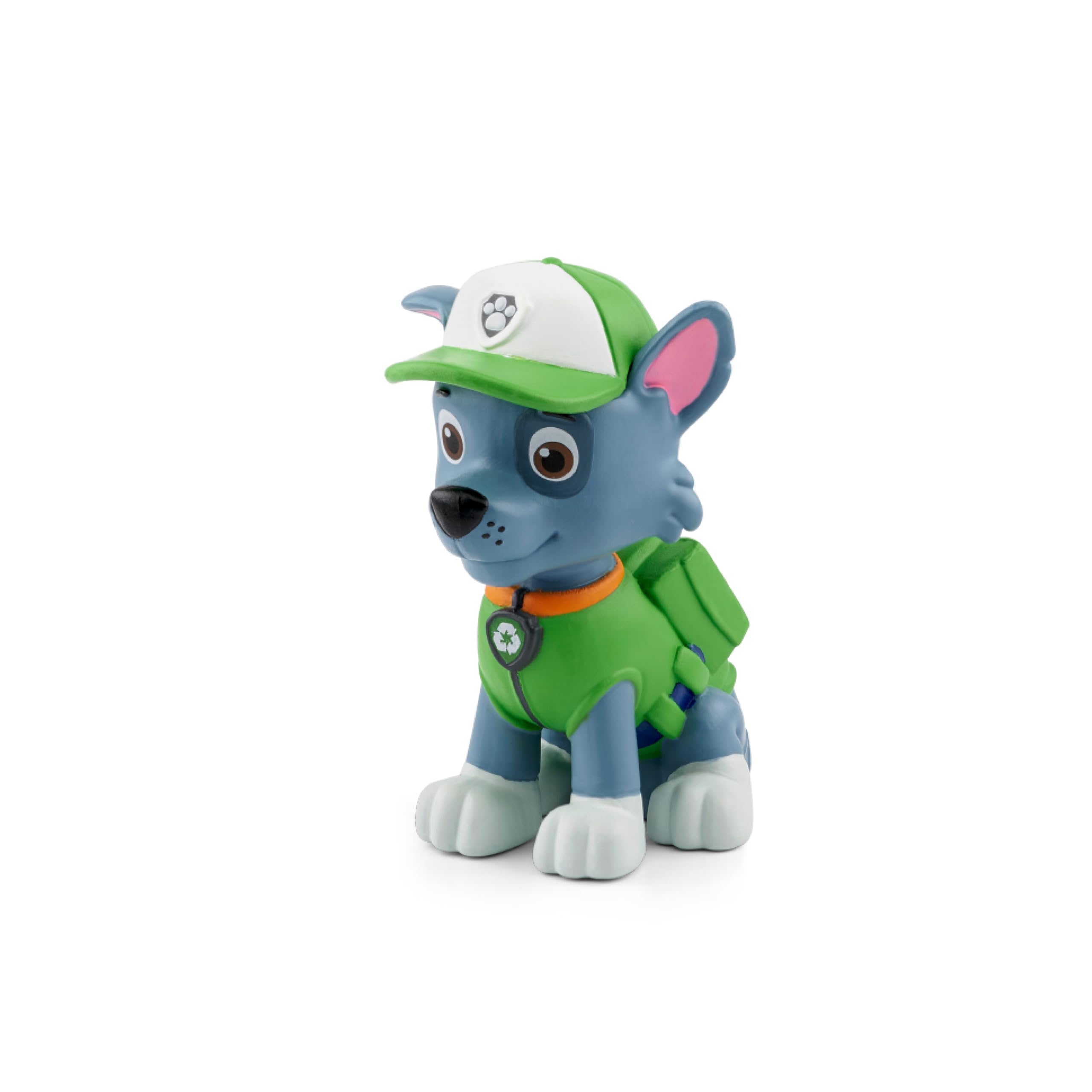
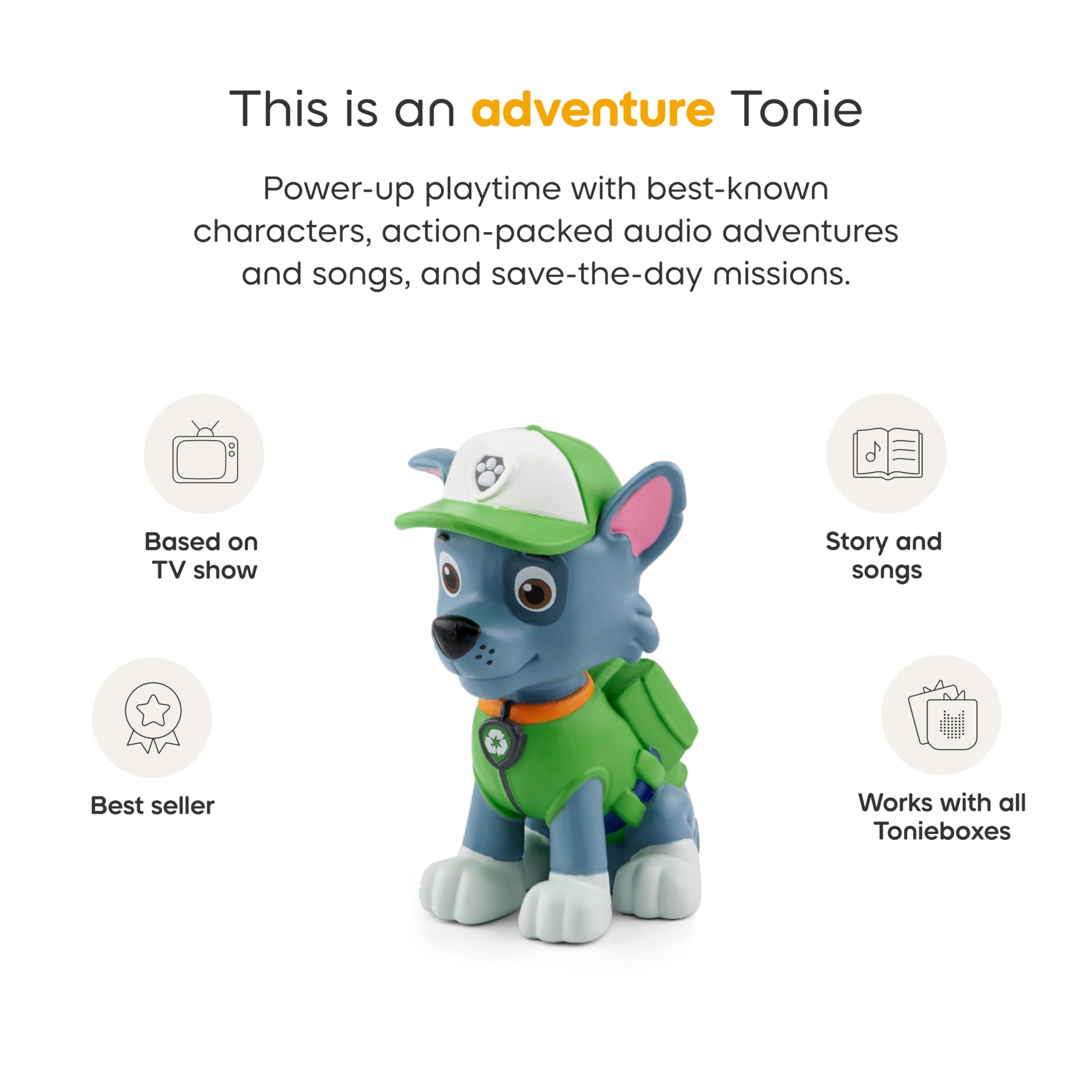
Rocky is rendered as a compact standing figure with the green and grey color scheme that identifies him across the PAW Patrol lineup. His pup pack, ball cap, and collar tag are all sculpted rather than printed, so the details hold up to being handled rather than wearing off after a few weeks in a toy bin. The paintwork is applied by hand, which means small variations between individual figures are normal and expected rather than a defect.
The base of the figure contains the magnetic and identification hardware that lets the Toniebox recognize which character has been placed on it. This is what allows the same box to play completely different content depending on which figure a child sets down. There are no buttons, no charging port, and no pairing steps on the figure itself. Nothing needs to be set up by an adult beyond the initial Toniebox configuration.
Size-wise, the figure is proportioned to sit comfortably in a small hand and to stand upright on a shelf or the top of the player. It carries model number 10002049 and UPC 840147409928, which is useful if you’re cross-checking that you’ve found the correct Rocky figure rather than a similar-looking character from the same series. Several PAW Patrol pups share a broadly similar silhouette, so the color scheme and the model number are the reliable ways to confirm you have the right pup.
How Children Actually Use It
The practical appeal here is screen-free independent listening. A child who wants a story does not need to ask an adult to unlock a tablet, find an app, or start a playlist. They pick up the pup they want, put him on the box, and the story starts. That autonomy matters more than it might sound. Children in this age range are working hard on doing things for themselves, and a piece of technology they can operate without help gets used far more than one that requires a grown-up in the loop.
The most common use cases parents report are quiet time, car rides with a portable player, and the wind-down period before bed. Because the audio stops the moment the figure comes off, a child falling asleep mid-story doesn’t leave a device running all night. Some families use it as a transition tool: one story on the box marks the shift from playtime to pajamas, and the ritual does some of the work that nagging otherwise would.
There’s a second layer of play value that has nothing to do with audio. When Rocky isn’t on the box, he’s a figure. Children fold these into ordinary imaginative play with other PAW Patrol toys, vehicles, and playsets. He’ll get carried around in a pocket, lined up with the other pups, and pressed into missions that have nothing to do with the recorded content. That dual life as both a media key and a toy is a genuine part of what you’re buying.
Collecting also drives a lot of the engagement. Once a child has one pup, the natural instinct is to want the rest of the team. This can be a benefit or a budget concern depending on your perspective, and it’s fair to go in knowing that the format is designed around building a library over time.
Durability, Safety, and Age Guidance
These figures are built with the assumption that they will be dropped, thrown into bags, and handled constantly by small hands. The body is a solid molded piece rather than an assembly of thin snap-together parts, so there are no obvious weak points like fragile limbs or protruding antennae to snap off. The paint is applied to a textured surface that hides ordinary scuffing reasonably well. Ordinary drops onto carpet or a wooden floor are within the range this is designed to handle.
The 36-month minimum age is the figure’s official guidance, and it should be respected. Children under three still explore with their mouths, and the figure has a magnetic component in the base. Magnets are a serious ingestion hazard for toddlers, so this is not a case where the age rating is simply a conservative legal default. If you have a younger sibling in the house, store the figures somewhere the toddler cannot reach and treat it the same way you would treat small building bricks.
For cleaning, a slightly damp cloth wiped over the surface is sufficient. Don’t submerge the figure in water, run it through a dishwasher, or use solvent-based cleaners, as the base contains electronic identification hardware and the hand-applied paint isn’t intended for soaking. The upper age guidance running to 1188 months, or 99 years, is the manufacturer’s way of noting that there is no upper limit on who can use the product, adults collect these too, and the audio content is often enjoyed alongside children rather than only by them.
Why Rocky Fits the PAW Patrol Universe
Rocky is the recycling and repair pup of the Adventure Bay team, and among the core lineup he’s the one defined by resourcefulness rather than speed or flight. His running theme is that almost anything can be reused, repaired, or repurposed, and his catchphrase, “Green means go!”, ties directly to that idea. For a lot of children he’s the pup they gravitate toward when they’re at the age of taking things apart to see how they work.
That makes him a somewhat different pick from Chase or Marshall, who tend to be the default first choices. Rocky appeals to children who like fixing and building, and he introduces environmental themes in a way that never feels like a lesson being delivered. He’s also the pup with a well-known dislike of water, which the show plays for gentle comedy and which gives him a recognizable personality quirk that children pick up on quickly.
Within a growing figure collection, Rocky rounds out the team. PAW Patrol is built around the idea that each pup contributes a distinct skill and that the group succeeds by combining them. A collection missing Rocky is missing the problem-solver, and children who play with these figures notice that gap. Whether he’s the first pup in the house or the one that completes the set, he brings a specific role to the shelf and to the stories that get built around it.