What This Set Is and Who It’s For
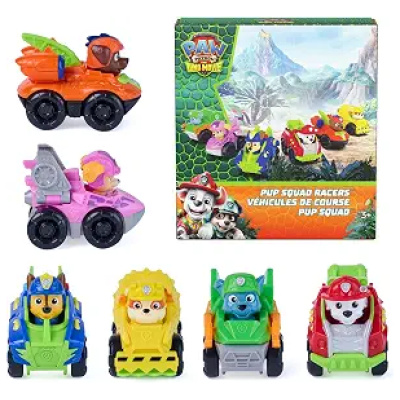
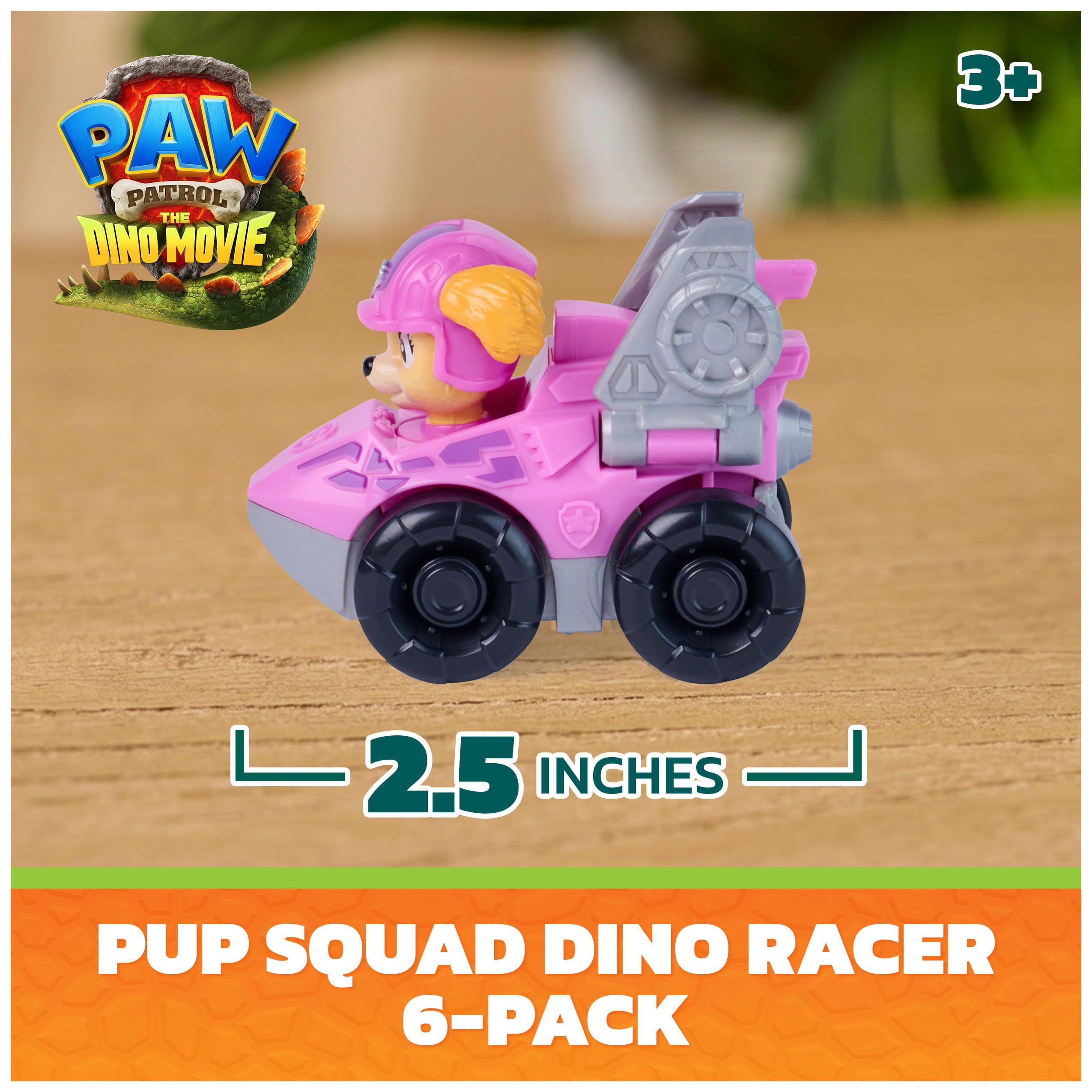
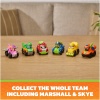
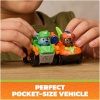
The PAW Patrol Dino Movie Pup Squad Racers 6-Pack brings together six pocket-sized vehicles inspired by PAW Patrol: The Dino Movie. Each car measures about 2.5 inches long, which makes the whole set small enough to gather into a lunchbox pocket, a car door bin, or the side pouch of a backpack. The pack is made by Spin Master, the company behind the PAW Patrol toy line, and carries model number 6076063.
The recommended age range is 3 years and up, with the manufacturer listing a span of roughly 36 to 108 months. That lands squarely in the preschool through early-elementary window, which is also when most children are watching the show and forming strong attachments to particular pups. Children at the younger end of that range tend to line the cars up, sort them, and roll them back and forth. Older children in that range build stories around them and stage races. Both kinds of play work with the same six vehicles, which is part of why a multi-pack tends to outlast a single figure.
This is a good fit for a household that already has PAW Patrol in rotation and wants something new tied to the movie, and it works equally well as a first PAW Patrol purchase. Because it arrives as one set of six rather than six separate purchases, it also solves a common parenting problem: a child who wants Chase and Skye and everyone else, all at once, without a series of separate trips to the store.
Design and What’s Inside the Pack
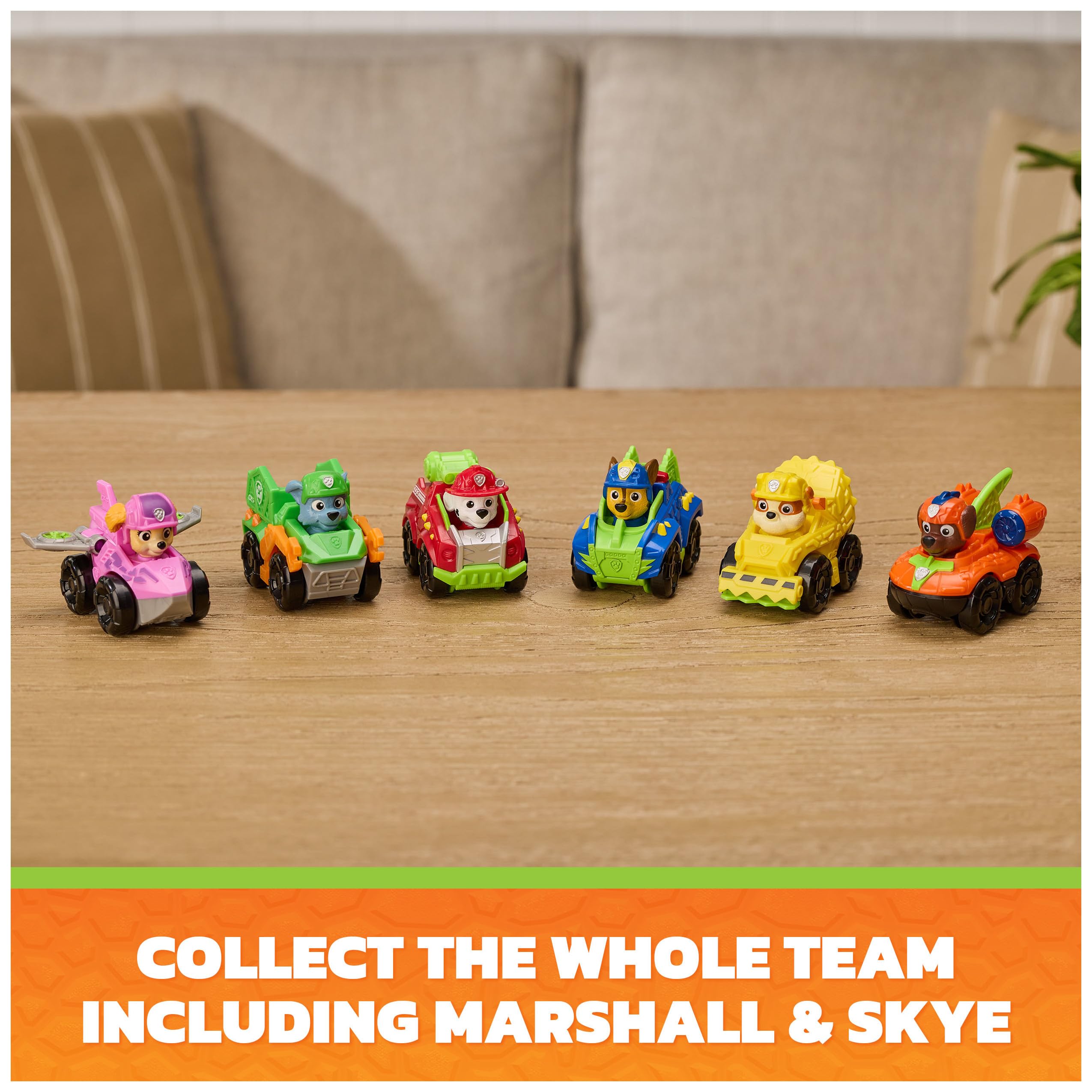
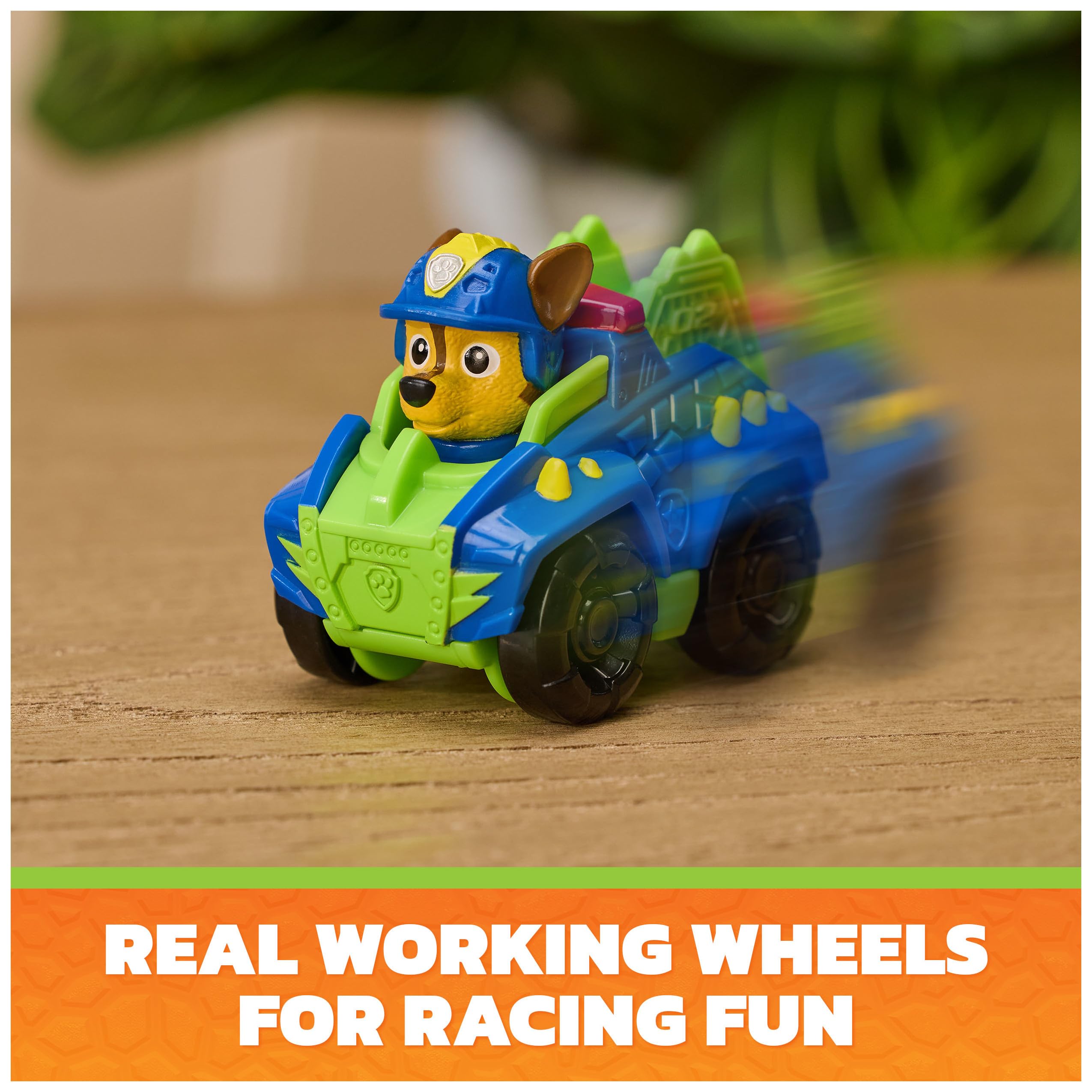
The set includes six vehicles featuring Chase, Skye, and their friends from the movie lineup. Each car is built as a single molded piece with the pup shown in the driver’s position, so there are no small figures to separate from the vehicle and lose. The die-cast-style body shape is chunky and rounded rather than sharp-edged, sized for a small hand to grip in a full fist rather than a pincer grasp.
Colors follow the character conventions children already know from the series. Chase’s vehicle carries the blue of his police gear, Skye’s carries her pink, and the remaining cars follow the same logic for their pups. That consistency matters more than it might seem. A three-year-old who cannot yet read a name on a package can still identify a pup by color from across the room, and that recognition is what lets a child organize the set independently, without an adult naming each one.
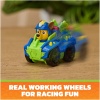
The vehicles roll on free-wheeling axles. There is no pull-back mechanism, no battery compartment, and no electronics, which means nothing to switch off, nothing to replace, and no sound that has to be tolerated during quiet hours. The cars roll when pushed and stop when they stop. The 2.5-inch scale is deliberate; it matches the general size class of other pocket vehicles, so the racers tend to work alongside track sets, garages, and ramps a family may already own, though fit is never guaranteed across brands.
How Children Actually Play With Them
Six vehicles in one box changes the kind of play that’s possible. A single car gets pushed around; six cars get raced, ranked, lined up in convoy order, hidden and found, and sorted by color. Sorting and sequencing are the sort of quiet cognitive work preschoolers do on their own without calling it that, and a set with six distinct, clearly differentiated items gives them the material for it.
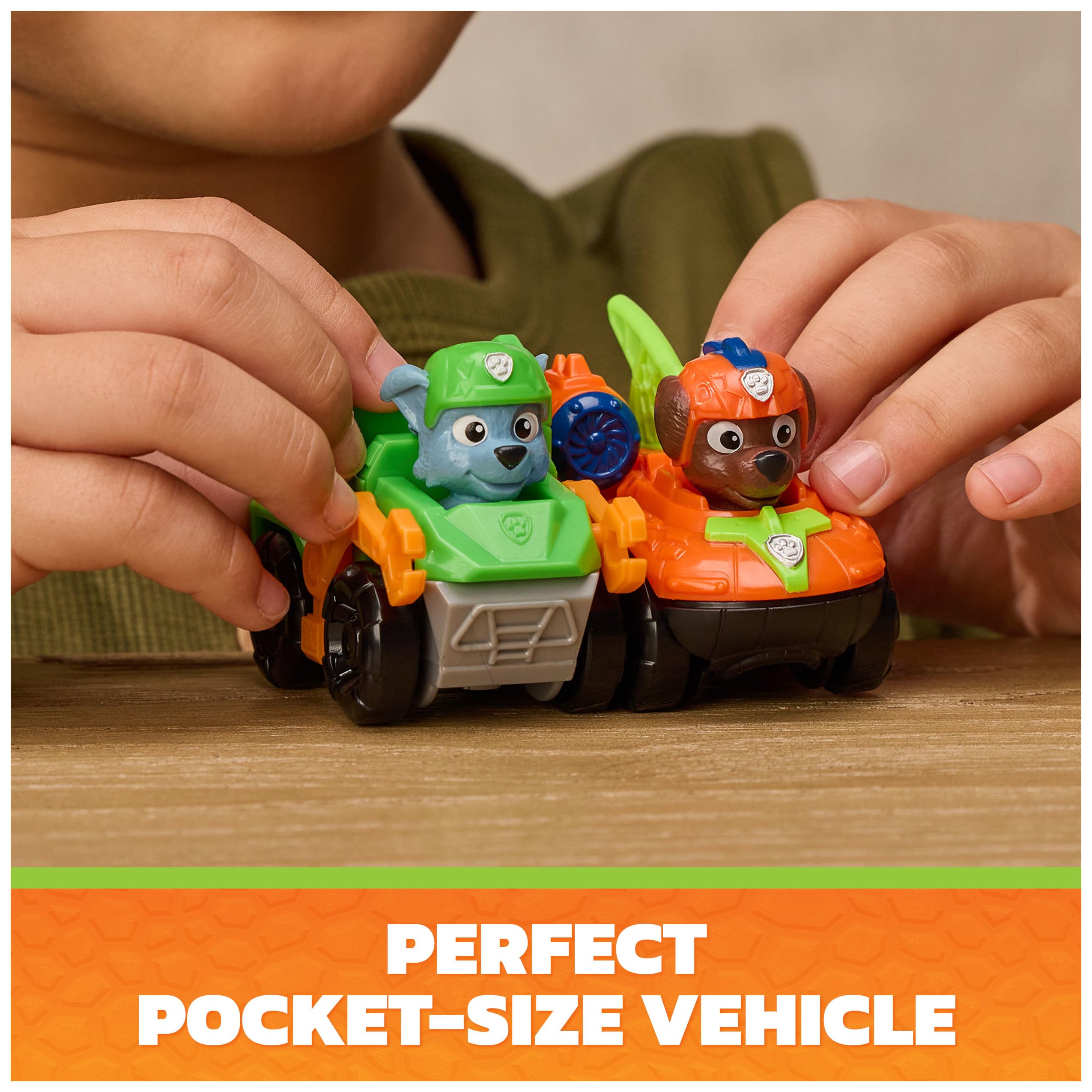
The size is the practical advantage for families. These fit in a coat pocket, so they travel to restaurants, waiting rooms, airplane tray tables, and grandparents’ houses without a bag. A child who has six small cars has enough to build a scenario on a tray table and enough redundancy that losing one mid-trip is disappointing rather than ruinous. For long car rides, a handful of small vehicles that make no noise is a specific kind of relief.
Group play works well here too. Six cars means a child and a sibling or friend can each take three, which removes the negotiation that a single toy forces. Many parents find that multi-packs get pulled out for playdates precisely because there is enough to go around.
The vehicles also fold into existing PAW Patrol play. Children who already have the larger figures, the Lookout tower, or other playsets tend to incorporate the small racers as extra vehicles in a scene rather than treating them as a closed system. The racers stand alone, but they don’t have to.
Durability, Safety, and Age Guidance
The 3+ age rating is the number to pay attention to, and it applies to the set as a whole. Small vehicles of this scale are not suitable for children under 3, who still mouth objects; a 2.5-inch car falls within the range that presents a choking hazard for that age group. Households with both a preschooler and a baby or toddler should plan for a storage spot that’s genuinely out of reach, not just tidied away, and should keep the set to surfaces the younger child doesn’t share.
Construction favors survivability. Solid molded bodies with no separate accessories, no doors that open, and no antennae or spoilers to snap off mean there is very little on these cars to break. The most common failure point on small vehicles is a wheel or axle after repeated hard throws, and that is worth knowing rather than worrying about. Printed and molded graphics hold up better than stickers over time, which is generally the case with vehicles at this size.
Cleaning is straightforward: a damp cloth and a dry-off. With no electronics or batteries, there’s nothing to keep away from water beyond ordinary sense, and nothing to corrode in a toy bin. Storage is easy to solve with any small bin, zip pouch, or shoebox; the whole set occupies about the volume of a sandwich.
As with any toy of this kind, an occasional check for cracked plastic or a loose wheel is a reasonable habit, and a car that has been damaged is worth retiring rather than repairing.
Where It Fits in the PAW Patrol World
PAW Patrol has been built around vehicles from the beginning. Each pup has a job and a vehicle that goes with it, and much of the appeal for young children is exactly that pairing: Chase is the police pup with the cruiser, Skye flies, Marshall handles fire response. Children learn the roles before they learn to read, and vehicle toys are the most direct way for that knowledge to become play.
This set connects to PAW Patrol: The Dino Movie specifically, so the vehicles reflect the movie’s take on the pups rather than the standard series versions. For a child who has seen the film, or is about to, that connection is the point; the cars are the version of the characters they just watched. For a child who hasn’t, the set still reads as PAW Patrol, since the pups, colors, and vehicle logic carry over.
Spin Master has produced the PAW Patrol line since the show’s start, and small-scale vehicle multi-packs have been a steady part of that range. Families who have owned earlier vehicle sets will recognize the general format. This one is distinguished by the movie tie-in and by arriving as a complete group of six rather than as individual pieces to collect one at a time.
What makes it useful long-term is that it’s low-commitment play. The cars do not require setup, instructions, batteries, or a particular surface. A child can take one out for two minutes on a kitchen floor and put it back, and that low threshold tends to mean a toy gets picked up often over months rather than intensely for a week.