From Construction Site to Rescue Mission: The Story Behind Rubble’s Transforming Bulldozer
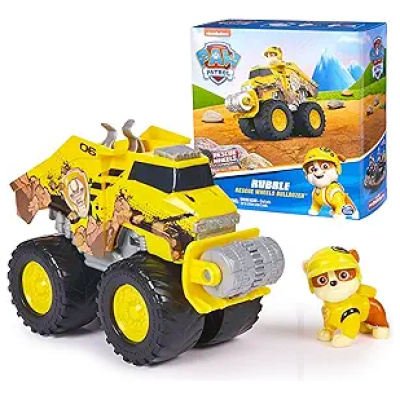
When children engage with the world of Paw Patrol, they’re not just watching a show, they’re stepping into a universe where teamwork, problem-solving, and hands-on play come together. The Spin Master Toy Truck Paw Patrol Rubble’s Bulldozer with Vehicle Transformation and Action Figure is a direct extension of that world, designed for children aged 3 to 9 who want to bring the construction-themed rescues of Adventure Bay into their own hands. This isn’t a static toy; it’s a vehicle that changes form, a figure that stands ready for action, and a tool for storytelling that mirrors the episodes kids already love.
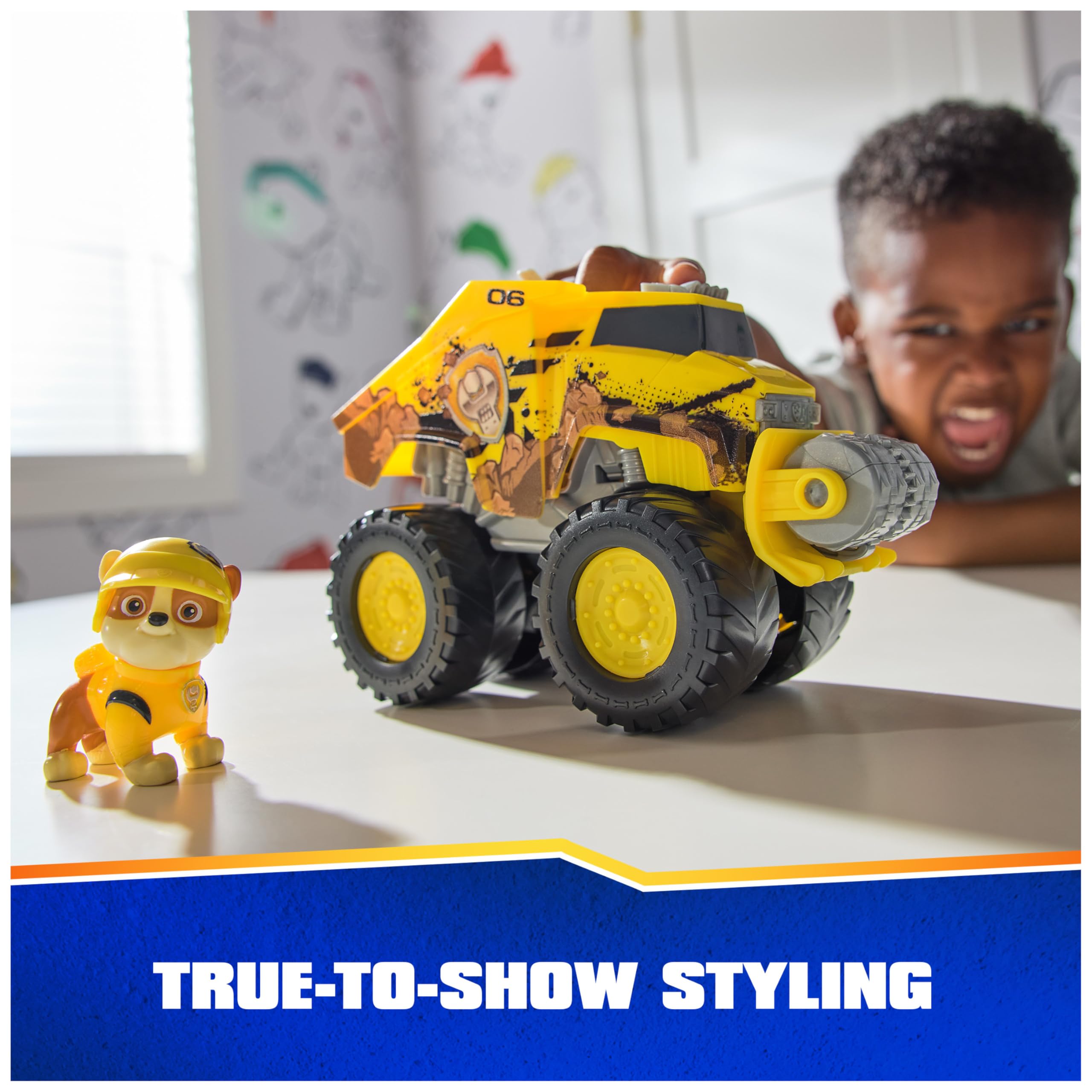
Rubble, the beloved bulldog construction expert, is known for his can-do attitude and his signature bulldozer. This toy captures that essence with a design that prioritizes durability and playability. The vehicle itself is constructed from robust materials that can withstand the bumps and rolls of daily play, whether on carpet, tile, or outdoor surfaces. The transformation feature is the centerpiece: with a few simple steps, the bulldozer converts from a rolling truck into a more compact rescue mode, or vice versa. This isn’t a gimmick, it’s a mechanical function that encourages children to think about how vehicles work, how parts move, and how a single object can serve multiple purposes. The included Rubble action figure is scaled to fit the driver’s seat, and his articulated arms and legs allow for positioning that feels natural, whether he’s gripping the steering wheel or standing beside the vehicle for a closer inspection.
Parents will appreciate that the toy requires no batteries, which means no unexpected shutdowns during play. The focus is entirely on manual interaction: pushing, pulling, transforming, and posing. This aligns with developmental needs for fine motor skills, spatial reasoning, and imaginative narrative building. The recommended age range of 3 to 9 years is appropriate because the transformation mechanism is simple enough for a preschooler to grasp with a little guidance, yet the open-ended play possibilities keep older children engaged as they create complex rescue scenarios. The model number 6070423 and ASIN B0CSPF2327 identify this as a current Spin Master release, part of the Rescue Wheels sub-line that emphasizes vehicle functionality and character integration.
In a market saturated with electronic toys, this bulldozer stands out for its tactile, analog approach. It doesn’t talk back, it doesn’t light up, it simply rolls, transforms, and waits for a child’s imagination to drive the story. For parents seeking a toy that encourages active play rather than passive consumption, this is a deliberate choice. The construction theme also offers a subtle entry point for discussing real-world concepts like building, engineering, and helping others, all wrapped in the familiar, friendly context of Paw Patrol.
How the Transformation Mechanism Works: A Closer Look at the Vehicle’s Two Modes
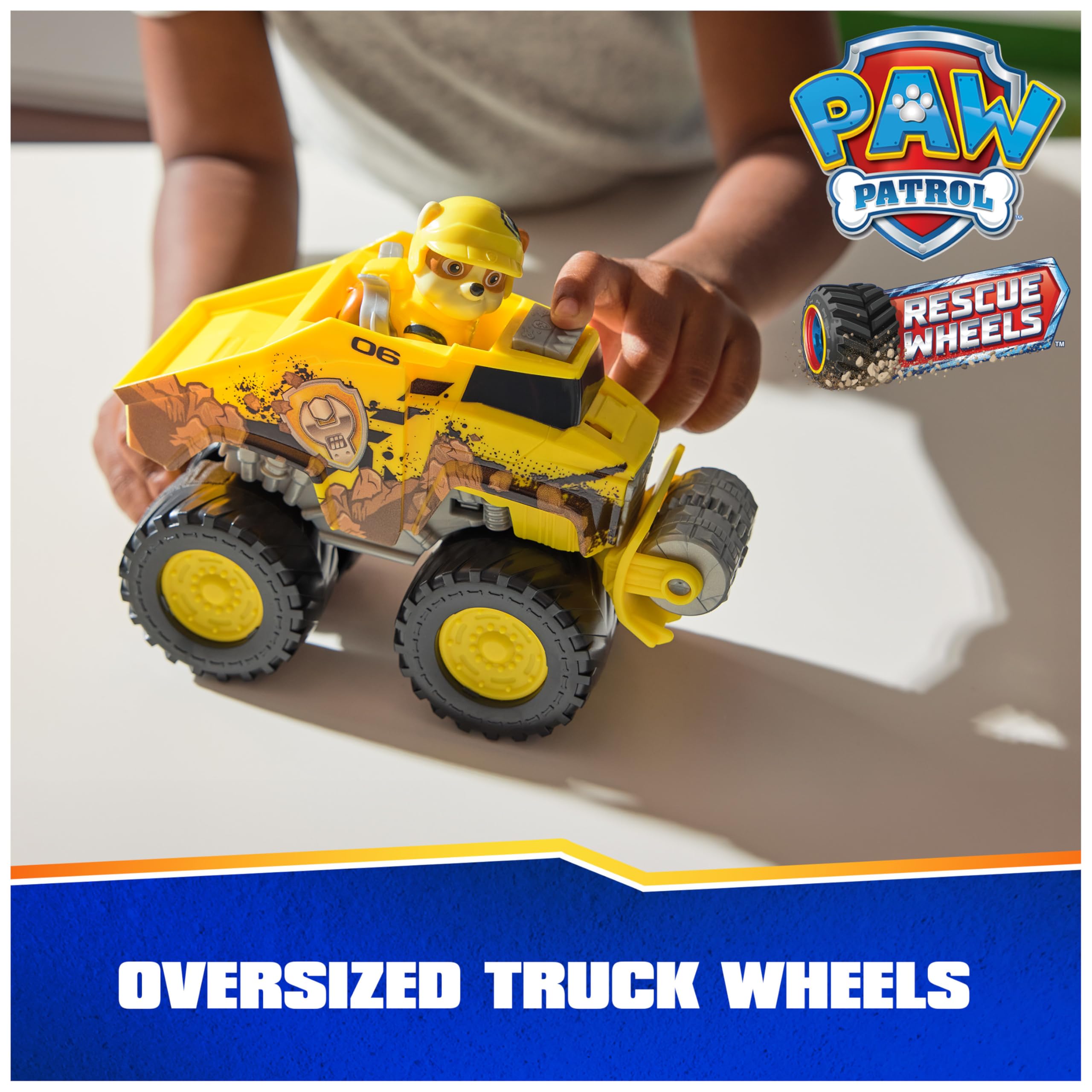
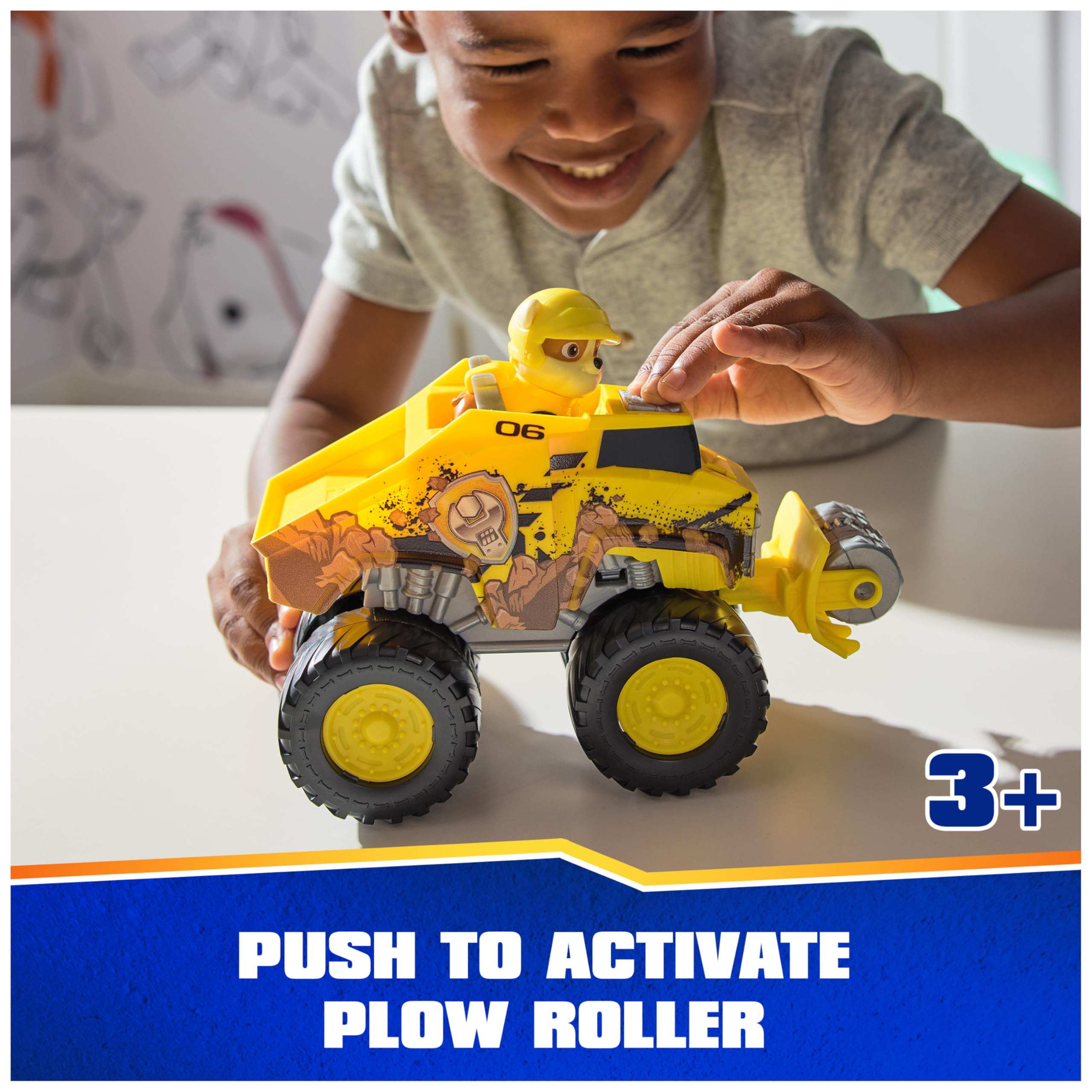
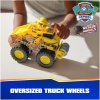
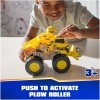
The defining feature of this toy is its ability to shift between two distinct configurations, and understanding how this mechanism operates helps parents evaluate its durability and play value. In its standard truck mode, Rubble’s bulldozer resembles a classic construction vehicle: a large, yellow cab with a black roll cage, oversized wheels with chunky treads, and a front blade that can be raised or lowered manually. The blade is not motorized; instead, it moves on a simple hinge and lock system that clicks into place at different angles. This allows children to simulate scooping, pushing, or lifting debris during rescue missions.
The transformation to rescue mode involves a series of physical steps that are intuitive but require deliberate action. The rear section of the vehicle, which houses the scoop or shovel, can be rotated forward and locked into a new position. This shortens the overall length of the vehicle and changes its center of gravity, making it more maneuverable in tight spaces, a detail that mirrors the show’s emphasis on adaptability. The cab itself remains stationary, but the front blade can be repositioned to act as a stabilizer or a pushing tool. The entire process takes about ten seconds once a child is familiar with the steps, and the joints are designed with enough resistance to hold their position during play but not so tight that small hands struggle.
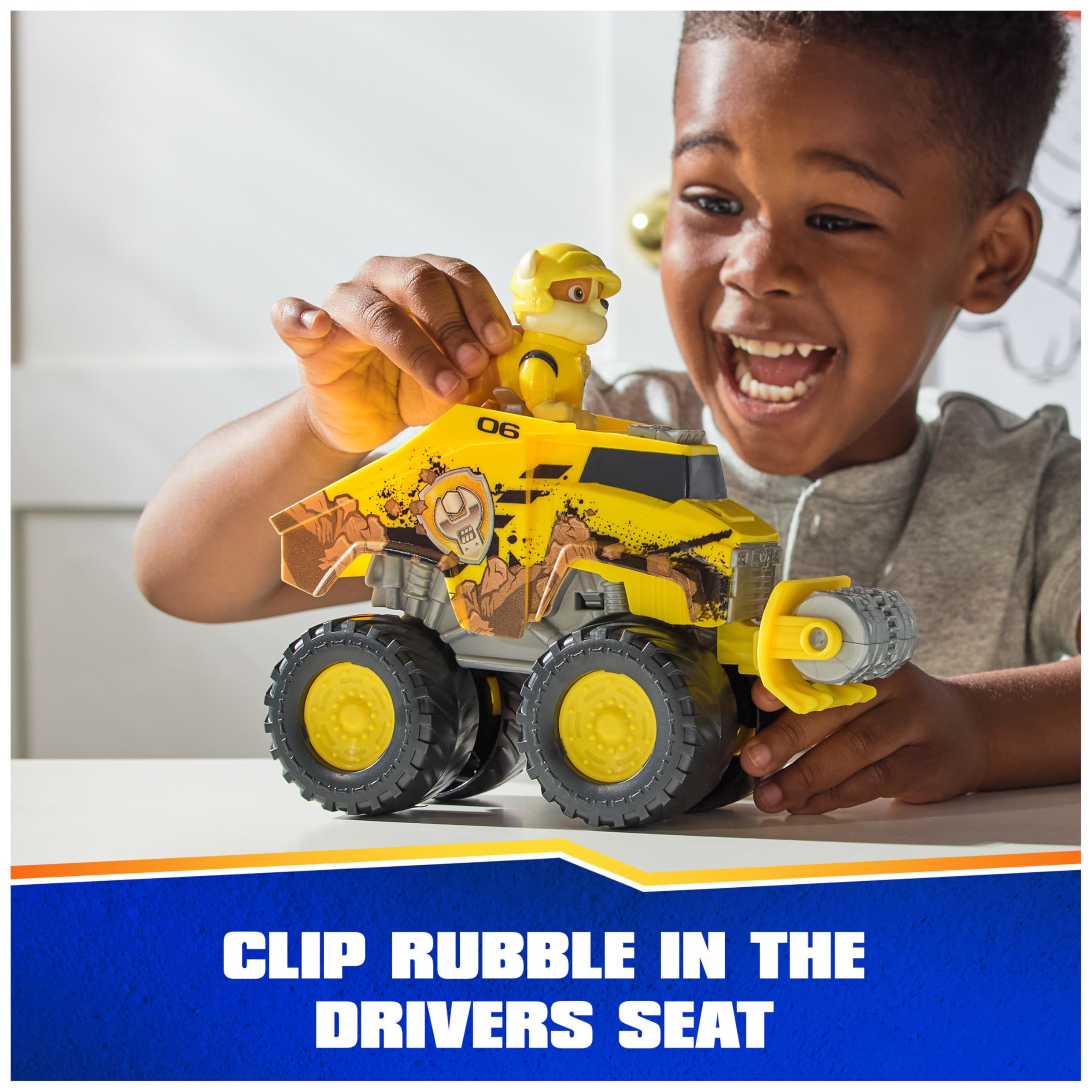
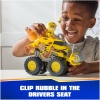
From a materials standpoint, the transformation points are reinforced with thicker plastic and metal pins where stress is highest. Spin Master has a track record with the Paw Patrol line of producing toys that survive repeated transformations, and this model follows that standard. The wheels are free-rolling on smooth axles, and the tread pattern provides enough grip for carpeted surfaces without leaving marks. The figure fits securely into the cab via a peg on the seat, and the cab’s windshield is clear plastic that allows visibility of Rubble’s face. Parents should note that the transformation does not require any tools or separate parts, everything is integrated into the vehicle’s design, reducing the risk of lost pieces.
This dual-mode functionality serves a developmental purpose beyond novelty. When a child transforms the vehicle, they are engaging in sequential thinking: they must remember the order of steps, apply the right amount of force, and check that each part is locked. This is a low-stakes exercise in problem-solving that builds confidence. Additionally, the two modes encourage different types of play. Truck mode is ideal for travel across a play mat or floor, while rescue mode is better suited for detailed scenarios involving other figures or obstacles. The toy essentially offers two play experiences in one package, which extends its lifespan in a child’s rotation.
Rubble the Construction Pup: How the Action Figure Enhances Narrative Play
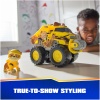
The included Rubble action figure is not an afterthought, it is a carefully scaled companion that integrates with the vehicle and stands alone for character-driven stories. Standing approximately 2.5 inches tall, Rubble is molded in his signature yellow hard hat and orange construction vest, with painted details that match his on-screen appearance. His face features the friendly, determined expression that fans recognize, with printed eyes and a small smile. The figure’s arms and legs are articulated at the shoulders and hips, allowing for a range of poses: sitting in the driver’s seat, standing with arms raised, or crouching to inspect a “problem” on the play mat.
One of the key design choices is the figure’s compatibility with the vehicle’s cab. The seat has a small peg that fits into a hole on the figure’s underside, keeping Rubble secure during rough play or when the vehicle is pushed quickly. This prevents the figure from falling out mid-rescue, a common frustration with other toy lines. The figure can also be removed easily for independent play, and his feet are flat enough to stand without support on most surfaces. Parents will notice that the plastic used for the figure is slightly softer than the vehicle’s, which reduces the risk of sharp edges and makes it more comfortable for small hands to grip.
From a narrative perspective, Rubble’s role as a construction expert opens up specific play scenarios. Children can recreate episodes like “Pups and the Big Rumble” or invent their own missions involving building collapses, road repairs, or debris clearing. The figure’s articulation allows him to hold small tools or accessories from other Paw Patrol sets, though this toy does not include additional accessories beyond the figure itself. This is a deliberate choice to keep the focus on the vehicle transformation and the core character interaction. For parents, this means less clutter and fewer small parts to lose, while still providing a complete play experience.
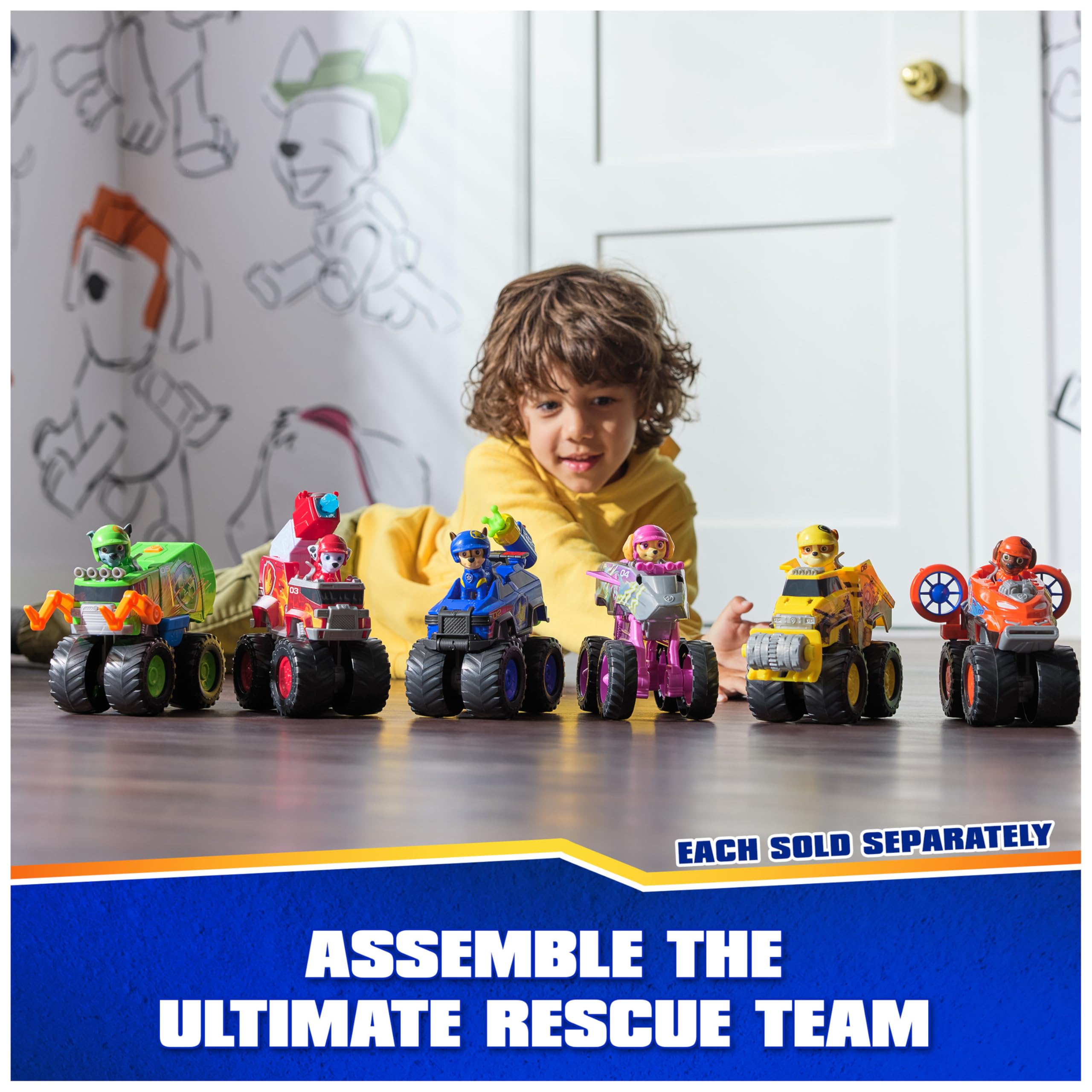
Rubble’s design also reflects the show’s emphasis on teamwork. While he can certainly play alone, the figure is scaled to work alongside other Paw Patrol Rescue Wheels vehicles and figures. The 1:55 scale is consistent across the line, so Rubble can ride in Chase’s police cruiser or stand next to Marshall’s fire truck. This interoperability is a practical consideration for families who already own other Paw Patrol toys, as it expands the storytelling possibilities without requiring additional purchases. The figure’s durability has been tested through typical play patterns, dropping, chewing (within reason), and being shoved into pockets, and the paint is resistant to minor scuffs, though it will show wear over time with heavy use.
Why No Batteries Means More Active, Uninterrupted Play for Your Child
In an era where many toys rely on lights, sounds, and motion sensors, the decision to make Rubble’s Bulldozer a purely mechanical toy is a deliberate design philosophy that prioritizes child-driven play. Without batteries, there are no on/off switches, no volume controls, and no moments where the toy stops working because the power ran out. This simplicity has several practical benefits for both children and parents. First, it eliminates the frustration of a toy that “dies” in the middle of a play session. Second, it reduces the environmental impact and ongoing cost of replacing batteries. Third, it ensures that the toy is always ready to use, regardless of whether you have fresh batteries on hand.
From a developmental standpoint, battery-free toys encourage children to be the source of action. The vehicle only moves when pushed, the transformation only happens when hands manipulate the parts, and the figure only speaks when the child provides the voice. This active engagement is linked to higher levels of creativity and problem-solving, as children must invent the sounds, dialogue, and plot points themselves. Research in early childhood development consistently shows that open-ended, non-electronic toys foster longer attention spans and more complex pretend play. The bulldozer’s mechanical nature supports this by providing a physical object that responds directly to the child’s input, reinforcing the cause-and-effect relationship between action and result.
For parents, the lack of batteries also means less noise in the home. There are no repetitive songs, no jarring sound effects, and no electronic voices that might grate after the hundredth repetition. The only sounds are the rolling of wheels on the floor, the click of the transformation joints, and the child’s own imaginative narration. This makes the toy suitable for quiet play, car rides, or waiting rooms where electronic noise might be disruptive. Additionally, the toy is easier to clean, no battery compartments to worry about moisture or corrosion, and no delicate electronic components that could be damaged by spills or drops.
Spin Master has designed the vehicle with this philosophy in mind, using high-quality plastics and metal axles that can withstand years of use without electronic failure. The wheels are attached with sturdy axles that won’t bend under pressure, and the transformation joints are reinforced with internal springs that maintain tension. This mechanical reliability is a key selling point for parents who have experienced battery-operated toys that break after a few months. With Rubble’s Bulldozer, the only maintenance required is an occasional wipe-down with a damp cloth to remove dirt or grime. The toy is built to last through the entire recommended age range and beyond, often becoming a hand-me-down for younger siblings.
Building Rescue Scenarios: How This Toy Fits into Broader Paw Patrol Play Sets
While Rubble’s Bulldozer functions perfectly as a standalone toy, its true potential is realized when integrated into a larger collection of Paw Patrol vehicles and playsets. The Rescue Wheels sub-line is designed with interoperability in mind, meaning that the bulldozer can interact with other vehicles, figures, and playsets from the same series. For example, the vehicle’s front blade can be used to push obstacles out of the way for Chase’s cruiser, or Rubble can be swapped into the driver’s seat of Skye’s helicopter for a cross-vehicle rescue mission. This modularity encourages children to build complex narratives that involve multiple characters working together, mirroring the teamwork themes of the show.
The scale of the vehicle is consistent with other Paw Patrol toys, so it fits on playsets like the Lookout Tower or the Paw Patroller. The wheels are sized to roll smoothly on the plastic tracks included with some sets, and the transformation mode allows the vehicle to fit into tighter spaces, such as the elevator of the Lookout Tower. Parents who already own a Paw Patrol playset will find that this bulldozer adds a construction dimension that may have been missing. Many sets focus on rescue vehicles like fire trucks and police cars, but the construction theme opens up new play scenarios involving building, repairing, and clearing debris. This variety keeps the play fresh and prevents children from repeating the same scenarios.
For families just starting their Paw Patrol collection, this toy serves as an excellent entry point. It includes both a vehicle and a figure, providing everything needed for immediate imaginative play. The transformation feature offers a unique selling point that distinguishes it from simpler vehicles, and the construction theme appeals to children who are fascinated by trucks and building sites. As the collection grows, the bulldozer remains relevant because it fills a specific role, Rubble is the construction pup, and his vehicle is the only one in the line that transforms in this way. This specialization means the toy won’t become redundant as other vehicles are added.
From a storage perspective, the vehicle’s compact size in rescue mode makes it easier to fit into toy bins or shelves. The transformation also serves a practical purpose: when not in use, the vehicle can be stored in its shorter configuration, taking up less space. The figure can be stored inside the cab or placed in a separate container. Parents will appreciate that the toy does not require a large footprint, making it suitable for apartments or rooms with limited play space. The durable construction also means it can be taken outdoors for sandbox or dirt play, though parents should note that the wheels and joints can accumulate grit over time and may require occasional cleaning to maintain smooth operation.