What This Set Is and Who It’s For
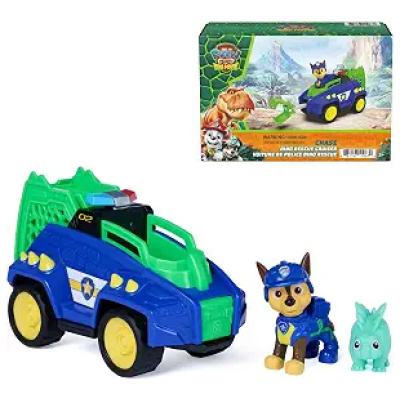
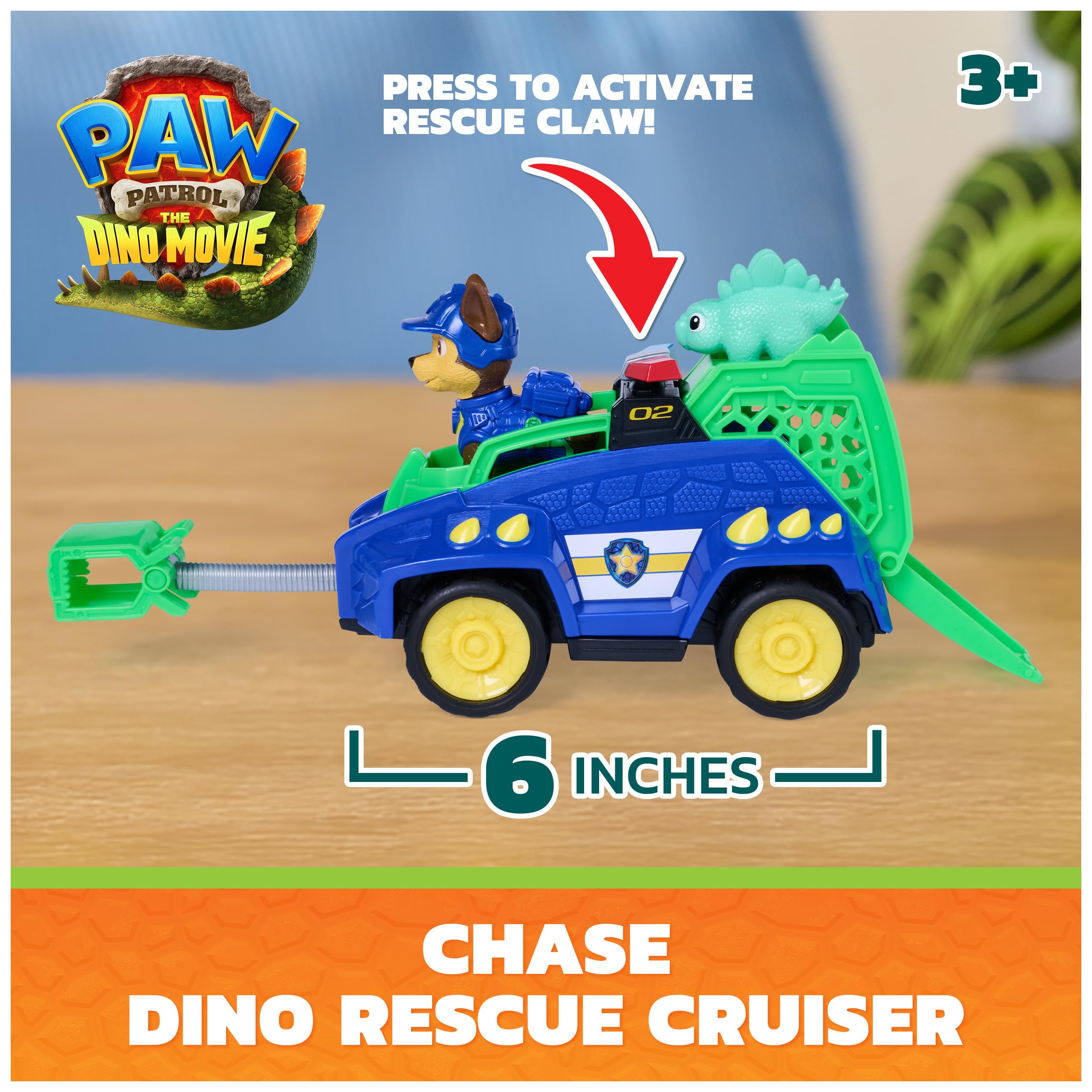
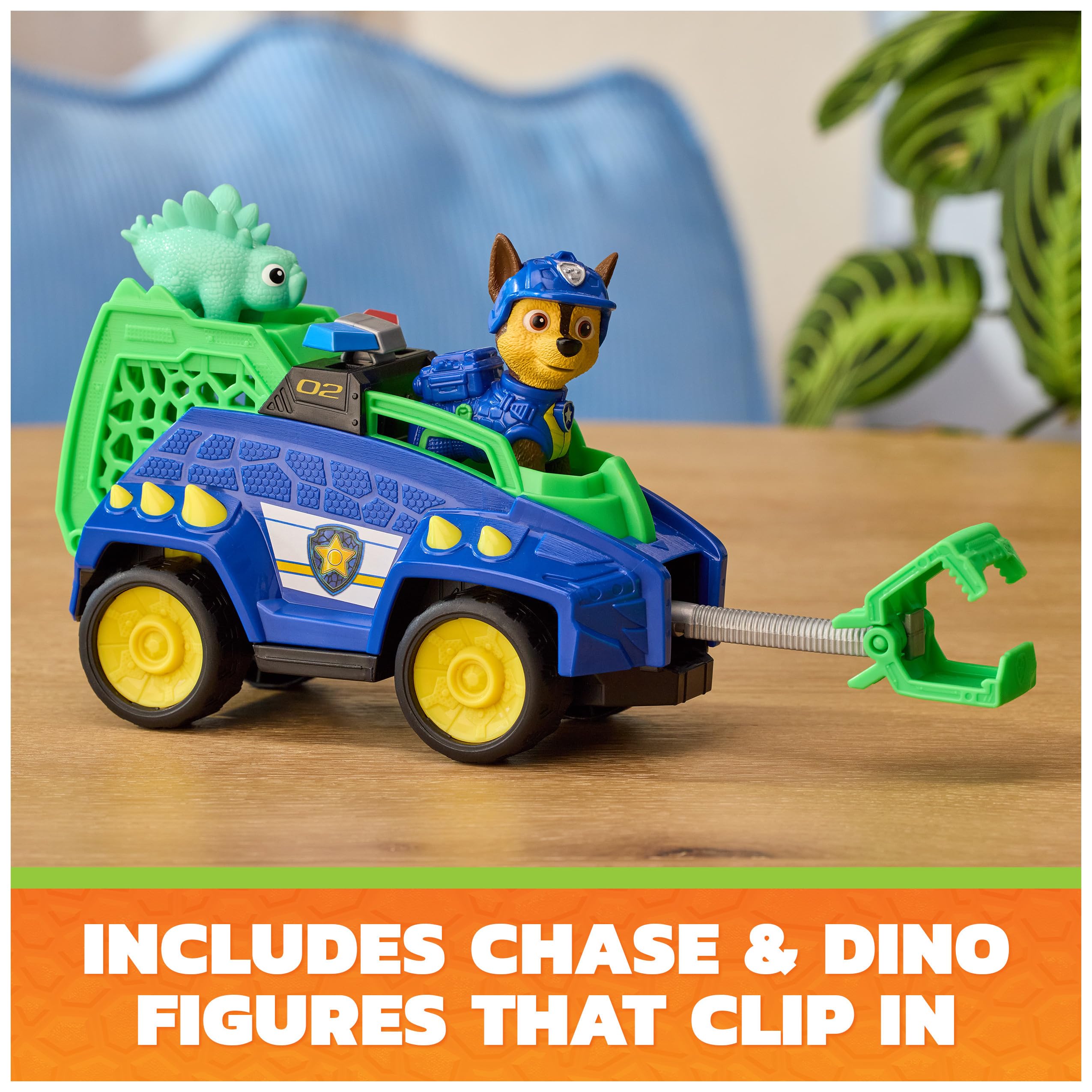
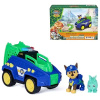
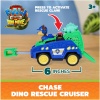
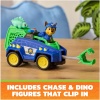
The Chase Dino Rescue Cruiser is a push-along toy vehicle from the PAW Patrol Dino Movie line, built around Chase, the German shepherd police pup who leads most of the team’s traffic-and-tracking missions. It arrives with two collectible action figures and a spring-loaded rescue claw mounted on the front of the cruiser, so a child has everything needed to start playing straight out of the packaging. There is no assembly step, no charging, and nothing that needs a grown-up to set up first.
The set is aimed at children roughly three to nine years old, which is the window where pretend rescue play tends to be most absorbing. Younger children in that range usually focus on the simple physical actions: rolling the cruiser across the floor, pressing the claw, seating the figures. Older children start layering stories on top, giving each pup a job and inventing the emergency that needs solving. Because it works on both levels, it tends to stay in rotation longer than a toy pitched at a single narrow age.
It suits families already watching the show or the Dino Movie, but it also stands on its own as a vehicle-and-figure playset. A child who has never seen an episode still understands a truck with a grabbing arm and two characters to ride in it. If you are buying for a birthday party or as a gift for a friend’s child, that broad readability is useful, you do not need to know how deep into PAW Patrol the recipient already is.
Design and Key Features
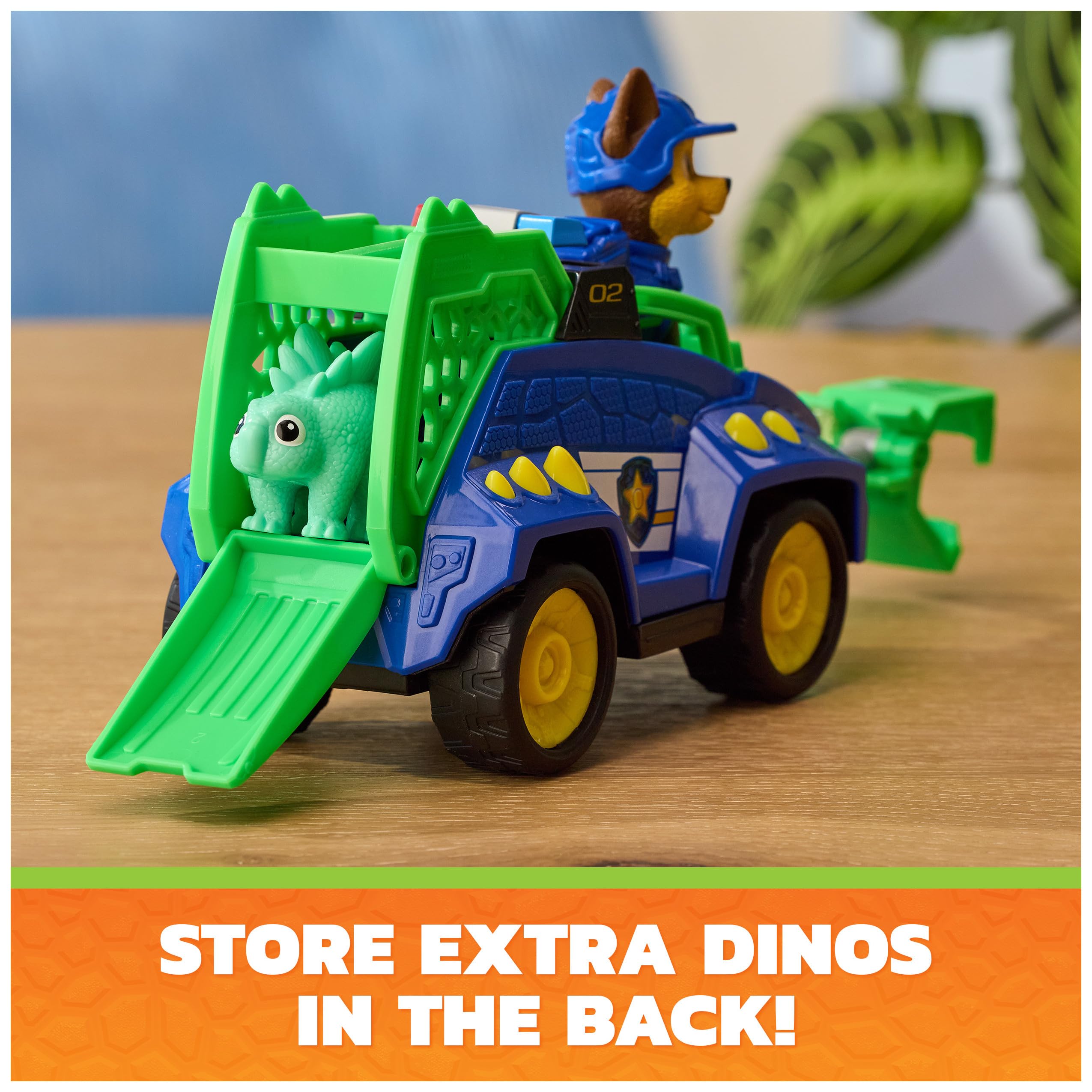
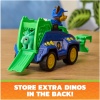
The cruiser is styled after Chase’s police vehicle with the dinosaur-expedition treatment the movie storyline uses, so the body carries rugged detailing rather than the plain city-patrol look of the standard Chase truck. Free-rolling wheels let it travel across hard floors, low-pile carpet, and outdoor surfaces like a patio or a driveway, with enough clearance to handle the small bumps and thresholds a living room presents.
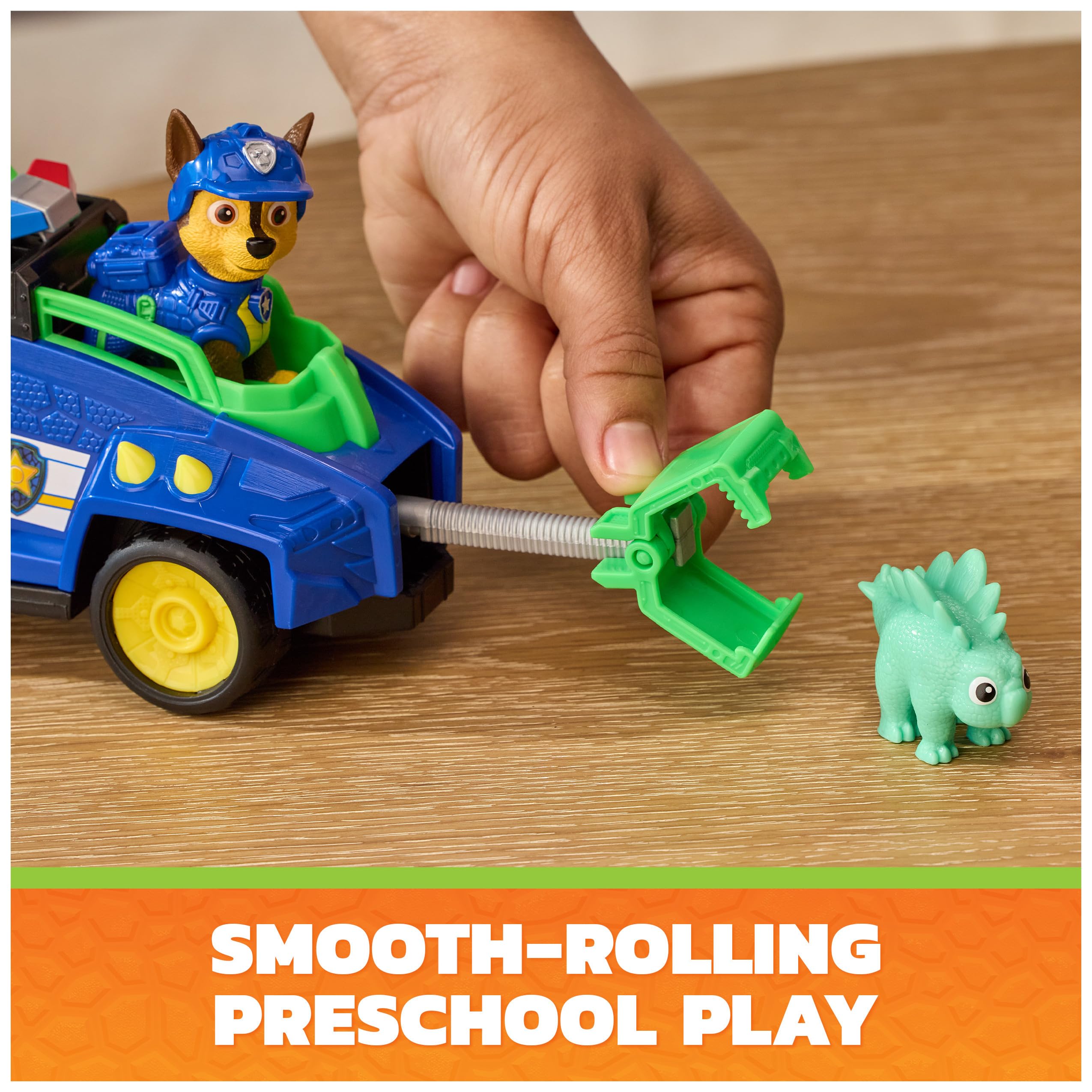
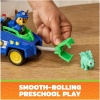
The front-mounted rescue claw is the mechanical centerpiece. It is spring loaded, meaning a child sets it and releases it to snap the claw closed on whatever is being rescued, usually the second figure, sometimes a stray dinosaur, sometimes an unrelated object that has been drafted into the scenario. The action is direct and repeatable, with no batteries and no timing to learn, which matters for smaller hands. Children who cannot yet manage fiddly mechanisms can still trigger this one on the first try.
Two collectible movie action figures come in the box. They are sized to work with the cruiser and with other figures from the broader PAW Patrol range, so children who already own pups can mix everyone into the same scene. The figures are solid molded pieces rather than delicate posable models, which is the right call for a toy that will be carried around, dropped, and packed into bags.
Product details for reference: the manufacturer is Spin Master, the model number is 6075796, and the UPC is 681147110670. Included components cover the vehicle and the two figures.
How Children Actually Play With It
Most play with this set falls into a loop that repeats endlessly and needs no adult direction. Something is stranded, a figure, a toy dinosaur, a building block that has been designated as in danger. The cruiser drives over. The claw grabs. The rescue succeeds. Then a new emergency is invented and the loop starts again. That structure is why vehicle-and-figure sets hold attention: the child controls the problem and the solution, and every run can be slightly different.
The claw in particular rewards experimentation. Children work out what it can and cannot grip, how close the cruiser needs to be, and which angle works. This is genuine trial and error with immediate physical feedback, and the fine motor practice, positioning the vehicle, setting the spring, timing the release, comes along with it rather than being announced as an educational feature.
Two figures instead of one makes cooperative and social play easier. A single child can voice both characters and stage a conversation. Two children can take one figure each without negotiating over a lone piece. Siblings and playdates go noticeably smoother when the toy already contains a second character.
Practically speaking, the set is well suited to floor play in a living room or bedroom, and it travels reasonably. The cruiser fits in a backpack or a car footwell for trips to a relative’s house, and because nothing is powered there is no worry about it switching on inside a bag or running down mid-journey. It also works fine as a quiet-time toy, the play is loud only if the child supplies the sound effects, which they generally will.
Durability, Safety, and Age Guidance
The manufacturer states an age range of 36 to 108 months, three to nine years. The lower bound is worth respecting rather than treating as cautious over-labeling: the figures and any small removable parts are a genuine choking concern for children under three, so this is not a set to leave within reach of a crawling younger sibling. In households with mixed ages, keeping it on a shelf or in a lidded bin between play sessions is the simple fix.
Construction is molded plastic throughout, chosen for repeated handling rather than display. The wheels and the claw are the two parts that see the most use, and both are built into the body rather than clipped on as fragile add-ons. Normal enthusiastic play, drops from couch height, collisions with table legs, being pushed at speed down a hallway, is what the design anticipates. Deliberate stress like standing on it or throwing it downstairs is not.
Cleaning is straightforward. A damp cloth handles most of it, and a little mild soap deals with the rest. Avoid submerging the cruiser, since water trapped inside the spring mechanism can linger and lead to stiffness or corrosion over time. Let everything dry fully before it goes back on the shelf.
The figures are the pieces most likely to go missing, as small figures always are. Storing the whole set together in one container from day one saves the search later. It is also worth noting that this item carries no manufacturer warranty, so keeping your receipt is sensible if you want recourse for a defect found shortly after purchase.
Where It Fits in the PAW Patrol World
Chase is the pup most children name first, and his defining trait across the series is being the one who takes point, directing traffic, tracking what is lost, arriving before the rest of the team. A rescue cruiser with a grabbing claw sits naturally with that role, and children who know the show will slot it into their existing understanding of who Chase is without needing anything explained.
The Dino Movie context adds the element that makes this version distinct from the everyday Chase vehicle. Dinosaurs are one of the reliable fascinations of early childhood, and pairing them with characters a child already trusts gives the toy a second hook. A child interested in dinosaurs but indifferent to PAW Patrol, or the reverse, still finds something here.
The set also connects outward. PAW Patrol vehicles and figures are designed as a collection, and pups from other sets ride along in this cruiser, while these figures join scenes built around a different vehicle. For families already a few sets deep, that compatibility means this becomes part of a larger setup rather than a separate toy played with in isolation. For families starting out, a vehicle with two figures is a reasonable entry point, it is complete enough to play with alone, and it leaves obvious room to grow.
Underneath the dinosaur styling, the show’s basic premise carries through: something goes wrong, a pup with the right tool shows up, and the problem gets solved. That is a reassuring shape for a young child, and it is the reason this kind of pretend play stays appealing long after the novelty of a new toy has worn off.