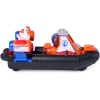
Zuma Takes the Lead: A Water-Ready Rescue Vehicle for Imaginative Play
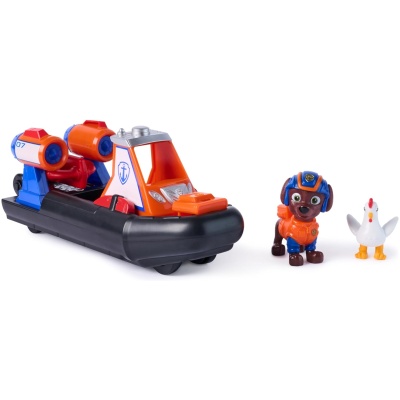
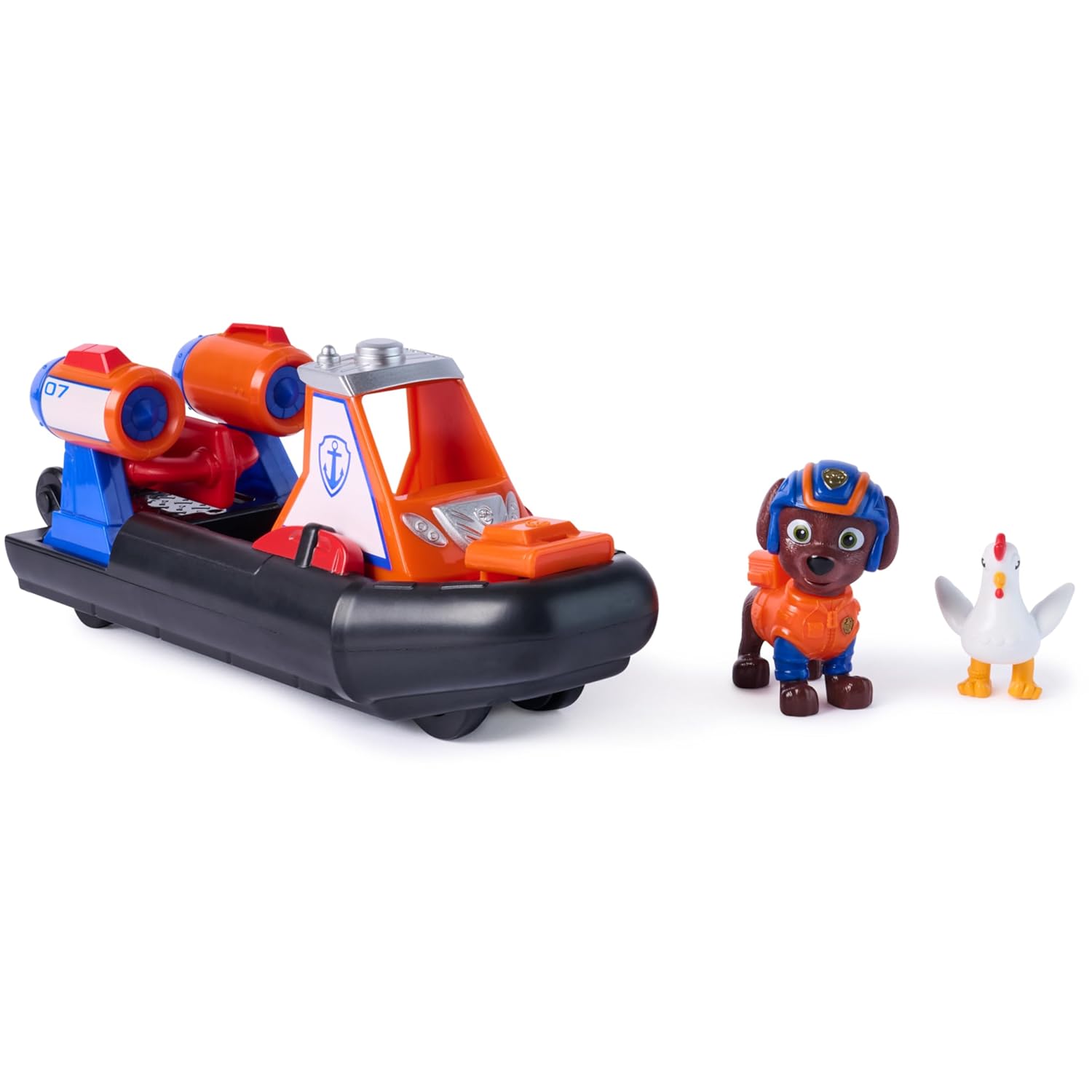
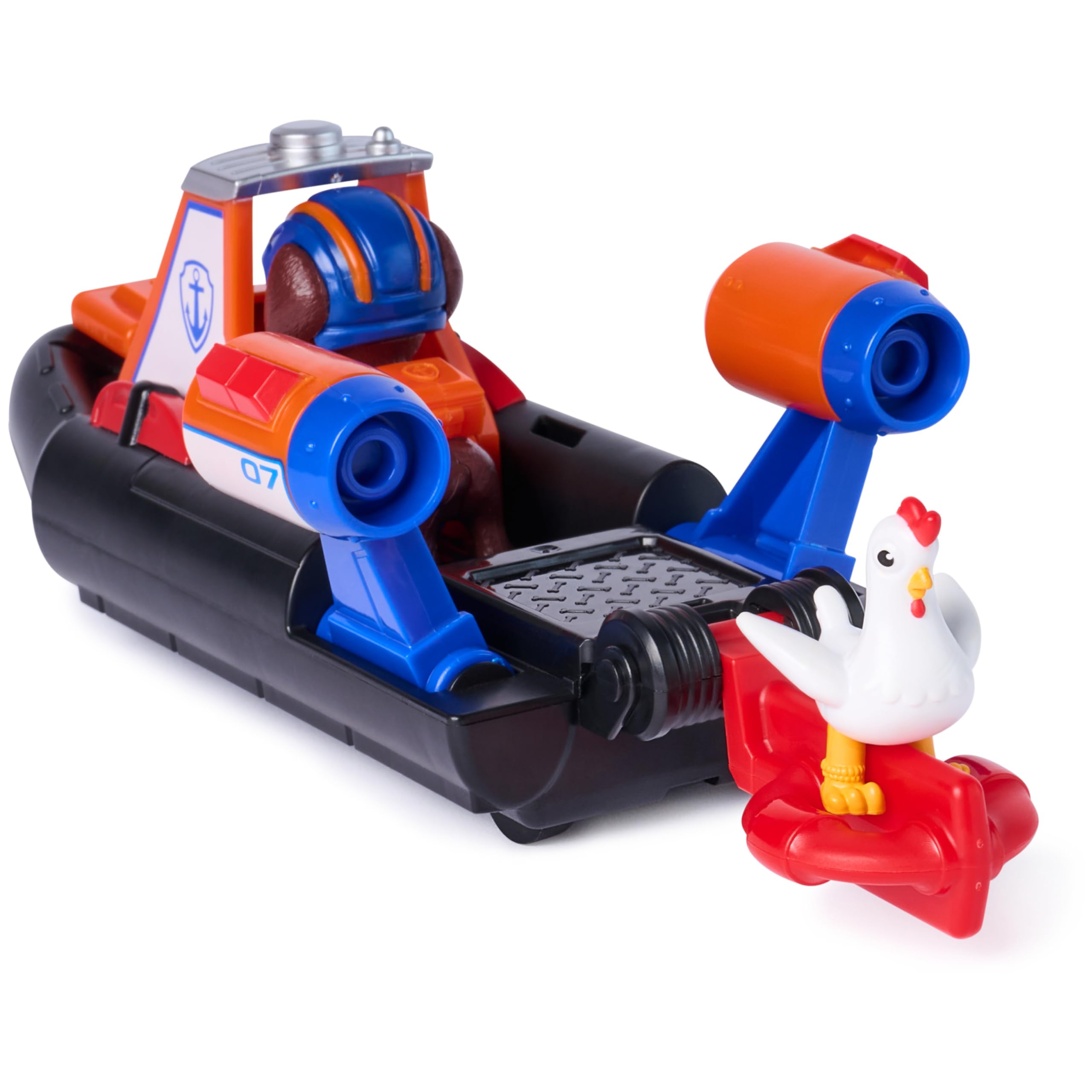
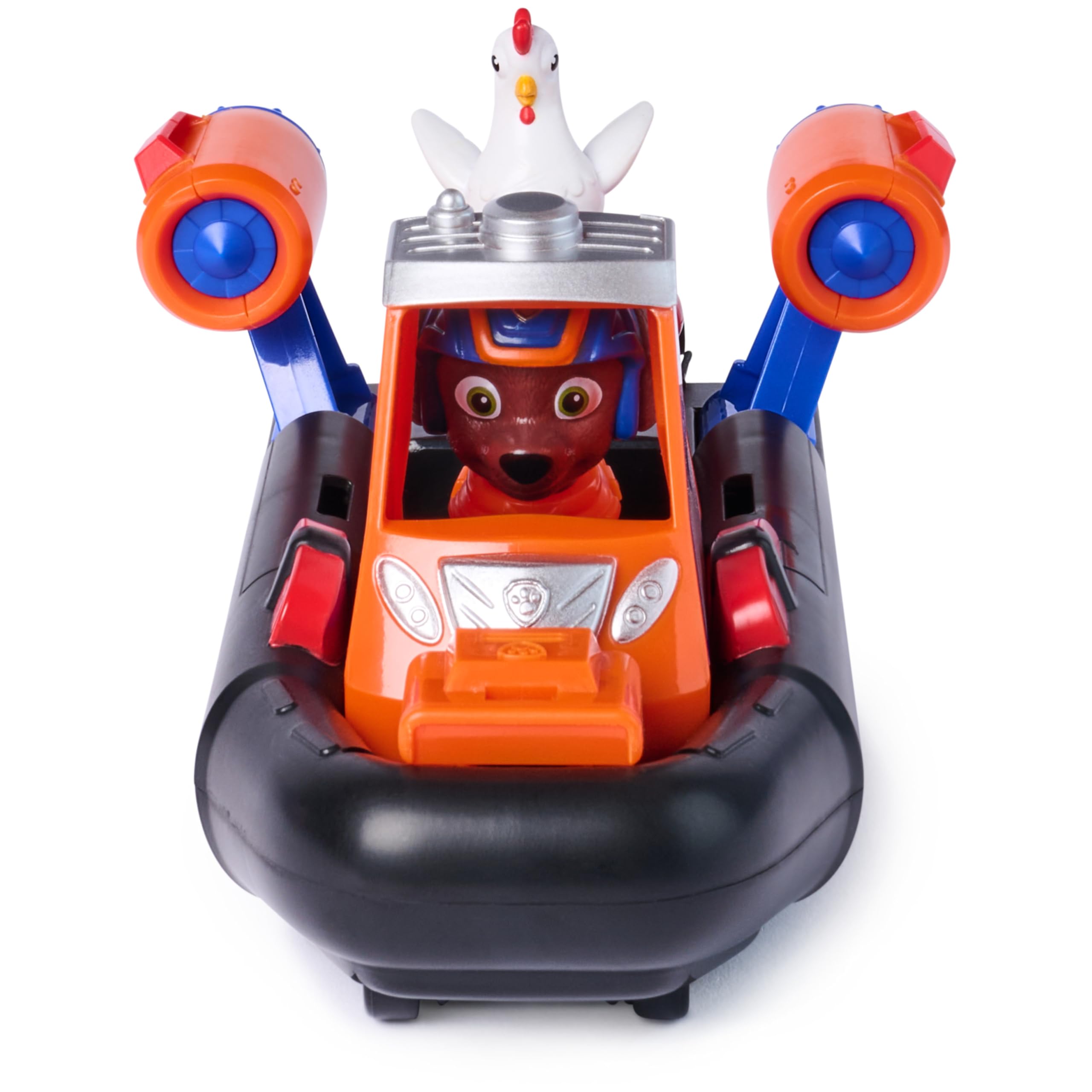
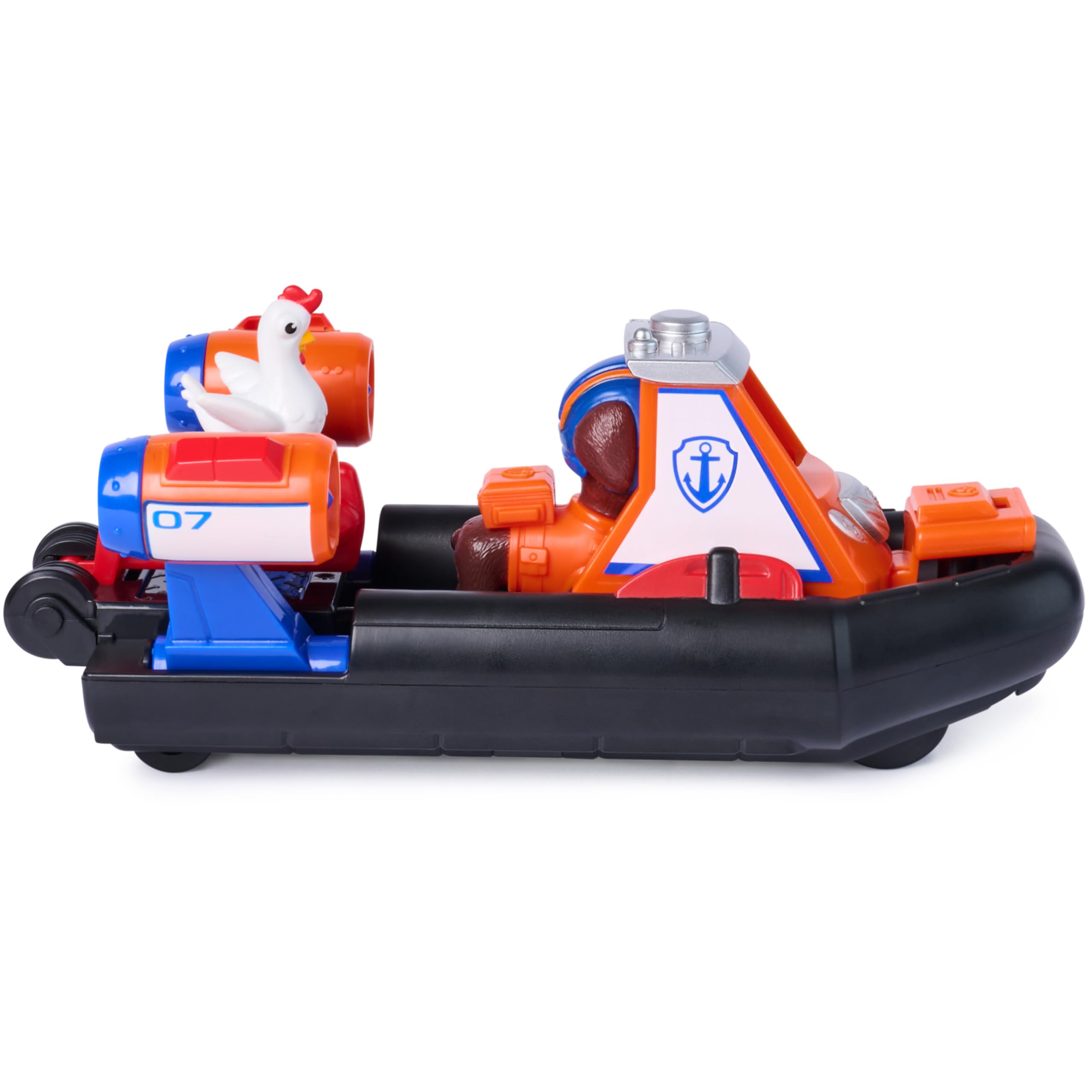
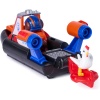
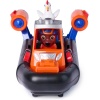
When your child’s favorite Paw Patrol pup needs to navigate rivers, ponds, or even a flooded bathtub, the Zuma Rescue Hovercraft delivers a play experience that mirrors the show’s emphasis on teamwork and specialized rescue. Designed for children ages three and up, this Spin Master vehicle brings the water-loving Labrador retriever to life with a pull-back motor that propels the hovercraft forward on flat surfaces and across water. The set includes two figures: a fully articulated Zuma in his signature orange rescue gear and the beloved chicken sidekick Chickaletta, adding a layer of narrative depth to every adventure. Unlike generic toy boats that simply float, this hovercraft features a low-profile hull and a raised cabin that stays dry during water play, encouraging kids to create rescue scenarios where Zuma speeds across the water to save the day. The pull-back mechanism is intuitive for small hands—simply pull the vehicle backward, release, and watch it zoom across the floor or skim across a shallow water table. This design choice supports fine motor skill development while maintaining the high-energy action that defines the Paw Patrol series. Parents will appreciate that the set requires no batteries, relying instead on mechanical action that never runs out of power. The included Chickaletta figure, a recurring character from the show, provides an immediate rescue target: perhaps she’s stranded on a pretend island, or her toy boat has capsized. This combination of vehicle and figures encourages open-ended storytelling that goes beyond simple cause-and-effect play. The hovercraft’s bright orange and yellow color scheme matches Zuma’s uniform, making it instantly recognizable to fans who know that Zuma is the team’s water rescue specialist. Whether used in a dry playroom or during bath time, this toy maintains its functionality across multiple environments, a feature that sets it apart from land-only vehicles in the same line.
Engineered for Water and Land: How the Pull-Back Mechanism Works
The Zuma Rescue Hovercraft distinguishes itself from other Paw Patrol vehicles through its dual-surface capability, a result of thoughtful engineering by Spin Master. The pull-back motor is housed within the vehicle’s body, connected to the rear wheels that also serve as the propulsion system when the toy is on land. When pulled backward, the motor winds an internal spring; releasing the vehicle releases that stored energy, sending the hovercraft forward at a steady pace. On water, the same mechanism drives a small propeller located beneath the hull, which is protected by a plastic guard to prevent damage from accidental bumps against tub walls or pool steps. This dual-action system means children don’t need to switch modes or attach additional parts—the toy works identically whether it’s racing across a carpet or gliding through a few inches of water. The hovercraft’s hull is designed with a flat bottom and raised sides that prevent water from splashing into the cabin area, keeping the Zuma figure dry during typical play. For parents concerned about safety, the propeller is fully enclosed and cannot be accessed by small fingers, meeting ASTM safety standards for toys intended for children ages three and up. The vehicle measures approximately 7 inches in length and 4 inches in width, making it large enough to handle without being cumbersome for preschool-aged hands. The pull-back mechanism requires a moderate amount of force to engage, which helps build hand strength and coordination in young children. Importantly, the motor is designed to disengage if pulled too far, preventing damage from over-winding—a common issue with simpler pull-back toys. This durability is consistent with Spin Master’s track record for producing long-lasting Paw Patrol vehicles that survive the enthusiastic play of multiple children. The hovercraft’s wheels are made from a soft plastic that won’t scratch hardwood floors, and the propeller guard ensures that water play doesn’t result in tangled hair or debris accumulation. For best results on water, parents should ensure the propeller is free of obstructions and that the vehicle is used in clean, shallow water without soap or bubbles, which can reduce traction.
Figures That Inspire Storytelling: Zuma and Chickaletta in Detail
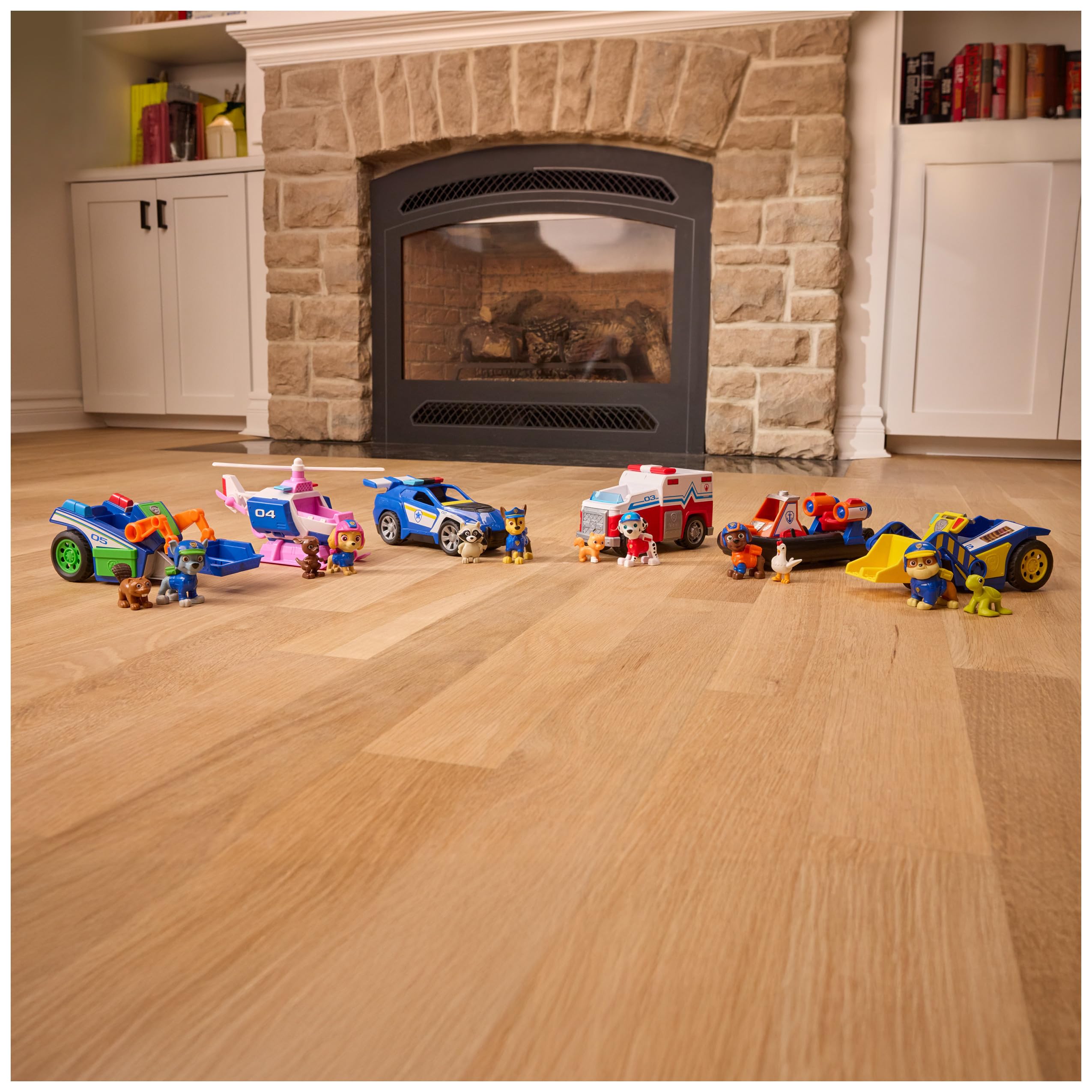
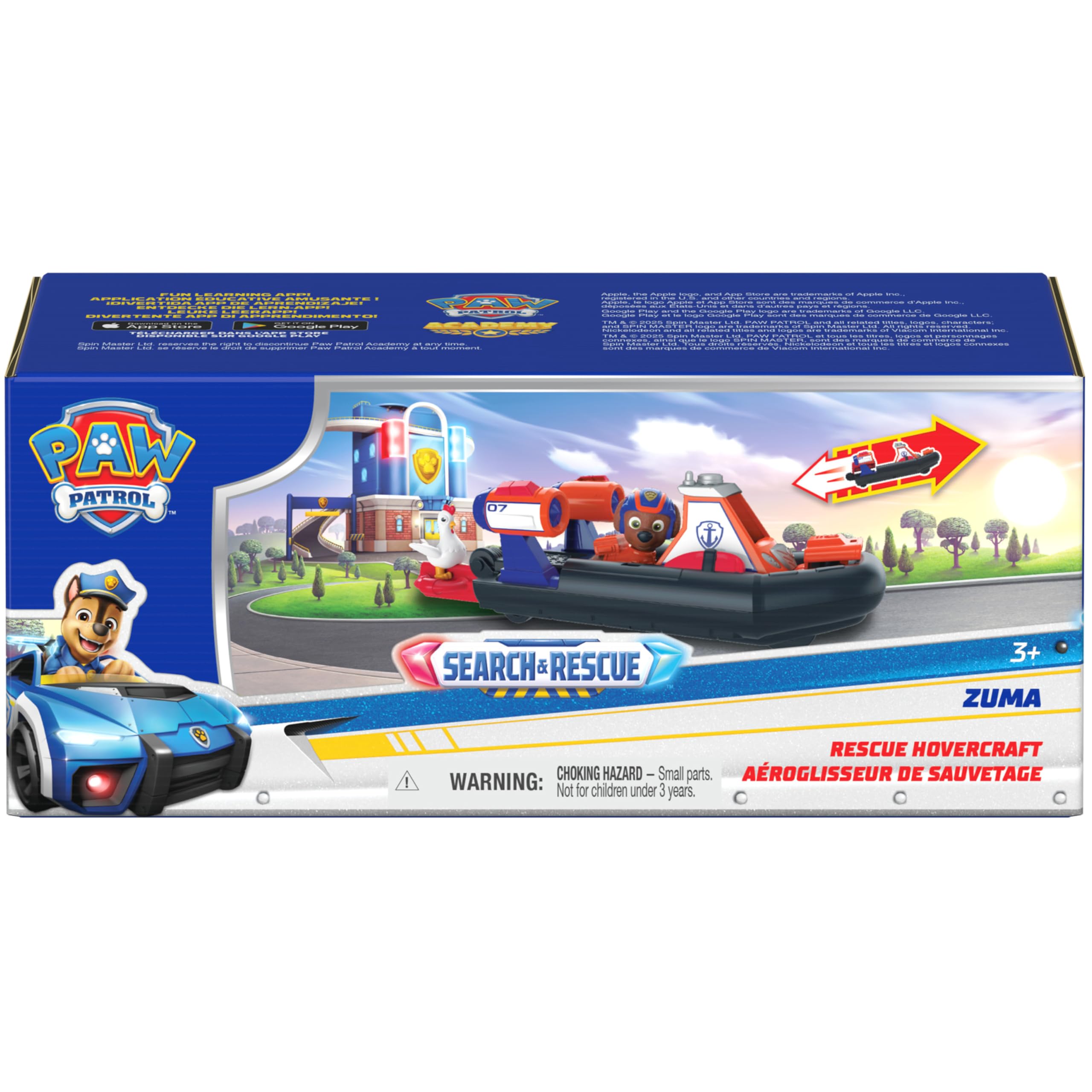
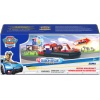
Included with the hovercraft are two figures that expand the play possibilities beyond simple vehicle operation. The Zuma figure stands approximately 2.5 inches tall and features full articulation at the neck, shoulders, and hips, allowing children to pose him in rescue-ready stances. His molded plastic body is painted in the show’s signature colors: orange for his uniform, with a yellow rescue badge on his chest and a detailed face that captures his eager, friendly expression. Unlike some toy figures that sacrifice detail for durability, this Zuma includes painted eyes, a defined snout, and the paw print logo on his helmet. The figure fits securely into the hovercraft’s cockpit, which has a molded seat that holds him in place during movement. Chickaletta, the Mayor’s pet chicken who frequently appears in Paw Patrol episodes, is a smaller figure at about 1.5 inches tall. She is sculpted with her characteristic white feathers, orange beak, and tiny wings, and she stands on a flat base that allows her to be placed on the hovercraft’s deck or on any flat surface. Chickaletta’s inclusion is strategic: she provides an immediate rescue target that aligns with the show’s plotlines, where she often finds herself in precarious situations requiring Zuma’s water rescue skills. Children can recreate specific episodes or invent their own scenarios, such as Chickaletta floating away on a piece of driftwood or getting stranded on a rock in the middle of a pond. The figures are made from the same durable ABS plastic used in other Spin Master Paw Patrol products, meaning they can withstand drops, chews, and the occasional bath without losing paint or structural integrity. While the figures are not interchangeable with other Paw Patrol vehicles in terms of scale—they are slightly smaller than the standard 3-inch figures sold separately—they are perfectly proportioned for this hovercraft set. Parents who already own other Paw Patrol toys will find that these figures can be used with playsets and vehicles from the same line, though the hovercraft itself is designed specifically for Zuma. The set’s packaging clearly shows the figures and vehicle, so children know exactly what to expect when they open the box.
Play Scenarios That Build Cognitive Skills Through Rescue Missions
The Zuma Rescue Hovercraft is more than a toy that moves across water—it’s a tool for developing problem-solving skills, narrative thinking, and social cooperation. When children engage in rescue play, they naturally practice sequencing: first, Zuma must reach the stranded character; then, he must navigate obstacles; finally, he must transport the rescued figure to safety. This three-step process mirrors the structure of the Paw Patrol TV show, where each episode follows a clear problem-solution-resolution arc. For example, a child might set up a scenario where Chickaletta is floating on a pretend iceberg (a piece of Styrofoam or a plastic container) in a water table. The child must then decide how Zuma should approach—from the left, to avoid a “current” created by a hand stirring the water, or from the right, where the water is calmer. This decision-making process exercises executive function skills, including planning and impulse control. The hovercraft’s pull-back mechanism adds a timing element: children must pull back the vehicle just enough to reach the target without overshooting it, teaching cause and effect in a tangible way. Additionally, the toy encourages cooperative play when multiple children are involved. One child can operate the hovercraft while another moves Chickaletta to different locations, requiring communication and turn-taking. For solo play, the set supports independent problem-solving as the child figures out how to position the hovercraft for a successful rescue. The inclusion of a second figure means that children can also create non-rescue scenarios, such as Zuma giving Chickaletta a tour of Adventure Bay’s waterways or the two characters racing against an imaginary timer. This flexibility ensures that the toy remains engaging long after the initial novelty wears off. Parents can extend the play by introducing simple challenges: “Can Zuma rescue Chickaletta without touching the sides of the tub?” or “How many times can Zuma circle the island before the timer runs out?” These prompts encourage children to think creatively within the toy’s physical limitations, fostering adaptability and resilience when a rescue attempt fails.
Durability and Safety Considerations for Everyday Use
Spin Master has designed the Zuma Rescue Hovercraft with the realities of preschool play in mind, using materials and construction methods that prioritize longevity without compromising safety. The vehicle’s body is made from impact-resistant ABS plastic, the same material used in many high-quality children’s toys, which can withstand drops from counter height onto tile floors. The pull-back mechanism is encased in a sealed compartment that prevents water from seeping into the gears during water play, though Spin Master recommends drying the vehicle thoroughly after each use to prevent mineral buildup from tap water. The propeller is housed within a protective cage that has openings small enough to prevent finger insertion but large enough to allow water flow, ensuring efficient propulsion. All paint used on the figures and vehicle is non-toxic and meets CPSIA standards for lead and phthalates, making the toy safe for children who may mouth the figures. The Zuma figure’s articulation points are designed with a friction-fit system rather than metal pins, eliminating the risk of small parts detaching and becoming choking hazards. Chickaletta’s base is wide enough to prevent tipping, and her figure is solidly molded without any removable parts. The hovercraft’s wheels are attached with axle caps that are heat-welded into place, so they cannot be pulled off by curious toddlers. For water play specifically, parents should note that the toy is not intended for use in chlorinated pools or saltwater, as these environments can degrade the plastic over time. Freshwater play in a bathtub or plastic wading pool is ideal, and the toy should be rinsed with clean water and air-dried after each session. The set does not include any batteries, electronic components, or small magnets, eliminating common failure points and safety concerns associated with button batteries. Spin Master offers a standard manufacturer’s warranty against defects in materials and workmanship, and replacement parts for common wear items like wheels can be ordered through their customer service portal. For families with multiple children, the hovercraft’s simple mechanism means there are no complicated instructions to lose or break, and the toy can be passed down to younger siblings without loss of functionality. The packaging is made from recyclable cardboard with minimal plastic inserts, aligning with current environmental standards for toy packaging.