What This Set Is and Who It’s For
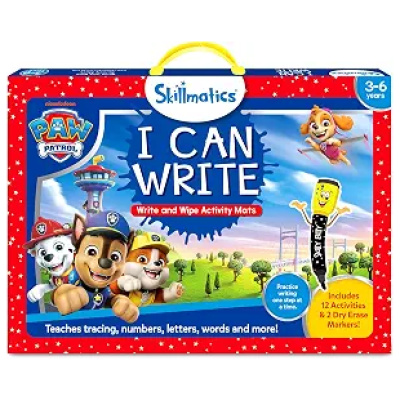
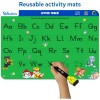
The Skillmatics I Can Write Paw Patrol set is a reusable writing practice kit built for preschoolers who are just starting to hold a marker with purpose. Instead of a paper workbook that gets used once and thrown away, this set uses six double-sided wipe-clean mats that your child can write on, erase, and start over as many times as they like. That single design choice changes how the activity works at home: a child who gets frustrated halfway through a letter can wipe it away and try again in seconds, without the sense that they have ruined the page.
The recommended age range runs from 36 months to 72 months, which covers roughly ages three through six. In practice, that means a three-year-old will spend most of their time on the earliest tracing pages, working on the basic strokes and shapes that come before letters, while a five- or six-year-old will move through letters, numbers, and simple word practice. Many families find the set stretches across two or three years because the mats can be revisited at different skill levels rather than being outgrown all at once.
It suits parents who want screen-free practice that does not require constant supervision. Once a child understands how the markers and mats work, most sessions run independently, which makes this a reasonable choice for quiet time, restaurant waits, road trips, or the stretch between dinner and bedtime. It also works well as a back-to-school gift or a preschool readiness tool for children heading into pre-K or kindergarten in the fall.
What’s Included and How the Mats Are Designed
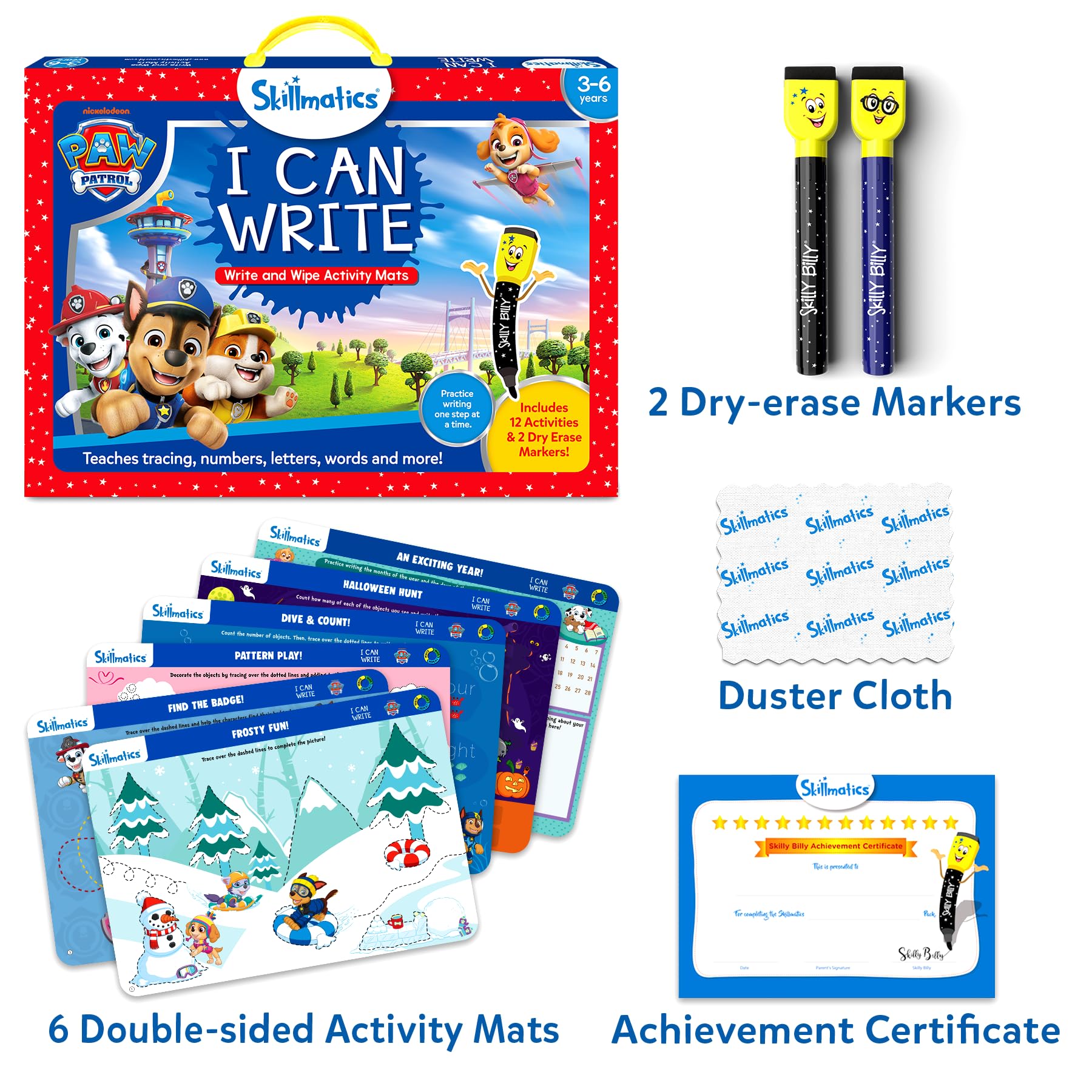
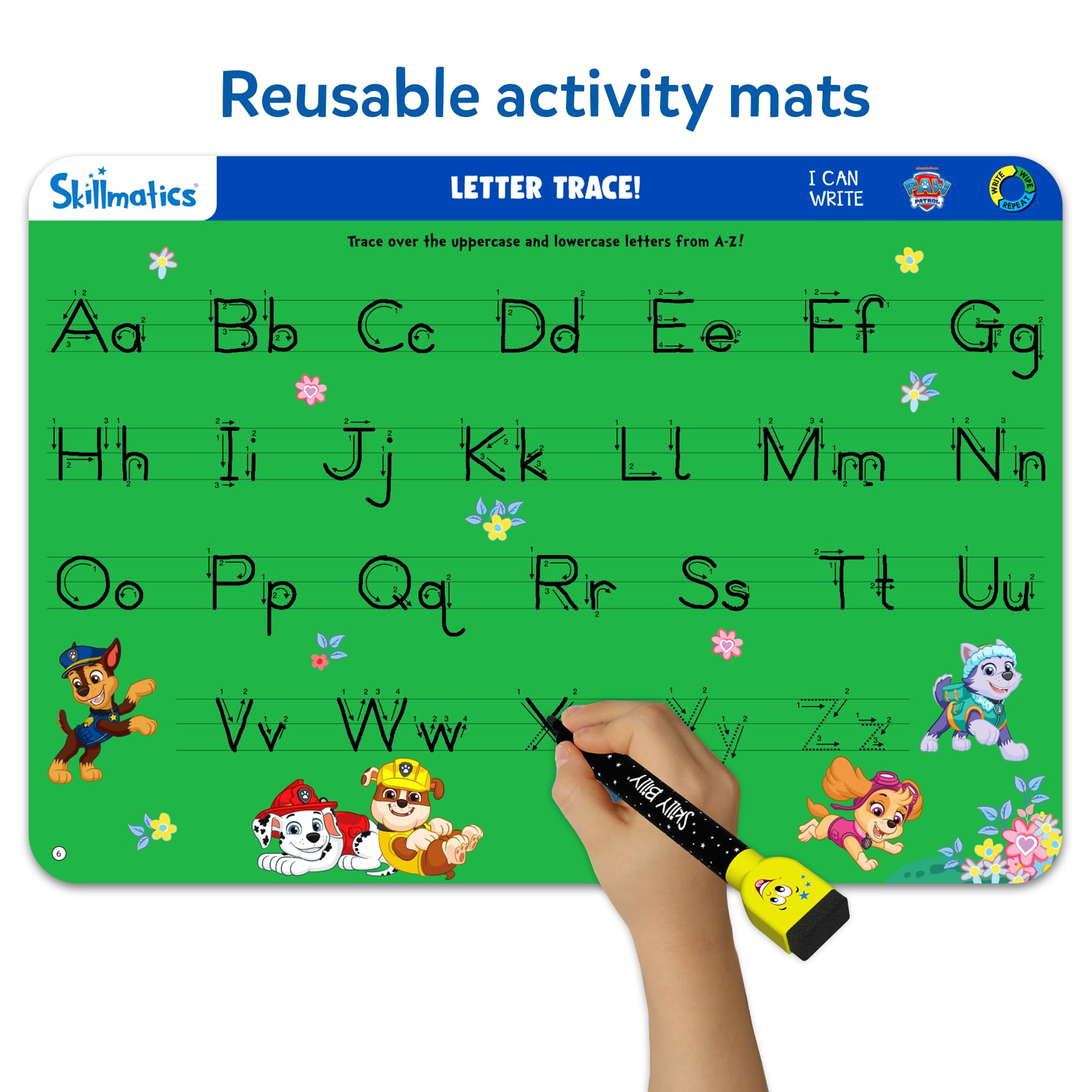
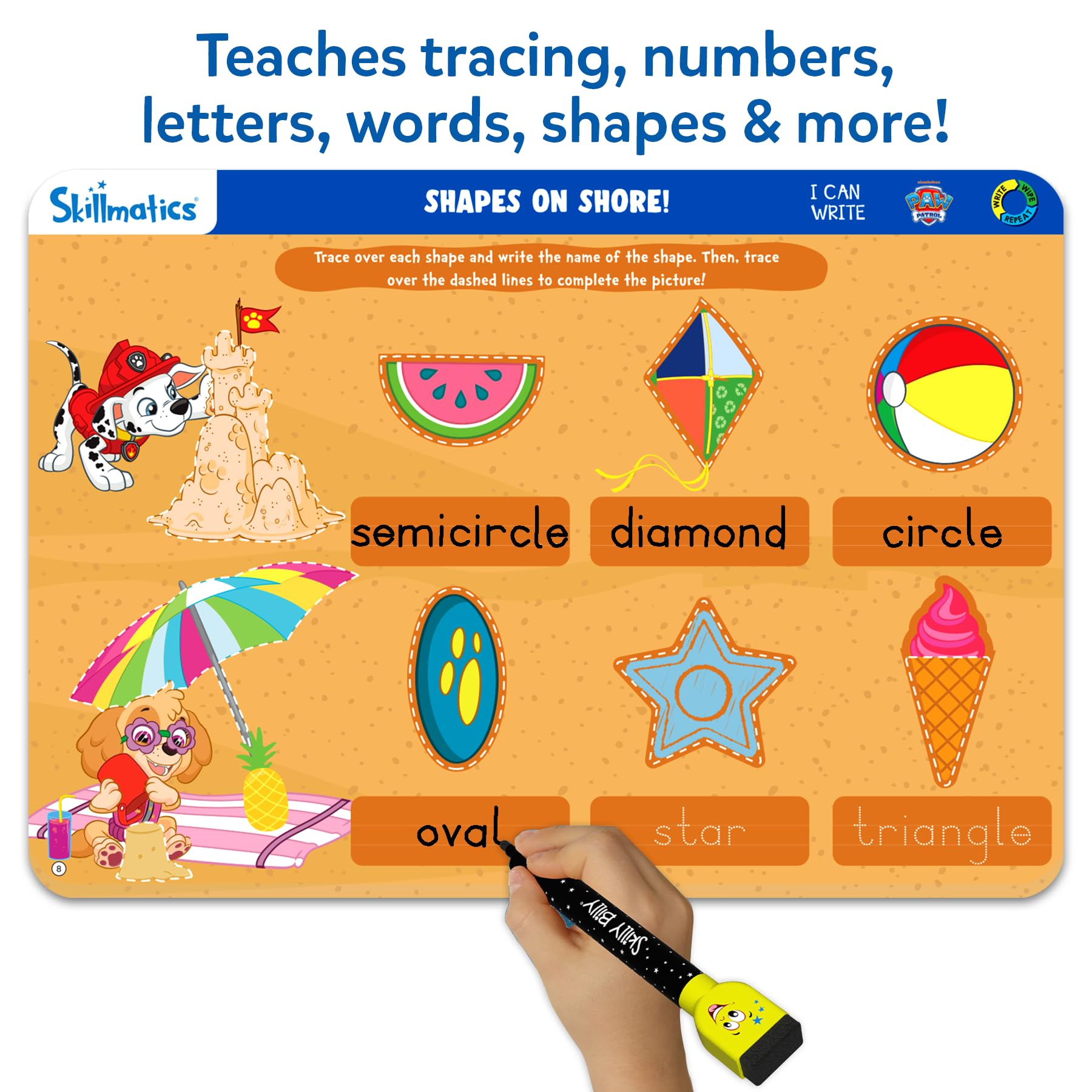
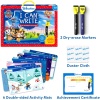
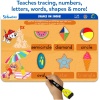
Each set contains six double-sided wipe-clean activity mats, two dry-erase markers, one duster cloth, and one achievement certificate. Because the mats are printed on both sides, six physical mats provide twelve surfaces of content, and the progression is deliberate rather than random. Early pages focus on pre-writing strokes such as straight lines, curves, zigzags, and loops, which build the hand control a child needs before letter formation makes sense to them. Later pages move into uppercase letters, lowercase letters, numbers, and simple guided practice.
The mats use directional cues, such as starting dots and arrows, so a child learns not only what a letter looks like but the order and direction of the strokes that make it. This matters more than it might seem. Children who teach themselves to draw a letter from the bottom up often have to unlearn that habit later, and the guided arrows on these mats quietly prevent that from setting in.
Two markers are included rather than one, which is a small but practical detail: markers get lost under couches, and a second one keeps the set usable. The duster cloth is designed for the mat surface and wipes marker away cleanly when used shortly after writing. The achievement certificate gives you something to fill in and hand over when your child finishes the set, which many kids treat as a real milestone worth keeping on the refrigerator door.
The full set is compact enough to store in a drawer or slide into a tote bag, and it packs down flat, unlike activity kits built around bulky boards or plastic frames.
How Children Actually Use It
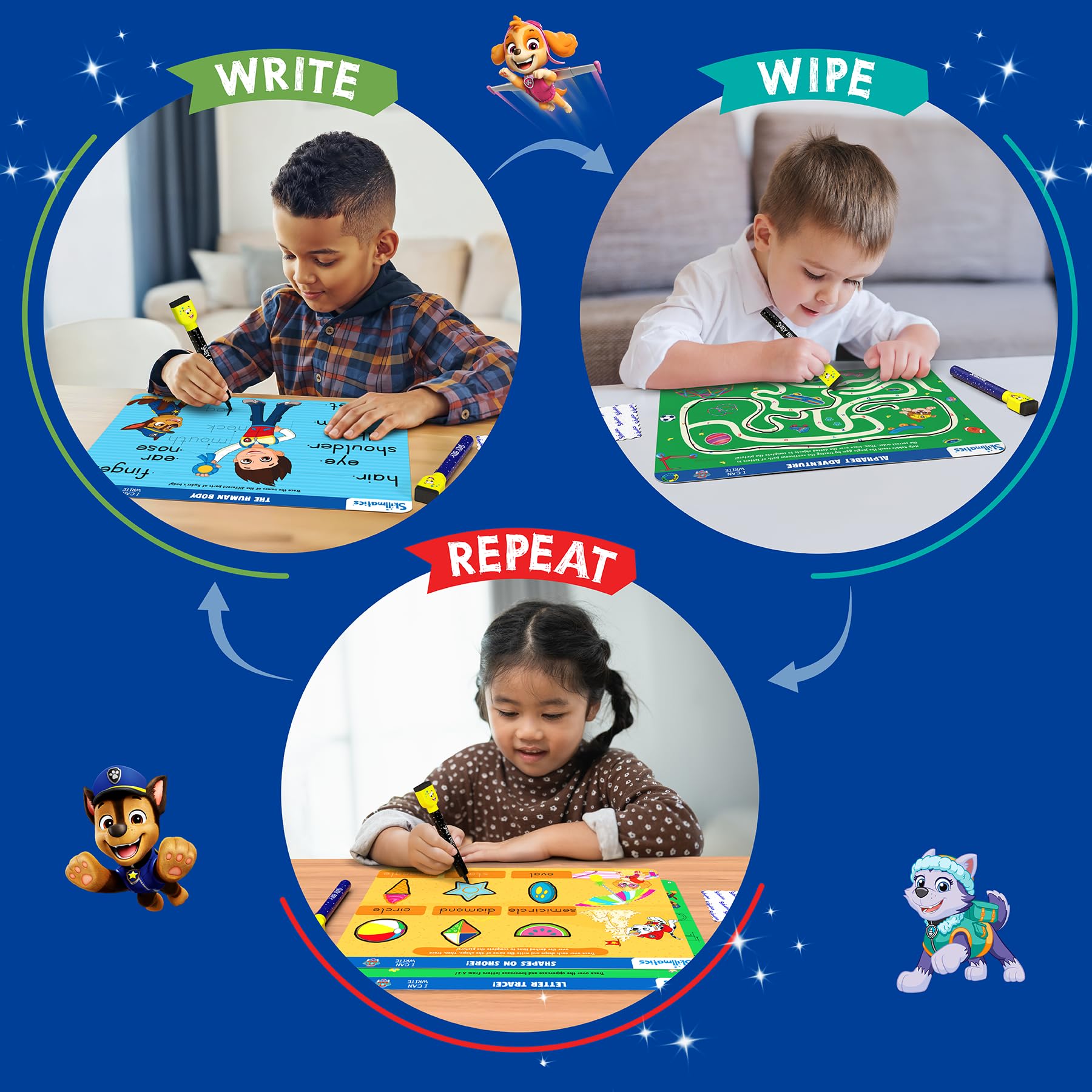
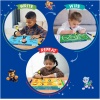
The strongest practical use for this set is short, repeated sessions. Handwriting develops through repetition, and preschool attention spans are short, so ten or fifteen minutes at a time tends to work better than a long sitting. The wipe-clean surface supports exactly that rhythm, because a child can complete a page, wipe it, and return to the same page tomorrow with a fresh start and visible improvement.
Because the Paw Patrol characters appear throughout the mats, children who already know the show tend to engage with the pages as a continuation of something familiar rather than as schoolwork. That difference in framing does real work at home. A child who resists a plain workbook will often sit down with Chase or Skye on the page without argument, and the practice happens anyway.
There is also room for shared use. A parent can sit alongside a younger child and guide the first attempts at a stroke, then step back as confidence builds. Siblings at different ages can each work on different mats from the same set at the same time, which is one advantage of a multi-mat kit over a single-board toy. For travel, the mats and markers fit easily in a backpack pocket, and there are no small loose pieces to hunt for under a car seat.
Beyond letter formation itself, the set builds pencil grip, hand-eye coordination, left-to-right tracking, and the fine motor control that later feeds into drawing and independent writing. Those skills transfer directly to classroom work in kindergarten.
Durability, Safety, and Age Guidance
The mats are made to be written on and wiped repeatedly, so the surface is a wipe-clean laminate rather than plain paper. It stands up to normal preschool handling, including bent corners and the occasional spill, far better than a printed workbook would. For best results, wipe the marker off within a reasonable time after writing rather than leaving it to sit for days, and use the included duster cloth or a slightly damp cloth on the surface. Avoid using permanent markers, which will not come off, and store the mats flat when possible.
The manufacturer lists a minimum age of 36 months, and that guidance is worth following. Children under three are still likely to mouth objects, and dry-erase markers are not appropriate for that stage. For children right at the three-year mark, we suggest keeping the markers under adult control between sessions and supervising the first several uses until you’re confident your child treats the markers as writing tools rather than toys. Cap the markers after each session so they don’t dry out.
The set is manufactured by Grasper Global Private Limited under the Skillmatics brand and ships as a single pack with a six-count component set. Note that the manufacturer does not include a warranty with this product, so we’d suggest checking that all components are present when the set first arrives.
Why It Fits the Paw Patrol Universe
Paw Patrol has always centered on preparation and problem-solving. Every episode follows the same reassuring shape: a problem appears, the right pup is called in with the right tool, and the job gets done through effort and teamwork. That framing maps unusually well onto learning to write, which is also a matter of showing up, using the right tool, and improving through repeated attempts.
For a child who watches the show, the pups on these mats are not decoration. They function as familiar company for a task that can feel difficult. Chase’s focus, Marshall’s willingness to try again after things go sideways, and Rubble’s persistence are all traits that a preschooler working through their first letter Q can recognize and borrow from. The achievement certificate at the end draws on the same logic as a badge earned at the Lookout: a job completed and acknowledged.
Within a wider Paw Patrol collection, this set fills a different role than plushies, vehicles, or clothing. Those items support imaginative play and everyday wear; this one turns the same characters toward a concrete school-readiness skill. For parents who already have a house full of pup toys, it offers a way to channel an existing interest into practice that pays off in the classroom, without the child feeling that their favorite show has been turned into homework.