What This Storybook Is and Who It’s For
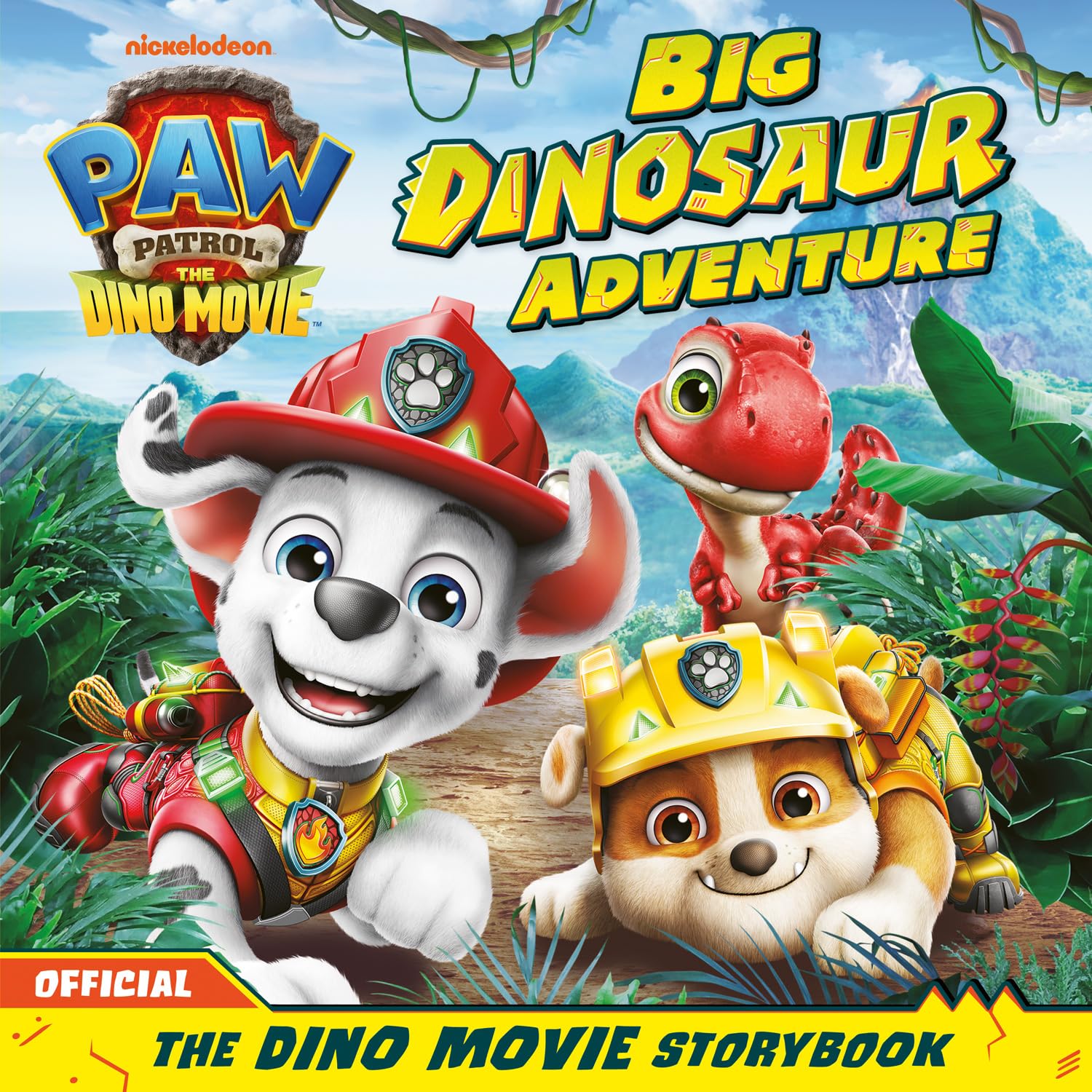
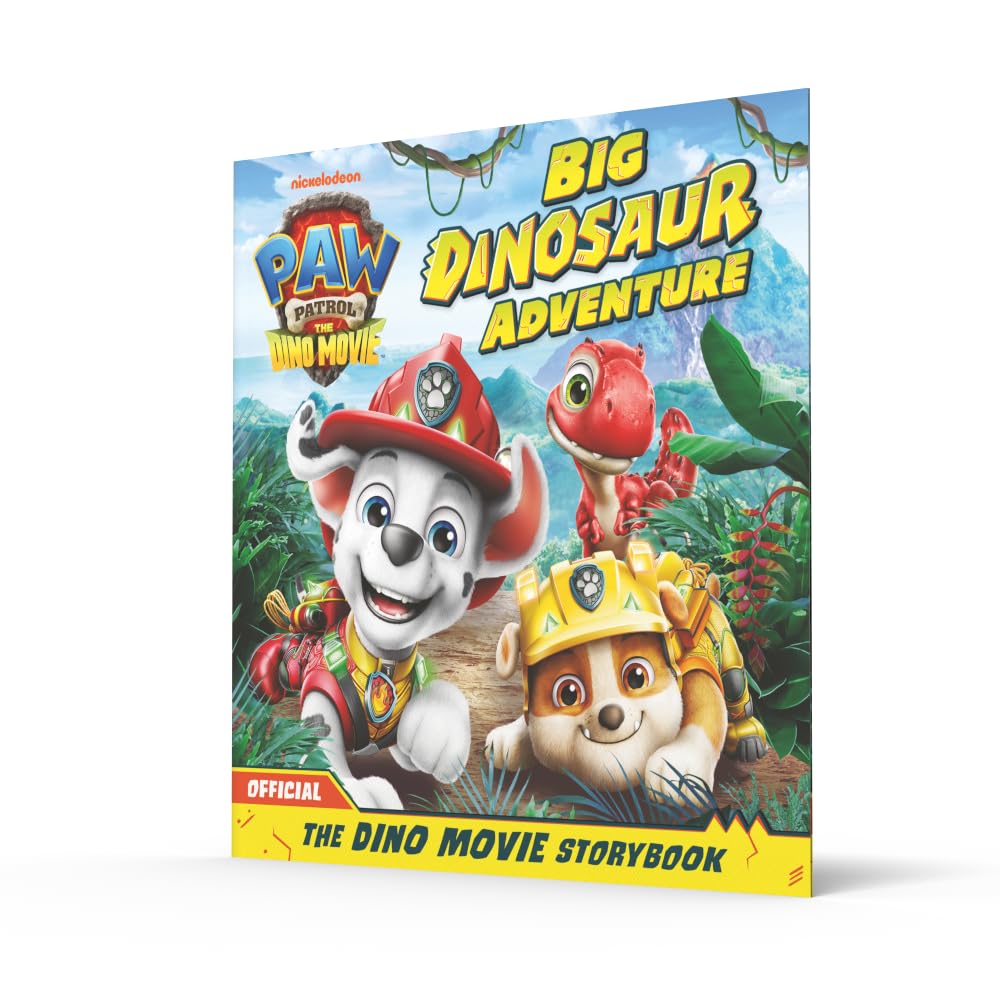
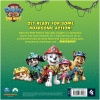
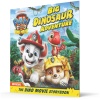
The PAW Patrol: The Dino Movie Storybook: Big Dinosaur Adventure is a full-color picture book that retells the story of the 2026 PAW Patrol dinosaur film in a format built for reading aloud at home. It’s written for children roughly 3 to 7 years old, which lines up with the age range most familiar with the PAW Patrol pups from television. Younger children in that range will follow along with the pictures while an adult reads; older children who are starting to decode words on their own will recognize character names and short repeated phrases from page to page.
Parents often look for a book after a movie has caught a child’s attention, and that’s exactly the gap this title fills. Instead of asking a child to sit through a feature-length film again, the storybook condenses the adventure into a sitting of about ten to fifteen minutes. That makes it practical for bedtime, for a quiet afternoon, or for a car ride where a screen isn’t the right choice. The English-language text is printed at a size and spacing typical of read-aloud picture books, so an adult can hold the book at arm’s length across a lap or a car seat and still read comfortably.
It’s also a reasonable pick for children who haven’t seen the movie yet. The storybook works as a standalone adventure, so it can serve as an introduction to the dinosaur storyline rather than only as a companion piece. Families who plan to see the film together sometimes find that reading the story first helps a younger child follow what’s happening on screen, particularly if the child is new to longer-form narratives.
Format, Design, and What’s Inside
The book measures 9.84 by 9.84 inches, making it a square format rather than the more common portrait shape. Square picture books give illustrators a wide canvas for full-page and double-page spreads, and that suits a story about dinosaurs and rescue vehicles, where scale is part of the appeal. The book weighs 5.9 ounces and is 0.08 inches thick at the spine, which tells you it’s a slim paperback edition rather than a heavy hardcover, light enough for a small child to carry, hold open, and turn pages without help.
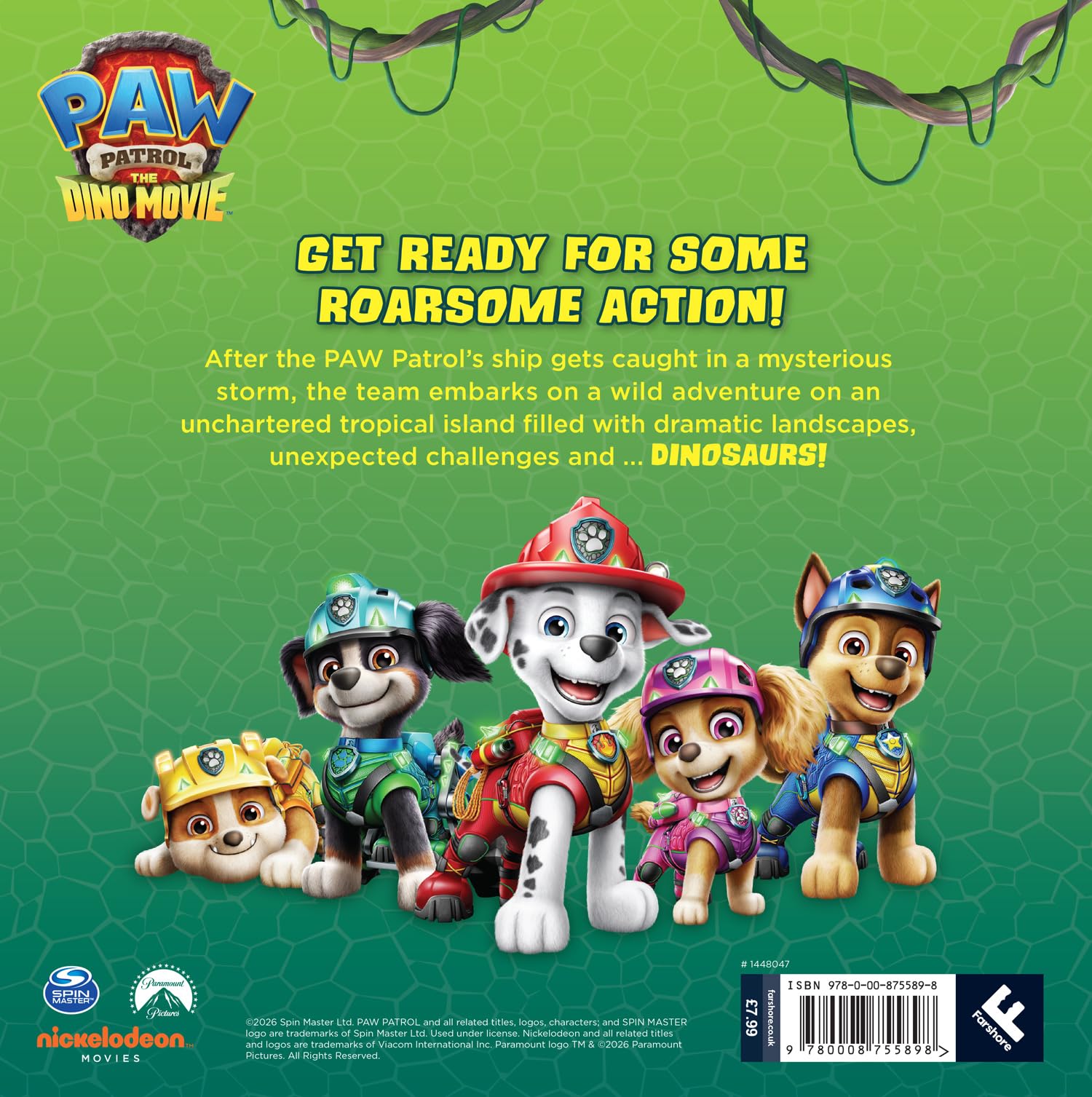
It carries ISBN-10 0008755892 and ISBN-13 978-0008755898, and the text is in English. Those identifiers are worth noting if you’re checking a library catalog, comparing editions, or making sure you’re buying the storybook rather than one of the other tie-in formats that share similar cover art, such as sticker books or activity titles.
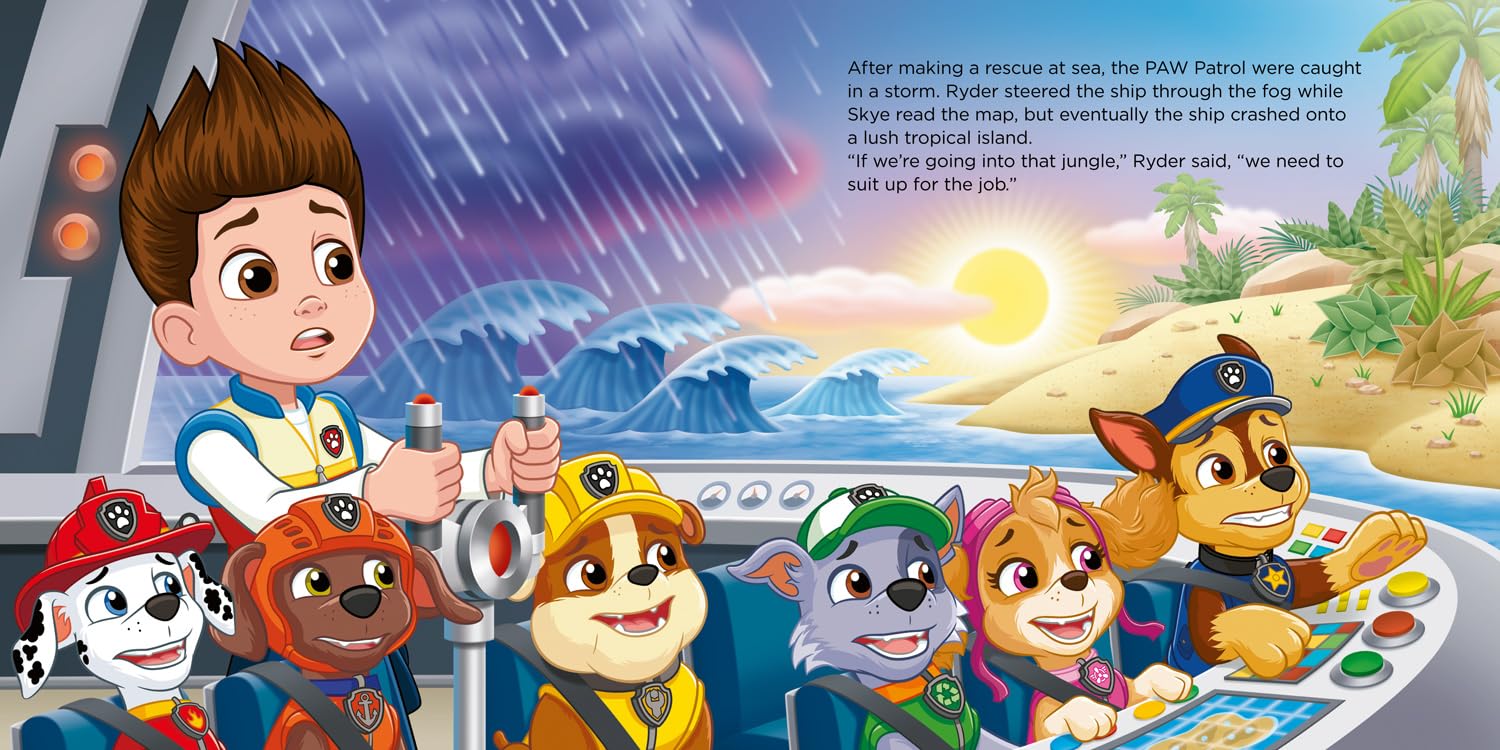
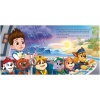
Storybooks in this line follow a consistent structure: a page or two of setup, the problem the pups have to solve, the rescue itself broken across several spreads, and a resolution. Illustrations carry a large share of the narrative, so children who aren’t reading yet can still track what’s happening between the words. The square trim also means the pictures aren’t cropped down to make room for long blocks of text, the balance leans toward the visual, which is what holds attention in this age group.
How Families Actually Use It
The most common use is straightforward: a bedtime read that a child asks for again and again. Repetition is how young children build comfort with a story, and a book short enough to finish in one sitting is one they’ll request often. Many parents find that after several readings, a child begins reciting sections from memory before turning each page, an early literacy step that happens naturally with a familiar text.
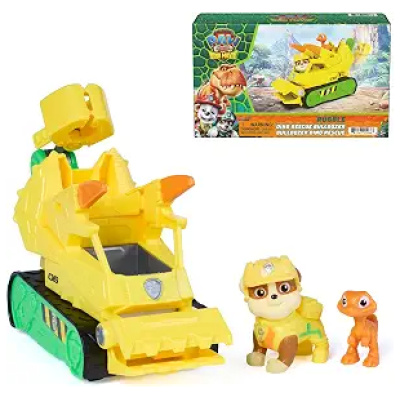
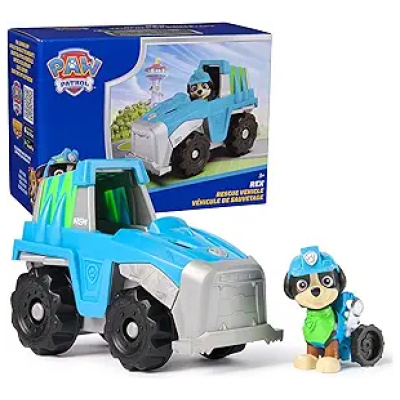
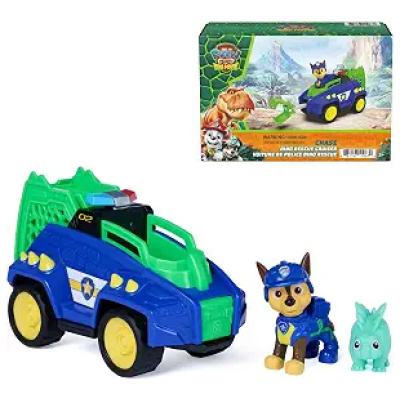
Beyond reading aloud, the storybook pairs well with toys a child may already own. A child who has Chase’s cruiser or Marshall’s fire truck can act out scenes from the pages, which extends the book well past its reading time. Children who have PAW Patrol dinosaur figures or Dino Movie playsets tend to make those connections without prompting, moving between page and floor as the story goes.
It also travels well. At under six ounces, it slips into a diaper bag, a backpack, or a seat pocket without adding noticeable weight, and it holds up as an alternative to a tablet during waiting-room time or a flight. Some families keep a copy specifically for travel and a separate one at home, since a book this light is easy to lose track of in a bag.
For children learning to read, the storybook offers a low-pressure practice text. Because the story is familiar and the character names are already known, a child can guess at words from context and pictures rather than sounding out every one. Teachers and reading specialists often recommend media tie-in books for exactly this reason: motivation matters, and children work harder at a story they already care about.
Age Guidance, Handling, and Care
This is a paperback picture book, so the practical considerations are different from those for a toy. There are no small parts, no batteries, and no electronics. The publisher’s guidance for this format is generally ages 3 and up, and that recommendation is mostly about content and attention span rather than safety, children under 3 may still mouth or tear paper pages, which a paperback edition won’t survive as well as a board book.
For a child in the 3-to-5 range, some parents choose to keep the book on a shelf and bring it out for shared reading rather than leaving it in an open toy bin, which extends its life considerably. Paper pages will show wear at the corners over time, that’s normal for a book that gets read often, and it isn’t a defect. If a page tears, clear book tape applied along the tear on both sides is the standard repair and holds up well through further readings.
The slim profile means the book is best stored upright between other books or laid flat, rather than jammed spine-down into a bin where the cover can curl. Keep it away from damp areas; paperback covers absorb moisture and warp. Beyond that, no special care is needed. The book carries a 5.0 out of 5 star rating on Amazon, though that comes from a single review, so it’s a limited signal rather than a broad consensus at this point.
Where It Fits in the PAW Patrol Universe
PAW Patrol has run for more than a decade, and its books have always served as an on-ramp for children who meet the pups on screen first. Chase, Marshall, Skye, Rubble, Rocky, and Zuma each have a defined role and a signature vehicle, and that structure is what makes the stories easy for young children to follow: a problem appears, Ryder calls the team, each pup contributes what they’re specifically good at, and the job gets done together.
The Dino Movie extends that framework into prehistoric territory, adding new faces to the established lineup. For families who have followed the franchise through the earlier films and the Dino Rescue episodes, the storybook connects to material a child already knows while introducing what’s new. For families just starting out, it works as an entry point, the pups’ roles are clear enough from the illustrations that a newcomer isn’t lost.
Tie-in storybooks also give children something the films can’t: control over pacing. A child can linger on a page, go back to a favorite spread, or stop halfway and pick up the next night. That control is part of why picture books remain a fixture in homes where the same story is also available to stream, and it’s a fair argument for keeping a printed copy of a story your child has taken to.